
















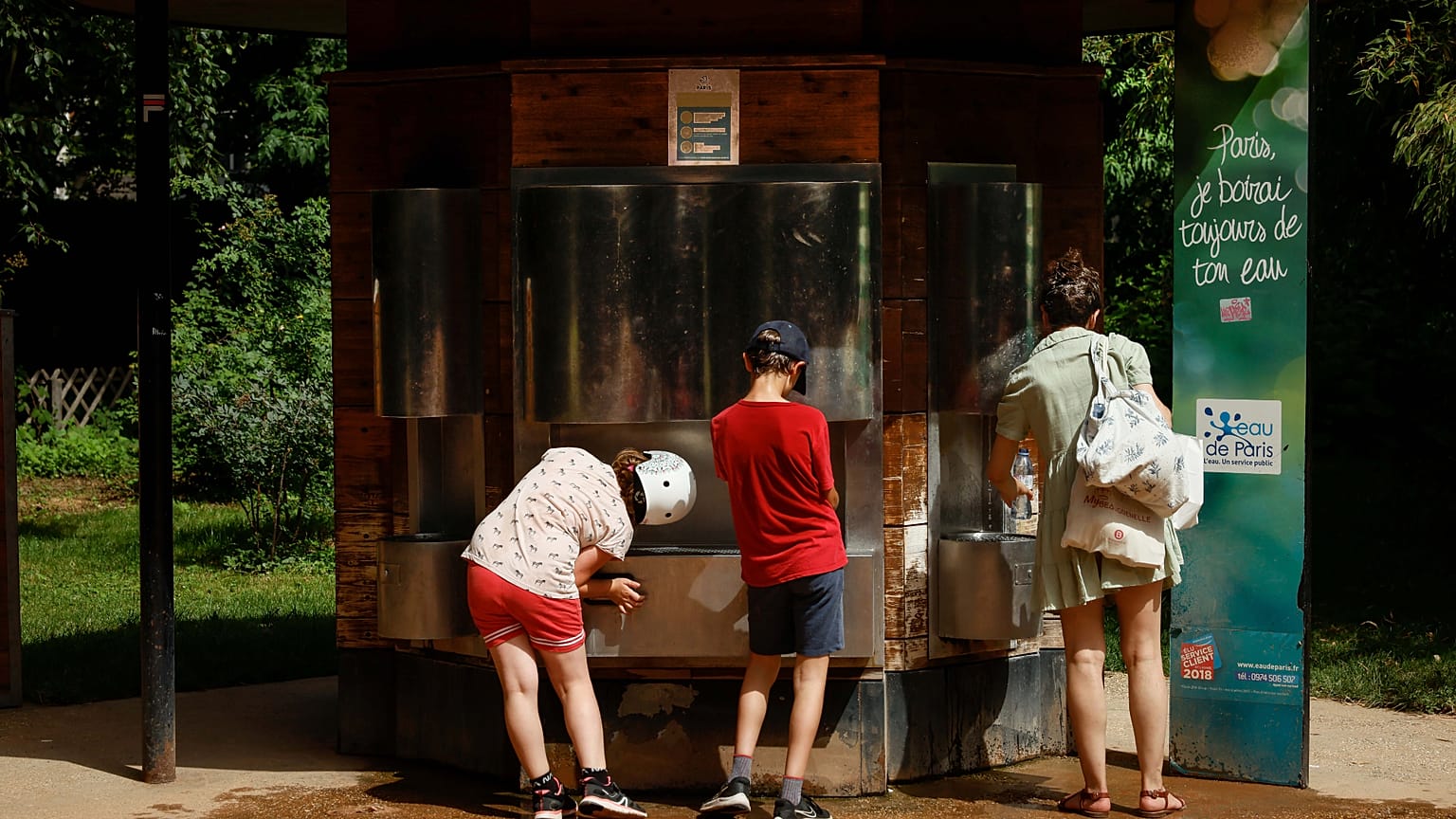













Europe’s heatwave endangers lives as well as incomes.
This week’s punishing heatwave is hitting Europeans where it hurts – and not only in terms of physical discomfort. Household costs are spiking as power prices hit record highs, parents scramble for emergency childcare and outdoor workers lose hours they can’t afford to miss.
 ADVERTISEMENT
ADVERTISEMENT
ADVERTISEMENT
New research published this week by Climate Analytics reveals that combined heat and drought events are reducing average household incomes by almost three per cent across Europe.
If global warming reaches 2.7°C by 2100 – the trajectory under current global policies – the average European household could see its income fall by 27 per cent. Limiting warming to the Paris Agreement’s 1.5°C would cut this down to seven per cent.
“The massive heatwave now sweeping across Europe is already threatening people’s health, livelihoods and ability to work,” says Jessie Schleypen, lead author of the study and senior climate economist at Climate Analytics. “Where extreme heat coincides with drought, the damage can be much greater.”
Record power prices – and why they matter for your bill
The most immediate financial hit is to Europe’s energy bills. Power prices rose to record highs on Tuesday evening (23 June) as surging demand for air-con collided with supply-side weakness, according to real-time energy market newswire Montel News.
Belgium recorded a new all-time high quarter-hourly power price of €1,038.25/MWh – the quarter-hourly price tracks the cost of electricity in 15-minute intervals and directly affects customers on variable tariffs. This is more than 10 times the average wholesale electricity price in the EU, which typically ranges from €50 to €100/MWh outside of crisis periods.
The Netherlands reached €902.47/MWh, Denmark's DK1 zone hit €786.83/MWh, and Germany – Europe’s largest power market – peaked at €747.10/MWh.
The spikes are concentrated in the evening, when solar generation falls but temperatures and cooling demand remain high. During that window, grid operators increasingly have to call on gas-fired power plants to meet demand. Under Europe’s ‘merit order’ system, the most expensive source of energy needed to meet demand sets the price for the entire grid, meaning when expensive gas is required it erases the gains of cheap renewables.
That problem is compounded during heatwaves, as power generators lose efficiency when faced with high temperatures. Solar panels lose between 0.3 and 0.5 per cent of their output for every 1°C their surface temperature rises above 25°C – limiting their contribution exactly when demand is at its peak.
Combined-cycle gas turbine plants suffer a similar effect, losing up to 0.9 per cent of their power output per 1°C above baseline.
In Germany, the amount of electricity demand not met by renewables – known as residual load – reached 51.5 GW on Tuesday evening, around 10.4 GW above normal levels for that time of day. The higher the residual load, the more gas is needed, and the higher the price.
Lost wages: Parents, outdoor workers and the hidden economic toll
The costs don’t stop at energy bills. Across France and the UK, thousands of schools have closed or cut their hours this week, leaving parents – disproportionately mothers – to absorb the gap.
“Schools will shut early, and parents – let’s be honest, mostly mums – will be expected to magically appear and fill the gap, burning holiday days or unpaid leave, taking the hit on their pay and their employer’s idea of how ‘reliable’ they are,” wrote author and women’s rights activist Joeli Brearley on LinkedIn.
Her post drew more than 150 responses from parents describing last-minute closures, with one commenter calling for governments to introduce extreme weather payments to cover emergency childcare costs.
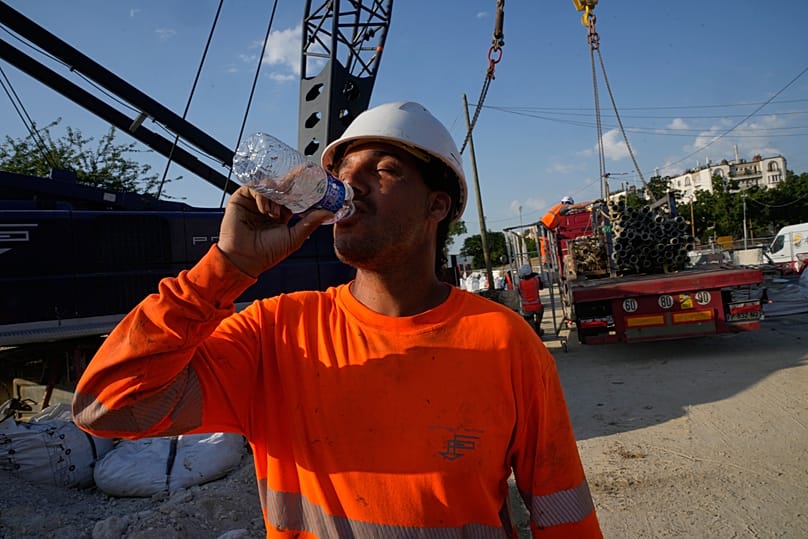
For outdoor workers, the losses are even more devastating. Construction workers, delivery drivers, agricultural labourers and factory employees are losing productive hours as heat forces changes to working schedules.
Numerous areas of French have banned fieldwork in the afternoons to reduce the risk of fires from dried-out crops – a measure that reduces daily earnings for workers, many of whom are seasonal migrants.
Train cancellations across France and Belgium, introduced to prevent overheating rail infrastructure from buckling, are pushing more commuters into cars, adding fuel costs to the households’ financial pressures.
France, Germany, UK: Who’s hit hardest by heatwave costs?
The Climate Analytics research shows that costs hit low income households first. The poorest 20 per cent of European households lose four per cent of income during compound heat-and-drought events, compared to 1.1 to 1.8 per cent for the rest of the population.
At the regional level, Madrid has recorded income drops of almost 10 per cent during such events, central Hungary 9.4 per cent, and central Spain 8.8 per cent.
Despite decades of scientific warnings, Europe’s governments remain dangerously underprepared for the costs of extreme heat. The UK’s Climate Change Committee said last month that the government’s adaptation plans “have not been fit for purpose”.
France’s advisory body, the Haut Conseil pour le Climat, has warned that the gap between adaptation needs and actions is widening. A Climate Analytics study for the World Bank, published in January 2026, found that Germany “lacks comprehensive solutions” to protect people from increasing heat stress, with implementation of even regional heat-health plans “still largely lagging”.
The consequences of inaction compound over time, Climate Analytics’ study shows. At 2.7°C of warming, Spanish household incomes would fall by more than one-third and Greek household incomes by more than one-half. Across the continent, the number of people at risk of poverty could rise from 60 million in a 1.5°C scenario to 127 million at 2.7°C – with Greece, Spain, Romania, Bulgaria and Cyprus among the hardest hit.
The current heatwave is forecast to continue across much of Central and Western Europe into early July.