

















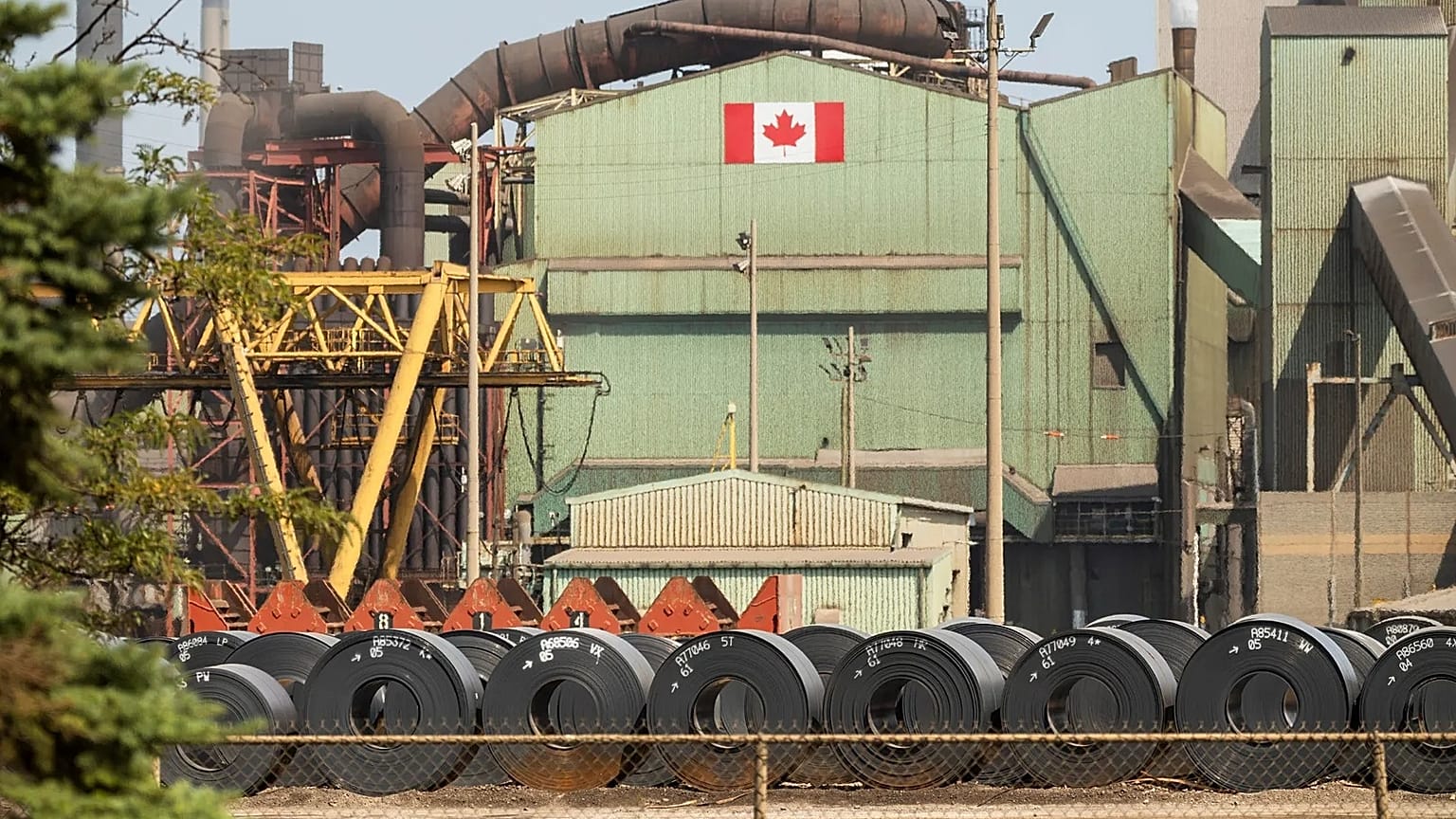














"We will support our workers, our businesses and our industries with whatever it takes, for as long as it takes," Canadian Finance Minister François-Philippe Champagne said on Tuesday.
Canada has unveiled a series of counter-tariffs on US goods as a growing trade war between Ottawa and Washington ramps up.
 ADVERTISEMENT
ADVERTISEMENT
ADVERTISEMENT
In a press conference on Tuesday, Finance Minister François-Philippe Champagne said Canada would respond to newly imposed US duties in a "proportionate, targeted, and strategic way," matching Washington's levies "dollar for dollar, rate for rate."
"Effective September 8, Canada will impose counter-tariffs of up to 15, 25 or 50% on C$27.6 billion in imports from the United States of America," he said.
The move comes after hefty 50% US duties impacting around C$28 billion (€17bn) worth of Canadian goods came into effect on Saturday, following a break down in trade talks between the two countries.
The US tariffs affect products ranging from hockey sticks to wine to cement.
The Canadian government said its retaliatory measures would be concentrated in sectors such as steel and aluminium, appliances, dairy, agricultural equipment, plastics, pulp and paper and electronics.
Champagne, who also announced an aid package for Canadian workers and businesses totalling C$7.5 billion (€4.6 billion), said Canada had been forced to abandon negotiations with Washington as the terms proposed by the Trump administration were "uneconomic, unfair, and ultimately unacceptable."
He also described the burgeoning tariff war as an "unprecedented challenge imposed on Canada" but said the nation would "meet the moment."
"We will support our workers, our businesses, and our industries with whatever it takes, for as long as it takes," he added.
US President Donald Trump on Monday also threatened to double tariffs on Canadian vehicles from 2027 as he accused Ottawa of "ripping off the United States of America for years."
In a post on his Truth Social account, Trump wrote: "On January First, 2027, Tariffs on all Cars, Trucks, both large and small, Automotive Parts, and Steel, will be increased to 50%."
Current US tariff rates on automobiles stand at 25% for non-US content.
A year of tit-for-tat
The trade dispute began in February 2025, when US President Donald Trump announced sweeping tariffs on Canadian goods, including a 25% tariff on most imports and a 10% tariff on Canadian energy products, citing a national emergency over immigration and drug trafficking.
Ottawa, then under Prime Minister Justin Trudeau, responded with 25% retaliatory tariffs.
It immediately imposed duties on C$30 billion (€18.6bn) of US goods, with a further C$125 billion (€77.5bn) threatened for three weeks later — for a combined total of C$155 billion (€96.1bn) — though Ottawa later suspended that second wave amid ongoing talks.
A temporary truce followed. Trump agreed to a 30-day pause, and more limited tariffs on Canadian imports kicked in on 4 March 2025, with exemptions later carved out for automakers and goods compliant with the Canada-United States-Mexico Agreement (CUSMA).
Mark Carney took over as prime minister the same month, inheriting a relationship Washington had already destabilised.
The duties continued to rise. On 1 August 2025, Washington increased its general tariff rate on non-exempt Canadian goods from 25% to 35%, again citing Canada's failure to curb the flow of fentanyl across the border.
This remains separate from tariffs on Canadian vehicles, which fall under a different legal authority and carry a 25% rate for non-US content, a figure Trump has since threatened to double.
Trump faces domestic legal challenges
Tensions escalated again in 2026. Early in the year, the US Supreme Court struck down several emergency tariffs imposed under the International Emergency Economic Powers Act, leading Trump to issue a temporary 10% global baseline tariff, later raised to 15%, that spared CUSMA-compliant Canadian and Mexican goods.
That relative calm proved short-lived. Trump signed proclamations under Section 338 of the Tariff Act of 1930 imposing a 50% tariff on C$27.6 billion (€17bn) worth of Canadian exports.
Although initially set to take effect on 19 August, the measure was delayed by three days for last-minute talks, and when those talks collapsed, the tariffs took effect on 22 August.
The duties carry no expiry date, override CUSMA exemptions, and target dairy, alcohol, building materials, apparel, electronics and agricultural products.
The White House framed the move as retaliation for what it called Canada's discriminatory treatment of US dairy, alcohol and vehicle exports.
The latest escalation comes as CUSMA itself hangs in the balance. The agreement's mandatory six-year joint review took place on 1 July 2026, but the two sides failed to agree on an extension, triggering annual reviews that will continue until the parties reach a deal or the agreement's term expires in 2036.