















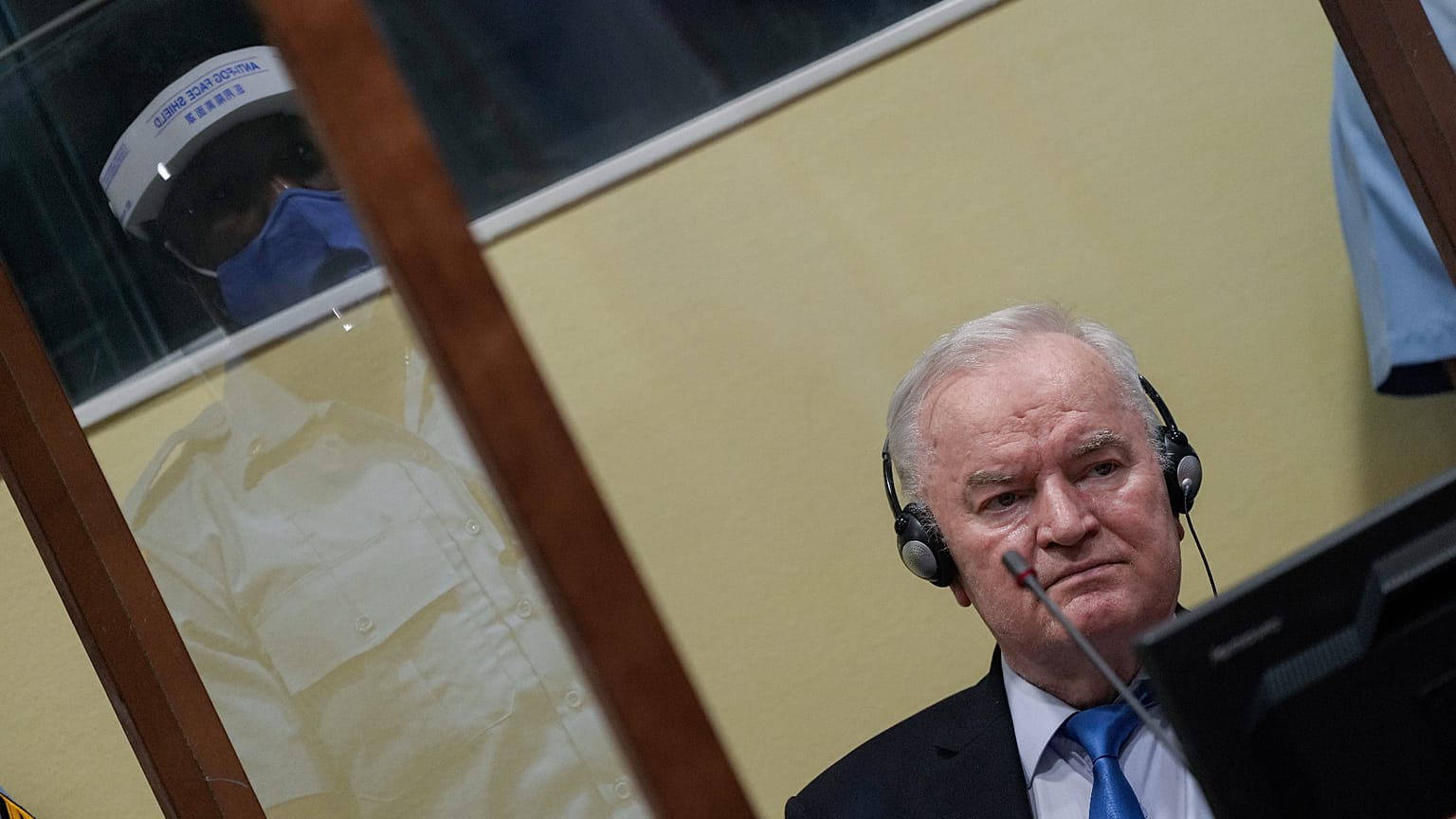













Thousands are expected at Mladić's burial in Belgrade on Monday, which will proceed without serving officials, artillery salutes or ceremonial military presence. Brussels has earlier said any glorification would be "incompatible with the values on which the EU path is built".
A commemoration for former Bosnian Serb army commander and convicted war criminal Ratko Mladić opened on Saturday at the House of the Serbian Army in Belgrade as Serbia faces mounting European pressure over what Brussels has described as his glorification — an accusation Serbia rejects.
 ADVERTISEMENT
ADVERTISEMENT
ADVERTISEMENT
Mladić died last week while serving a life sentence for genocide, war crimes and crimes against humanity during the 1992-1995 war in Bosnia. His remains were flown to Serbia from The Hague on a government plane on Thursday.
Serbian army soldiers carried the coffin with Mladić’s body wrapped in the national flag from the plane to an unmarked maroon van, which was then given a police escort down Belgrade’s main motorway.
Serbia's Justice Minister Nenad Vujić — who initially announced that Serbia would give Mladić "all the military and state honours" — was on the plane along with Mladić’s son Darko and two of his former army assistants.
The body was transferred to the military hospital in Belgrade for an autopsy before his coffin is displayed at a church near the Košutnjak cemetery on Monday morning, where he will be buried later in the day, his family announced on Friday.
He will be buried without state or military honours, with no serving officials in attendance including President Aleksandar Vučić, the prime minister and the speaker of parliament, Euronews has learned.
There will be no artillery salutes or ceremonial military presence, and he will not be buried in the Alley of the Greats or the Alley of Distinguished Citizens despite requests to that effect.
Serbian authorities clarified earlier that Saturday's commemoration — also not attended by Belgrade officials — was not organised by the state, but rather by an association of retired generals. Mladić's family said he would be buried next to his daughter, who died by suicide in the 1990s, according to domestic media outlets.
Belgrade has contributed to covering Mladić's personal expenses and family visits while at the Hague tribunal, and has repeatedly asked for an early release on humanitarian grounds due to his declining health in recent years.
Thousands to gather at funeral
After Bosnia declared independence from Yugoslavia in early 1992 following in the footsteps of Slovenia and Croatia, Bosnian Serb leaders, backed by the government in Belgrade led by Slobodan Milošević, created their own parastate.
The ensuing military offensive led by Mladić — a career Yugoslav army officer who also took part in the fighting in neighbouring Croatia — aimed at ethnically cleansing as much of the country’s territory as possible of the other two ethnic groups, Bosniaks and Croats.
The International Criminal Tribunal for the former Yugoslavia (ICTY) convicted Mladić of genocide for orchestrating summary executions of more than 8,000 Bosniak men and boys in Srebrenica in July 1995 — considered the worst bloodbath on European soil since the end of World War II.
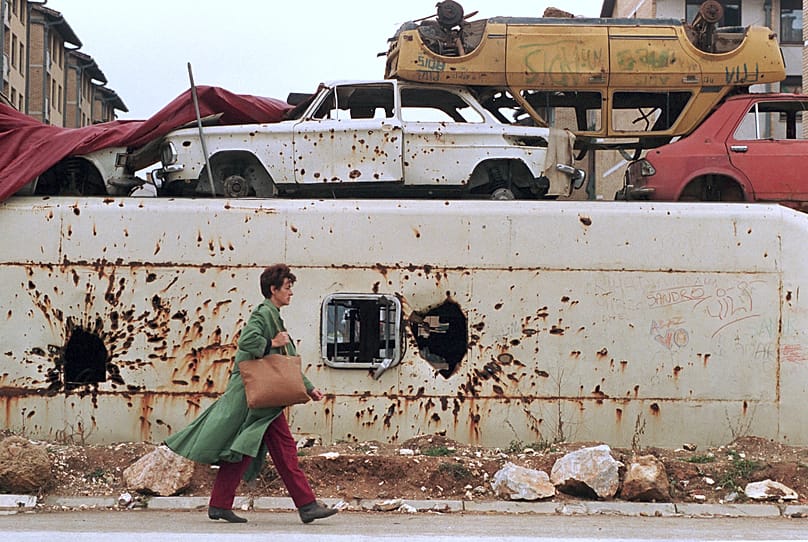
He was also found guilty of war crimes and crimes against humanity during the siege of Sarajevo, the longest siege of a capital city in modern warfare.
His troops in the surrounding hills terrorised the residents of the Bosnian capital with daily shelling and sniping for nearly four years after the war broke out in early 1992.
Known as the “Butcher of Bosnia,” he became the most notorious figure of the war in the former Yugoslav republic of 3,5 million that left more than 100,000 people dead and over 2 million displaced or seeking refuge abroad before it ended in 1995 in a US-brokered peace agreement.
Serbian President Aleksandar Vučić predicted that Mladić’s admirers — who consider him a hero despite his sentence — could come to the funeral in large numbers.
“It will be hard to secure and guarantee security to everybody,” Vučić said. He added that Serbia’s police and the state security agency predicted that “tens of thousands” could attend. “It will be a demanding job for our services and we will use everything at our disposal to provide security.”
“I have spoken to the Mladić family and I wish it all passes in a dignified way,” Vučić added.
The Serbian president later said he would not attend Mladić’s funeral because of a previously scheduled high-level visit.
“I have an official visit on Monday and all day Tuesday by the President of Uzbekistan (Shavkat Mirziyoyev), scheduled four months ago,” Vučić, who is touring the country to showcase infrastructure development, stated on Friday.
“Have I done everything necessary and everything possible for this to proceed in a dignified manner, in a serious and responsible manner, for the state to conduct itself properly? That is exactly what I have done,” he added.
Sparks fly over glorification accusations
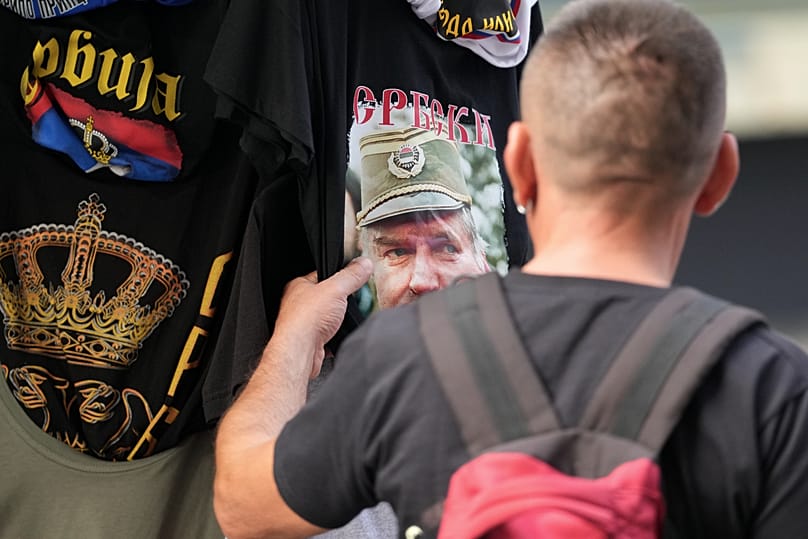
Following Mladić’s death last Thursday, thousands of Serbs held vigils and marches in his honour, drawing condemnation from Brussels and elsewhere.
EU Enlargement Commissioner Marta Kos on Friday cancelled an upcoming visit to Serbia, a long-standing candidate for membership in the 27-member bloc.
"The glorification surrounding his death is incompatible with the values on which the EU path is built," Kos said on X.
"Ratko Mladić was convicted of genocide, crimes against humanity and war crimes," Kos said. “The return of his remains to Belgrade reminds Europe of the darkest pages in our recent history.”
Vučić responded by stating that Kos’ explanation was "very short but stupid, as usual".
"I suppose we should ban people from showing up, ban the funeral, make cemeteries for dogs," he added.
Earlier on Friday, Kos said the next days "will be a very important test" for Belgrade ahead of the burial, which could draw large crowds.
The Council of Europe Commissioner for Human Rights Michael O’Flaherty on Friday urged authorities in Serbia and in the Bosnian Serb-run entity of Bosnia to "counter the glorification of convicted war criminals," which is illegal in Bosnia and "is not protected speech under the European Convention on Human Rights."
"I abhor the public glorification of Ratko Mladić, a deceased war criminal convicted for the Srebrenica genocide and crimes against humanity," O'Flaherty said in a statement.
Calls have also multiplied for the European People’s Party (EPP) to cut its ties to the ruling Serbian Progressive Party (SPS).
European Commission President Ursula von der Leyen is an EPP member, along with European Parliament President Roberta Metsola and other top officials.
The legacy court in The Hague, now formally known as the International Residual Mechanism for Criminal Tribunals, said it stood “in solidarity with the victims, survivors and their families who suffered the crimes for which Mr Mladić was found guilty.”
It condemned “any actions that glorify those convicted of war crimes, crimes against humanity and genocide by international courts.”
Belgian and Irish foreign ministers have both publicly objected to any honours granted to a person convicted of genocide.
Meanwhile, Serbian football club Red Star Belgrade was fined by UEFA for fans chanting in honour of Mladić, who died on the day of their Europa League game last week, which Red Star lost 5-1 against Czech club Viktoria Plzeň.
UEFA said late Friday its judges fined Red Star €90,000 for charges including chants not fit for a sports event plus "racist and/or discriminatory behaviour".
The European footballing body doled out a similar penalty to Bosnia's FK Borac Banjaluka, fining it €39,500 for chants in favour of Mladić and other fan infractions during their Conference League match against Iceland's Vikingur Reykavik.
Red Star is the most decorated football club in the former Yugoslavia, winning the Champions League in 1991.