



























The three-day vote will fill 450 Duma seats and 11 regional governorships, with only parties backing Putin and Russia's ongoing war in Ukraine on the ballot. Despite official denials of a new draft, fears of mobilisation are overshadowing the vote.
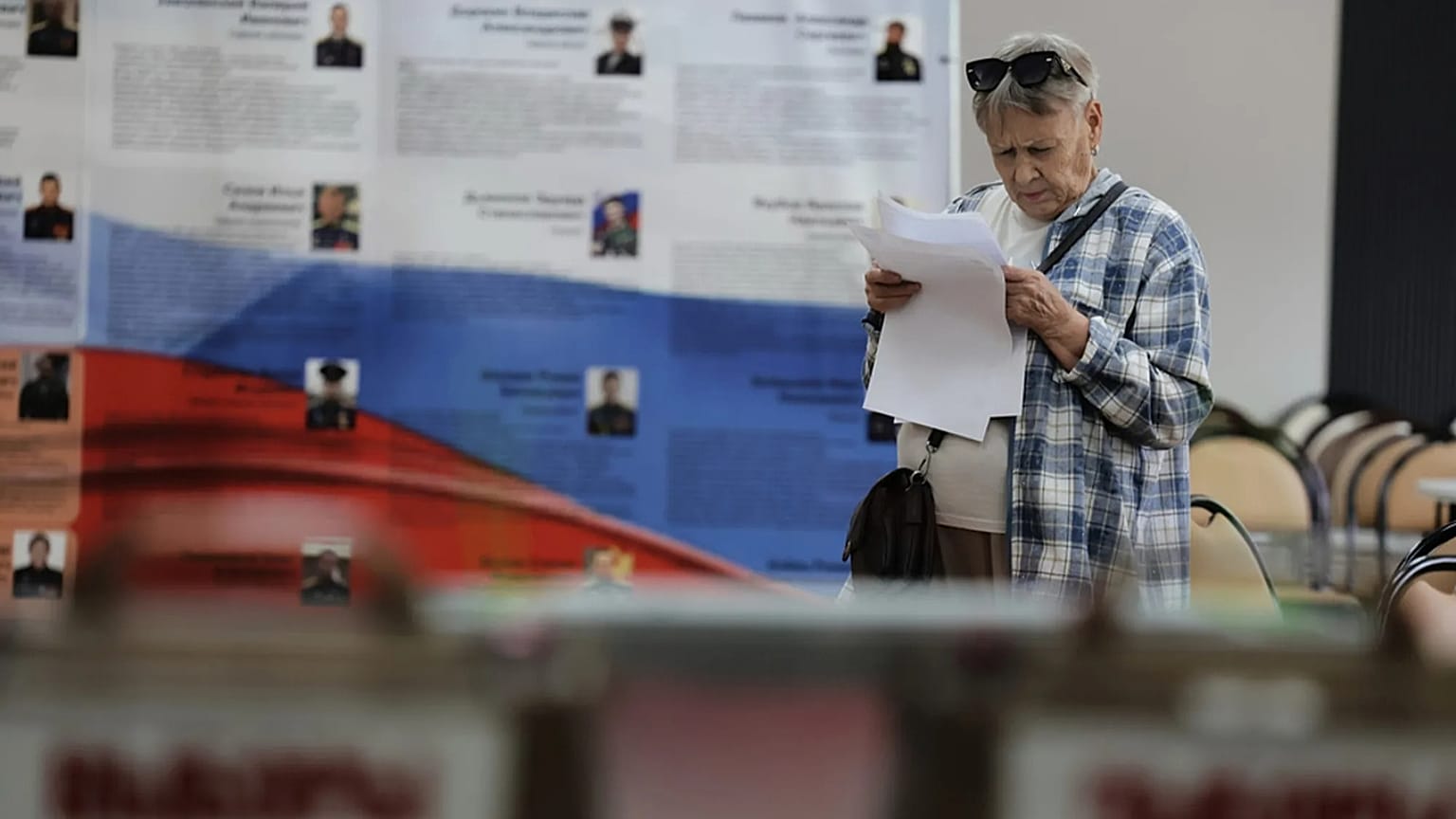
Russians began voting Friday in a tightly controlled three-day election that will likely see President Vladimir Putin tighten his grip on power after 26 years at the helm, as Russia's all-out war in Ukraine continues well into its fifth year.
 ADVERTISEMENT
ADVERTISEMENT
ADVERTISEMENT
Only parties backing Putin and his war in Ukraine are on the ballot: the ruling United Russia, the Communist Party, A Just Russia, the nationalist LDPR and New People.
Yabloko, Russia's only publicly anti-war party still operating inside the country, was barred from participating. The party saw a surge in social media support, particularly among young people, after it was initially allowed to stand.
An unnamed European diplomat said the elections were "pretty much a sham" but described them as "a ritual the Kremlin considers necessary," adding that it would seek to ensure a high turnout.
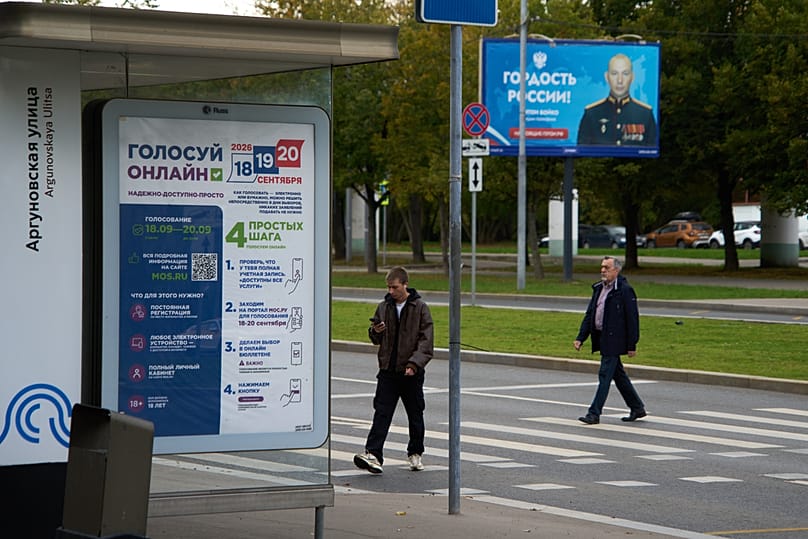
Independent observers have previously documented the use of state resources to influence results, including bussing voters to polling stations, pressuring employees of state institutions to vote for the ruling party, and pushing online voting as it is easier to monitor and control.
"As in the Soviet era, elections must demonstrate the loyalty of citizens," Russian political scientist and Head of Analysis of Transformation Processes at the NEST Centre Nikolai Petrov said.
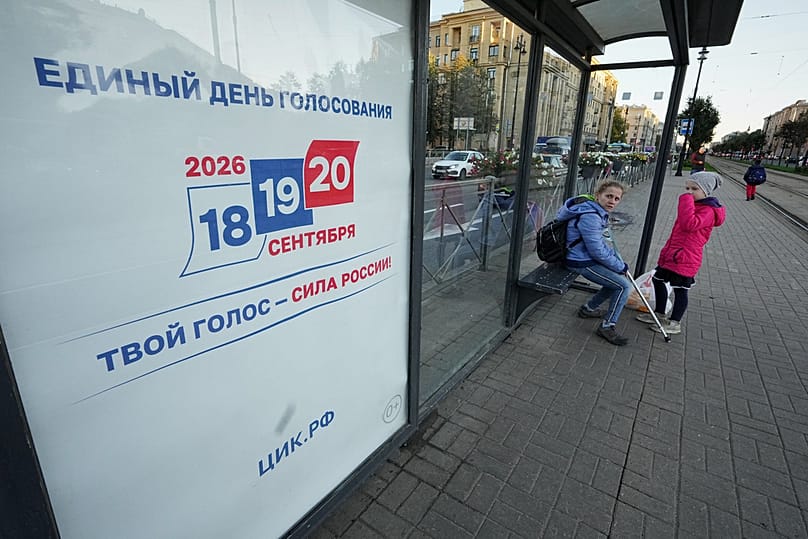
The election will fill 450 State Duma seats and the governorships of 11 federal regions, with the country's only remaining anti-war party excluded from the ballot and fears of mobilisation overshadowing the vote.
Running from 18 to 20 September, the election will also choose deputies to regional legislatures in 39 federal subjects.
Voters will choose eight of the 11 regional heads directly, while regional parliaments will elect the remaining three. Polling stations have been opened at Russian border crossings with Poland and the three Baltic states.
Half of the 450 Duma seats will be allocated through nationwide party lists and the other half through single-member constituencies.
Voting in Russian elections is also taking place in parts of Ukraine occupied by Moscow's troops, a move that neither Kyiv nor the West recognises as legitimate.
Kremlin pushes pro-army narrative
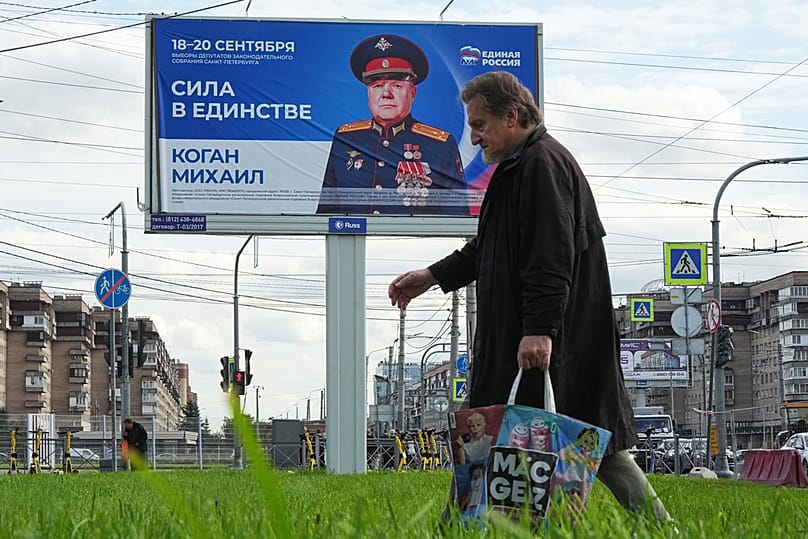
Almost 200 candidates in these elections have taken part in Russia's war in Ukraine, according to electoral commissions.
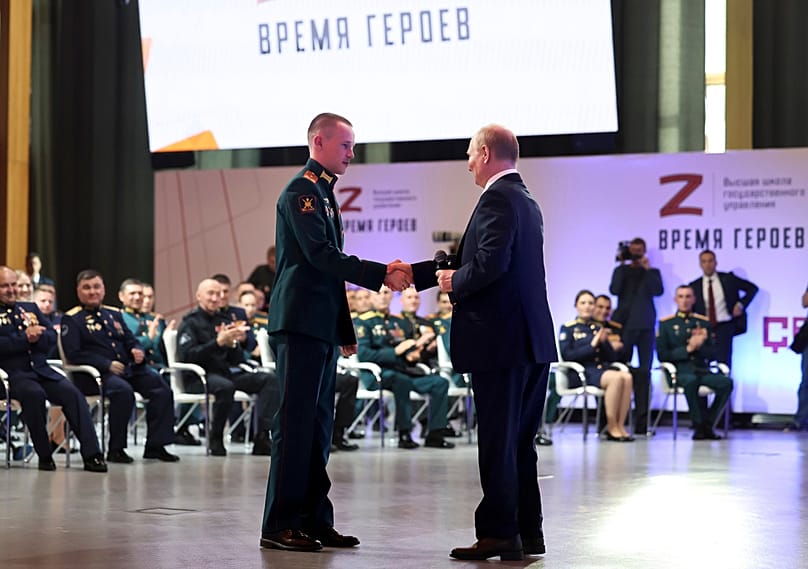
The Kremlin has promoted them as part of Russia's "true elite," but the initiative is primarily a recruitment tool to boost Moscow's troops on the front lines, with few standing any real chance of being elected.
Ahead of the vote, Putin urged Russians to vote to show troops that "behind our fighters stand millions of people" and to deliver an "answer to those who want to weaken Russia".
Meanwhile, Russians fear another wave of military mobilisation, despite Putin personally denying plans for a call-up twice in three days in September alone.
Independent Russian media have counted 17 official denials of an imminent mobilisation. Russia called up 300,000 reservists in the autumn of 2022 in a move that triggered significant public alarm and a mass departure of men of fighting age from the country.
Tatiana Stanovaya of the Carnegie Russia Eurasia Centre, which is banned in Russia, said she considered a new draft unlikely.
"They have put so much effort into persuading Russians not to worry about this," she said. "I would be very, very surprised if it happened."
In the streets of Moscow today, few visible signs indicate an election is even under way.
Fears of mobilisation have been further compounded by Ukrainian long-range drone strikes on Russian infrastructure in a bid to defund its war machine, causing fuel shortages and economic losses running into billions of euros.
Many Russians feel the attacks break what Stanovaya described as the Kremlin's tacit bargain with the population over the war.
In prison, in exile, dead
All of Putin's main political opponents are in prison, in exile or dead. Alexei Navalny, his most prominent challenger, died in a Russian penal colony in 2024.
Putin's political opponents have mostly been driven into exile and his main opponent Alexei Navalny died in an Arctic prison in 2024.
Russia's exiled opposition has urged anti-Kremlin Russians not to boycott the elections but instead vote "against Putin's party".
Navalny's widow Yulia Navalnaya also called on anti-war Russians to cast their ballots at noon on Sunday.
Yabloko — which critics say outlived its usefulness after the Kremlin allowed it to exist for many years to create a pretence of political plurality as a catch-all for liberal and discontented voters — disagreed, arguing that it was better not to vote.
"You are suggesting that we once again go, like sheep, dancing to their tune, and vote for those who have caused the deaths of people in Russia and Ukraine?" party chairman Nikolay Rybakov said this week.
'Mad printer'
Parliamentary elections were previously a source of significant political tension: in 2011, mass fraud during the Duma vote and Putin's return to the presidency from the post of prime minister triggered the largest street protests in Russia since the collapse of the Soviet Union.
Putin has ruled Russia since 1999 and his United Russia party has dominated politics since the early 2000s.
Under Putin, the Duma's powers have been substantially curtailed, reducing it largely to approving legislation initiated by the Kremlin — a role that has earned it the popular nickname "the mad printer" to mock the speed at which it rubber-stamped highly restrictive and controversial laws.
Any criticism of the war is treated under Russian law as "discrediting the army" and can carry a prison sentence.
Older voters remain among Putin's strongest supporters, although many still complain about living standards.