












Scientists have warned that one particular European country will be hit hard by extreme fire weather conditions if our reliance on fossil fuels doesn’t end.
Today’s babies and infants will suffer an extra three years of “extreme fire weather” over their lives compared to grandparents unless emissions are cut, a new study warns.
 ADVERTISEMENT
ADVERTISEMENT
ADVERTISEMENT
Europe is warming more than twice as fast as the global average, paving the way for more bouts of extreme weather. Following back-to-back heatwaves that scorched the continent, much of Europe was struck by long periods of drought this year.
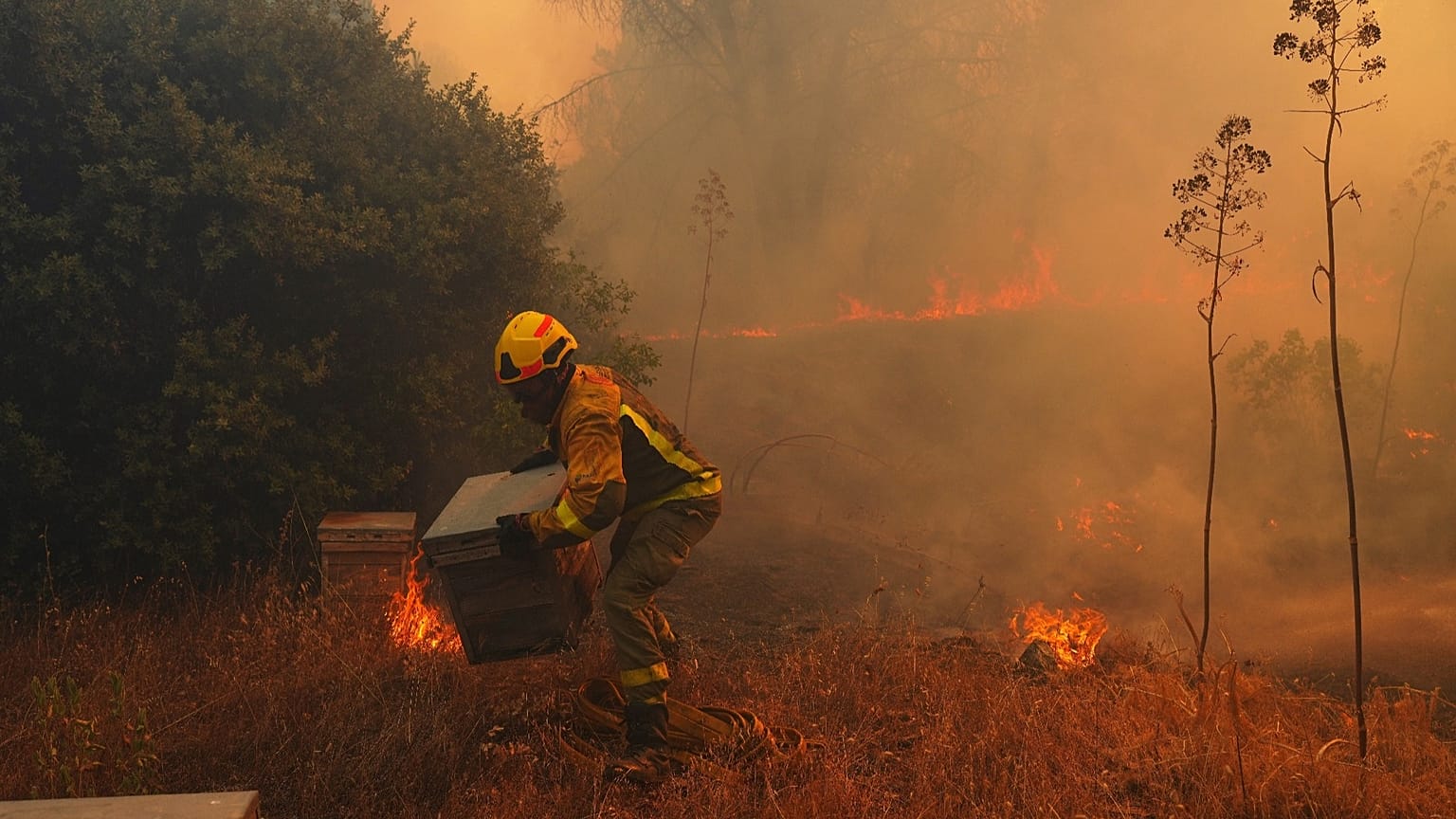
This created ideal conditions for deadly wildfires that ripped through Spain, France and Greece, burning hundreds of thousands of hectares and triggering one of the biggest evacuation efforts since World War II.
New research from Vrije Universiteit Brussel cautions that Europe’s accelerated warming will have dire consequences for younger generations, despite them having done the least to cause climate change.
European children to face more ‘extreme fire weather’
The study, published in the science journal Environmental Research Letters, found that a child born in Europe in 2025 will live through more than three additional years of extreme fire weather compared with someone born in 1950 if we continue with current climate policies. That presents an 84 per cent increase for today’s babies compared to their grandparents.
“A child born in Europe now will spend years more of their life under extreme fire weather conditions, and across the Mediterranean that burden is especially heavy,” says Rosa Pietroiusti, lead author of the study.
Researchers define extreme fire weather as days when the fire weather index (FWI) exceeds the top five per cent of days for the country over 1985-2014.
The largest increases are projected in the Mediterranean, a region already hard-hit by wildfires.
According to researchers, people born here in 2025 are projected to face up to 2.5 times the exposure to extreme fire weather of those born in 1950. This corresponds to more than five additional years of extreme fire weather over their lifetime – if climate change reaches 2.6°C of additional warmth by 2100.
Portugal is the European country which has seen the highest proportion of its area burned in recent decades. Extreme fire weather days here are projected to more than double, from 14 days per year in 1950-1970 to 32 days per year by 2100 under current climate policies.
It means that a child born in Portugal today is projected to spend about 6.5 years of their life under extreme fire weather conditions under current climate policies.
Each additional degree of global warming by the end of the century adds around 272 days of extreme fire weather to the life of a Portuguese child born in 2025, researchers add.
Pietroiusti argues that this is why youth-led climate justice movements and legal initiatives are starting to demand more ambitious climate action from governments and companies, so that the “worst impacts of future climate-related hazards in their future can be avoided”.
How to protect future Europeans from extreme fire weather
The study found that rapidly cutting the use of fossil fuels would reduce exposure to dangerous fire weather in all regions.
In fact, cutting emissions in line with the Paris Agreement target of 1.5°C by 2100 would decrease lifetime exposure for those born in 2025 by 1.3 years on average in Europe and more than two years for the most affected regions in Southern Europe.
Wim Thiery, senior author of the study, says as the costs of wind and solar continue to fall, hitting this goal is “absolutely feasible”.
“Every fraction of a degree of warming we avoid translates directly into less fire weather over a child’s lifetime, giving them a chance at a full and healthier life [and] an education,” he adds.
“That’s fewer lives cut cruelly short, fewer homes and dreams burned by the flames and fewer people traumatised by injury and grief.
Earlier this month, the UN warned that it is no longer possible to keep global warming below the 1°5C threshold – projecting a best-case 1°8C of warming and over 2°C in some scenarios.
“Overshoot, peak and decline” is now our best bet, the report from the UN Environment Programme (UNEP) adds.
The transition to clean energy has been identified as a key part of keeping the overshoot as “small and short as possible”. In 2025, renewables generated almost 34 per cent of global electricity, but this needs to be scaled up to 60–70 per cent by 2030 to help the world achieve a limited-overshoot scenario, according to UNEP’s report.