




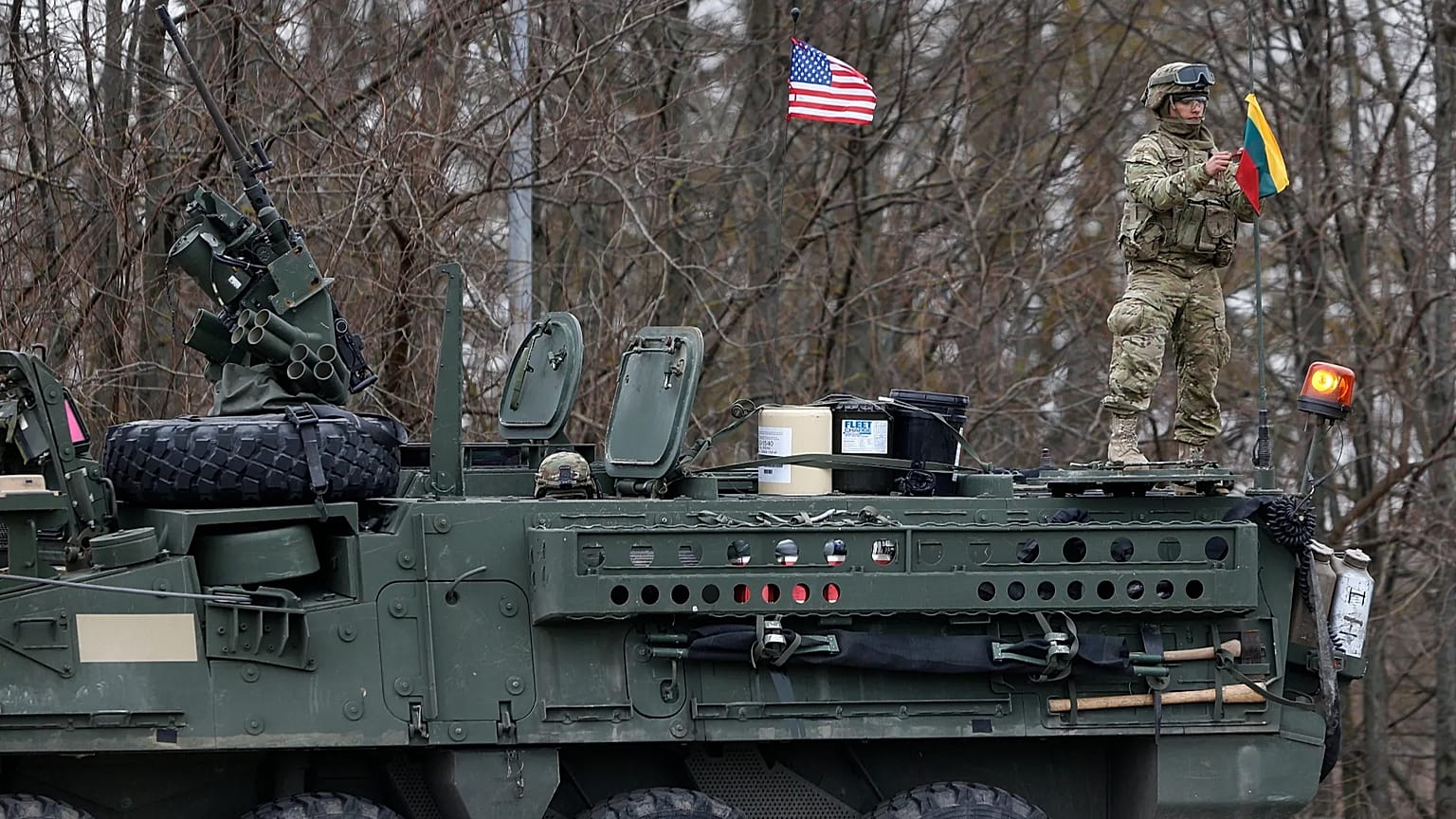













It comes despite repeated threats from US President Donald Trump to reduce the US' military presence in Europe.
Lithuanian President Gitanas Nausėda announced on Tuesday that a new group of American troops was heading to Lithuania.
 ADVERTISEMENT
ADVERTISEMENT
ADVERTISEMENT
"I have just received confirmation that the new rotation of U.S. troops is already on its way," Nausėda wrote in a post on social media, while also thanking the Trump administration for the decision.
"The U.S. military presence in Lithuania is an indispensable part of our deterrence and collective defence," he said, adding that the move was "important not only for Lithuania, but also for the security of the entire region."
It comes despite repeated threats from US President Donald Trump to reduce the US' military presence in Europe, as he increasingly shifts his focus to the Middle East and Latin America.
Lithuanian media reported in June that around 1,000 US troops had begun withdrawing from the Baltic state as their deployment came to an end.
Presidential adviser Deividas Matulionis told Lithuania's LRT Radio on Tuesday that the number of new US soldiers arriving in the country would not be lower than the last deployment.
Kęstutis Budrys, Lithuania's Foreign Minister, has hailed the move, saying the "decision on continued U.S. military presence in Lithuania is a powerful signal of Allied unity and resolve."
"Lithuania stands proud as committed Ally, leading by example with 5% defence spending, strengthening national capabilities, and providing the best training conditions for Allied forces," he wrote on X.
NATO's eastern flank
Lithuania sits in a crucial spot on NATO's eastern flank, bordering Russia's Kaliningrad region to the southwest as well as Russian ally Belarus to the east and south.
Its strategic location has seen the country, along with its Baltic neighbours Latvia and Estonia, increasingly impacted by Moscow's war in Ukraine, including a growing number of drone and airspace incidents in recent months.
Speaking to Euronews in May following a drone incursion over Vilnius, Lithuanian Defence Minister Robertas Kaunas warned that the Baltics must be prepared for further such threats.
"This is the new reality of what the Baltic states face,” he told the Europe Today news programme.
“We need to adapt because the possibility of repeated similar scenarios is very high," he added.