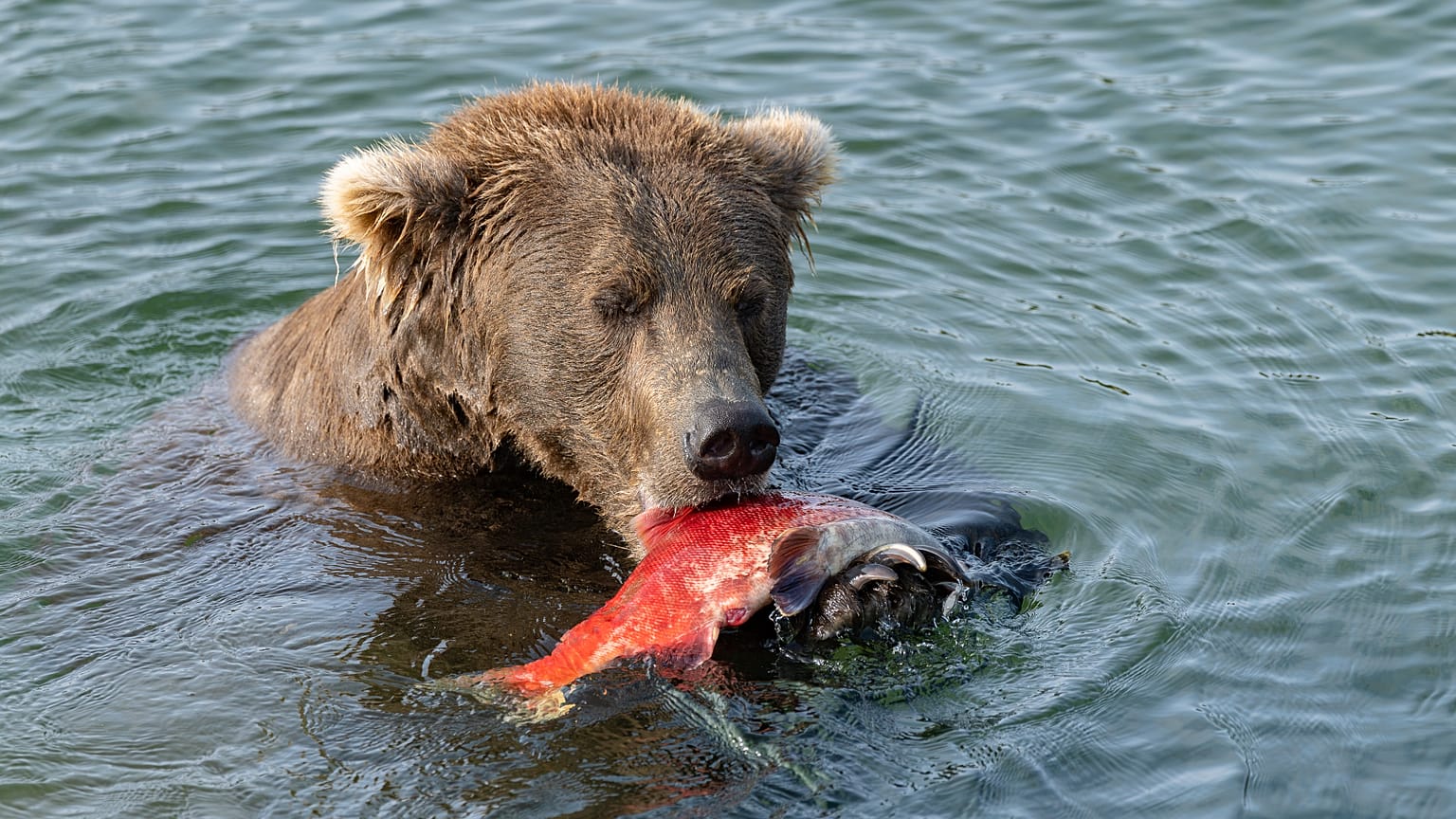














Online voting has opened for Fat Bear Week, the annual competition celebrating the brown bears of Alaska's Katmai National Park and Preserve as they prepare for winter hibernation.
Sixteen bears are competing in this year's tournament, with last year's winner, Chunk, officially known as Bear 32, hoping to defend his title. Chunk reportedly weighed 544 kilograms when he won last year's contest.
 ADVERTISEMENT
ADVERTISEMENT
ADVERTISEMENT
Now in its 12th year, Fat Bear Week invites people around the world to vote for the bear they believe has been most successful at gaining weight ahead of hibernation.
Speaking to the Associated Press, Mike Fitz, a resident naturalist at Explore.org, explained that the competition highlights how crucial weight gain is to the bears' survival. Because they do not eat during hibernation, they must consume enough food in roughly six months to sustain themselves for the entire year.
But choosing a winner is not simply a matter of identifying the heaviest bear.
"This year, I think it's pretty tough to predict. I mean, there's a few bears that are larger than others, but it's not necessarily about body mass alone. We want people to consider the bears' stories as well, because getting fat means different for a big adult male who's maybe trying to dominate access to the best fishing spots at Brooks Falls," he explains.
Why getting fat is essential for survival
Katmai National Park and Preserve is home to approximately 2,200 brown bears. The competition, which began in 2014, was designed to raise public awareness of the animals and their remarkable preparations for winter.
Adult male brown bears typically weigh between 270 and 410 kilograms, although particularly large males can exceed 450 kilograms after feeding extensively on salmon. Females are generally about one-third smaller.
During hibernation, the bears neither eat nor drink and can lose around a third of their body weight.
Fitz also highlighted the importance of healthy salmon populations to the bears' survival. He pointed to the abundant sockeye salmon runs in Alaska's Bristol Bay region as an example of what healthy river ecosystems can support.
According to Fitz, the region demonstrates why protecting and restoring salmon populations elsewhere in North America is so important, particularly in areas where salmon numbers are declining.
Beyond celebrating the bears' impressive size, the competition also offers an insight into their daily lives.
Fitz said viewers can observe everything from bears enjoying a successful fishing session and playing with one another to the difficulties faced by mothers trying to feed their cubs or coping with the loss of their young.
"We get to see their their joys when they have a belly full of fish, we get to see them having fun when they're playing with another bear in a friendly manner and we get the see the real hardships that they experience the mother struggling to feed their cubs, the mothers who maybe lose cubs for instance".
The competition's final round is scheduled for Tuesday, 29 September, when the public will decide which bear takes this year's title.
And for those who can't get enough of Fat Bear Week, Google has added an interactive surprise: Searching for "Fat Bear Week" brings up a small bear on the screen that users can feed salmon, helping it gain enough weight to survive winter hibernation.