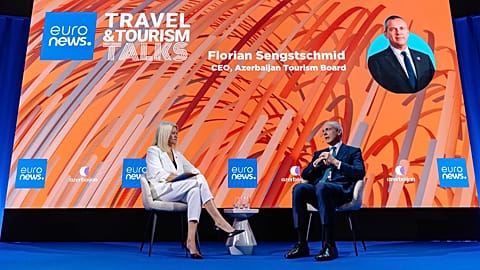














Figures from across the travel industry joined Euronews in Brussels on 29 September. Here’s the most important things to know.
Political leaders, policymakers and industry experts all gathered at the Euronews Travel & Tourism Summit 2026 in Brussels to discuss everything from overtourism and undertourism to climate change.
 ADVERTISEMENT
ADVERTISEMENT
ADVERTISEMENT
Here’s what you missed from the one-day summit in the Belgian capital.
‘We were the North Korea of Europe’
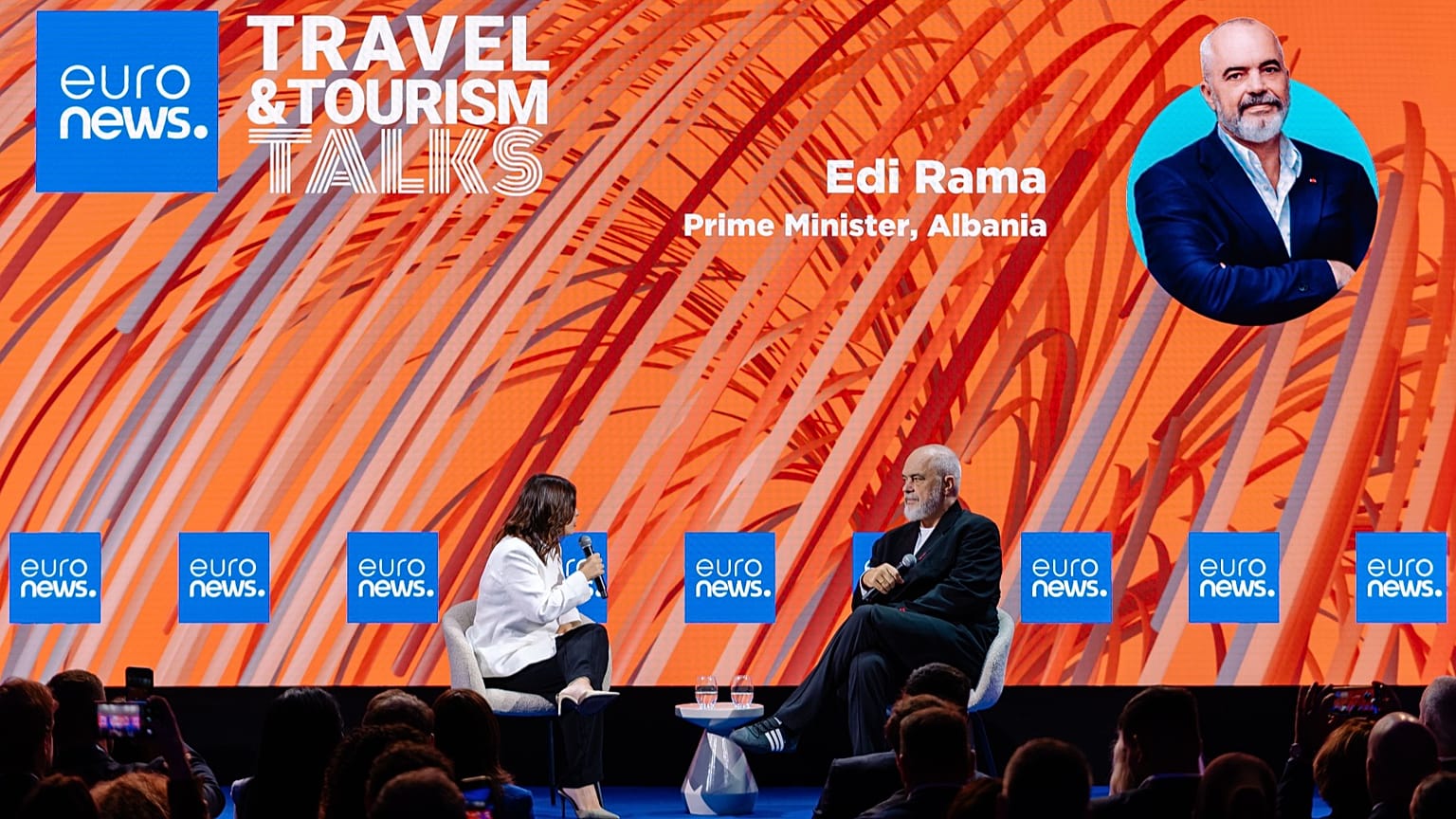
In a lively chat with Euronews’ Maria Tadeo, Albania’s Prime Minister Edi Rama spoke about his country’s incredible tourism story – going from the “North Korea of Europe” to somewhere everyone is travelling to right now.
“We are not the Black Hole of Europe – we are the shining little jewel of Europe,” he told the summit. He explained that neighbouring countries such as Croatia have had longer to work on their own tourism development, but that now it is “our turn”.
Rama also revealed that now the focus is on a “higher quality” of tourists, noting that hotel brands such as Waldorf Astoria and Aman are planning on opening hotels in the country. Atlantis, the famed hotel brand in Dubai, is also going to open its first property on the continent in Albania.
He also touched on the ongoing protests over the Sazan Island and Zvërnec resort project, which is backed by Jared Kushner, the son-in-law of US President Donald Trump, saying that Albania would be releasing documents related to the project in the coming weeks.
‘Climate change is the biggest threat to tourism’
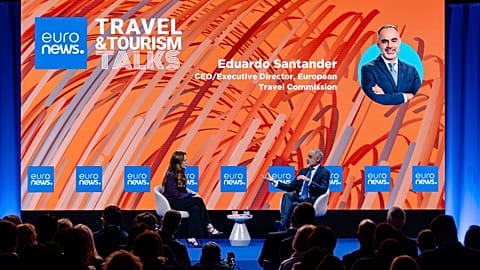
Eduardo Santander, the CEO of the European Travel Commission, sat down with Euronews’ Mared Gwyn-Jones to reflect on a summer where the headlines were dominated by heat waves across the continent.
He said that “climate change is the biggest threat to tourism right now, by far”, with trains unable to run due to expanded rails and cruise lines unable to sail along dry European rivers, adding that “we have to prepare for that in a much more coordinated and comprehensive way”.
Climate change isn’t just causing travel chaos, either – it’s also making travelling less affordable.
“Travelling is becoming much more expensive, and you all have travelled this summer, I guess, and you notice it in your pockets,” he said.
‘Central Europe market themselves as one destination’
Hungarian Tourism Agency President Olivér Csendes joined moderator Mared Gwyn-Jones on stage with Sandrine Buffenoir, Director, Netherlands, Belgium & Luxembourg, Atout France to chat about the future of marketing Hungary, and wider Central Europe.
“I would love to see more international collaborations where we position the way we live and our regions, basically as one destination,” he said. “We don’t have to limit our thinking and the creation of experience spaces to national borders.”
Multi-country itineraries – also known as “trip-maxxing” – are a natural fit with the region, which has two or three capitals within 100 kilometres of each other.
‘US Global Entry is coming for Belgian citizens by the end of 2026’
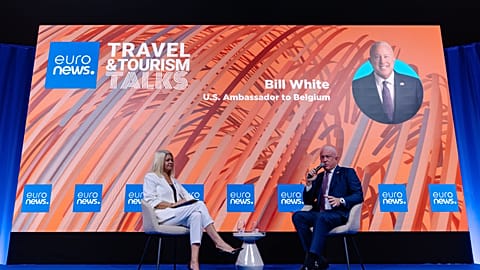
Host Jane Witherspoon sat down with Bill White, the Ambassador of the United States of America to the Kingdom of Belgium, to chat about the special relationship between the two countries.
He said that to encourage travel from the US to Belgium and vice versa, work must be done to improve the experience at airports – which is why the US is set to roll out Global Entry for Belgian citizens in the coming months.
The system allows pre-approved, low-risk travellers to benefit from expedited processing on arrival in the States.
“We're working with the Belgian government to get the paperwork in order. The Minister of Foreign Affairs, Maxime Prévot, is personally leading this effort,” Ambassador White said.
The move could happen before the end of the year, or early next year.
‘We have to put our money where our mouth is’
On the “managing visitor flows and shaping tomorrow’s destinations” panel, MEP Daniel Attard emphasised the need to invest in better connections, such as rail and airports.
That’s because many of the under-the-radar places that would truly benefit from tourism lack the infrastructure to bring tourists in.
As such, “we have to put the money where our mouth is at the European level”, he said, adding that “we have to create better connections, invest in new connections”, as well as bolster aviation services.