




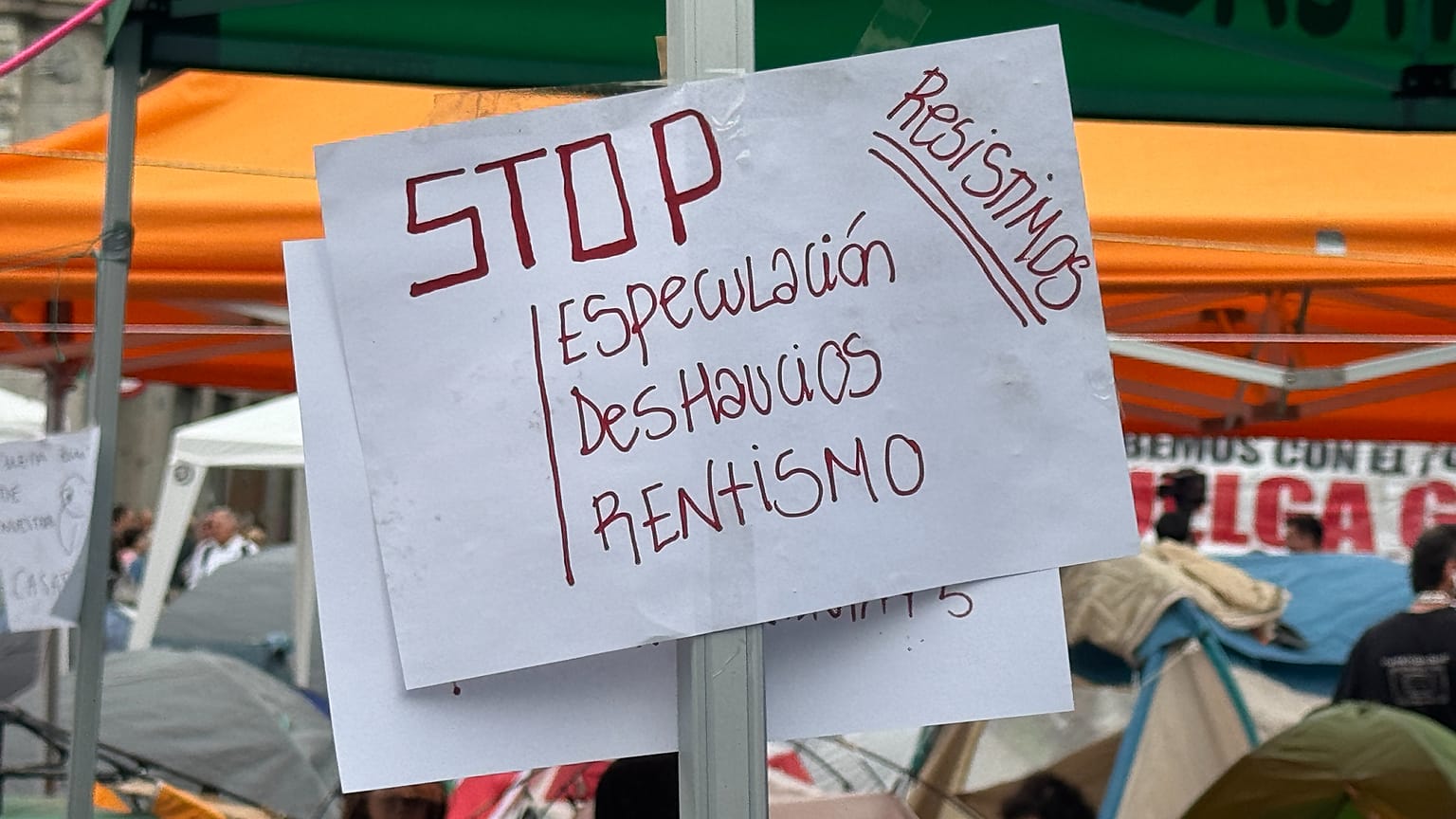














The government has been facing growing pressure from a housing protest movement amid high costs and public outcry over the eviction of an 87-year-old woman.
The Spanish government on Tuesday approved two new decrees aimed at tackling the country's housing crisis.
 ADVERTISEMENT
ADVERTISEMENT
ADVERTISEMENT
Measures included in the decrees range from stronger protection against evictions and limits on speculative purchases to tax incentives, as well as new rules for renting and zero-interest financing to help people buy their first home.
The move comes at a time of growing public pressure over soaring housing costs and mounting difficulties for people looking both to rent and buy.
Spain's Minister for Housing and Urban Agenda, Isabel Rodríguez, has described housing as "the main problem facing Spaniards" and presented the measures as a broad response to a crisis she sees as particularly "complex."
The agreement is split into two separate decrees.
The first contains most of the measures and is focused on four main areas: protecting tenants from evictions, curbing speculation, tackling abuses in the rental market and making homes more affordable.
The second is aimed at giving tenants more stability and security in their rental contracts.
The approval came after tense negotiations within Spanish Prime Minister Pedro Sánchez's coalition government.
The cabinet meeting started more than an hour late because of disagreements from Sumar, the junior coalition partner, over concessions being offered to Junts, the Catalan pro-independence party whose support could be crucial when Congress votes to ratify the measures.
"It has been a very difficult and complex text", Rodríguez said after the meeting, whilst also thanking those involved in drawing it up.
The government is now looking to fast-track the measures through parliament and has asked Congress to hold an extraordinary session this Friday.
"We are going to try to ensure this text sees the light as soon as possible," Rodríguez added, describing the law as "ambitious" and insisting there was "a broad social consensus in our country around these measures to ease the housing crisis."
Four pillars of the main package
The first and broader decree is built around four main areas.
The first aims to strengthen protection against evictions.
"We do not want any more cases like Maricarmen's," Rodríguez said, referencing the case of an 87-year-old woman who was evicted from her home in Madrid this month.
The government plans to extend the so-called "social shield" until 2030, with the aim of bolstering protection for vulnerable people at risk of losing their home.
"Let's put our foot down on speculation," the minister added as she presented the second set of measures.
The government intends to curb speculative purchases of housing and identify companies engaged in such operations to stop them from "trading in an essential good."
The government also wants to act on acquisitions made by so-called vulture funds and to use the tax system to steer investment towards affordable housing rather than speculative deals.
The third pillar focuses on fraud in the rental market, particularly the use of short-term and room-by-room contracts to sidestep rules governing residential lets.
Rodríguez also pointed to illegal tourist apartments, which she said should be shut down by regional authorities. The government is also proposing a new 10% VAT tax on tourist apartments.
Tax breaks and zero-interest financing
The fourth pillar is aimed at improving affordability and access to housing.
Among the measures announced are tax breaks for landlords, which the government says could allow some families to save the equivalent of one month's rent.
The government is hoping to complement regulatory measures with tax incentives and to make it easier for people to move from renting to home ownership for those who, despite having sufficient income, struggle to build up enough savings.
For such cases, Rodríguez announced "Tu Casa," a new zero-interest financing scheme designed to help people purchase their first home.
The government also wants to boost the construction of affordable housing and has unveiled a cut in VAT to 4% for protected and publicly developed housing.
Second decree focuses on rental stability
Alongside this broad package of measures, the Council of Ministers has approved a second decree of urgent measures to strengthen the stability of tenancy contracts.
Rodríguez explained that this second measure addresses "a very specific aspect" of the rental housing crisis. She argued that the government has long been trying to amend the current model to provide greater security for people living in rented accommodation.
"We want to provide that stability so people can live in rented housing with peace of mind," Rodríguez said.
Housing protests continue

The government has been facing growing pressure from a housing protest movement.
The Tenants' Union is among the organisations behind an encampment set up in Madrid's Puerta del Sol, as well as demonstrations held in other Spanish cities.
The groups have decided that they would keep the encampment in place regardless of the cabinet's decision, meaning the approval of the two decrees does not mean the protests are coming to an end.
Regional authorities have given the central government's delegation 48 hours to dismantle the site and warned that they would take the matter to court if it were not removed.