




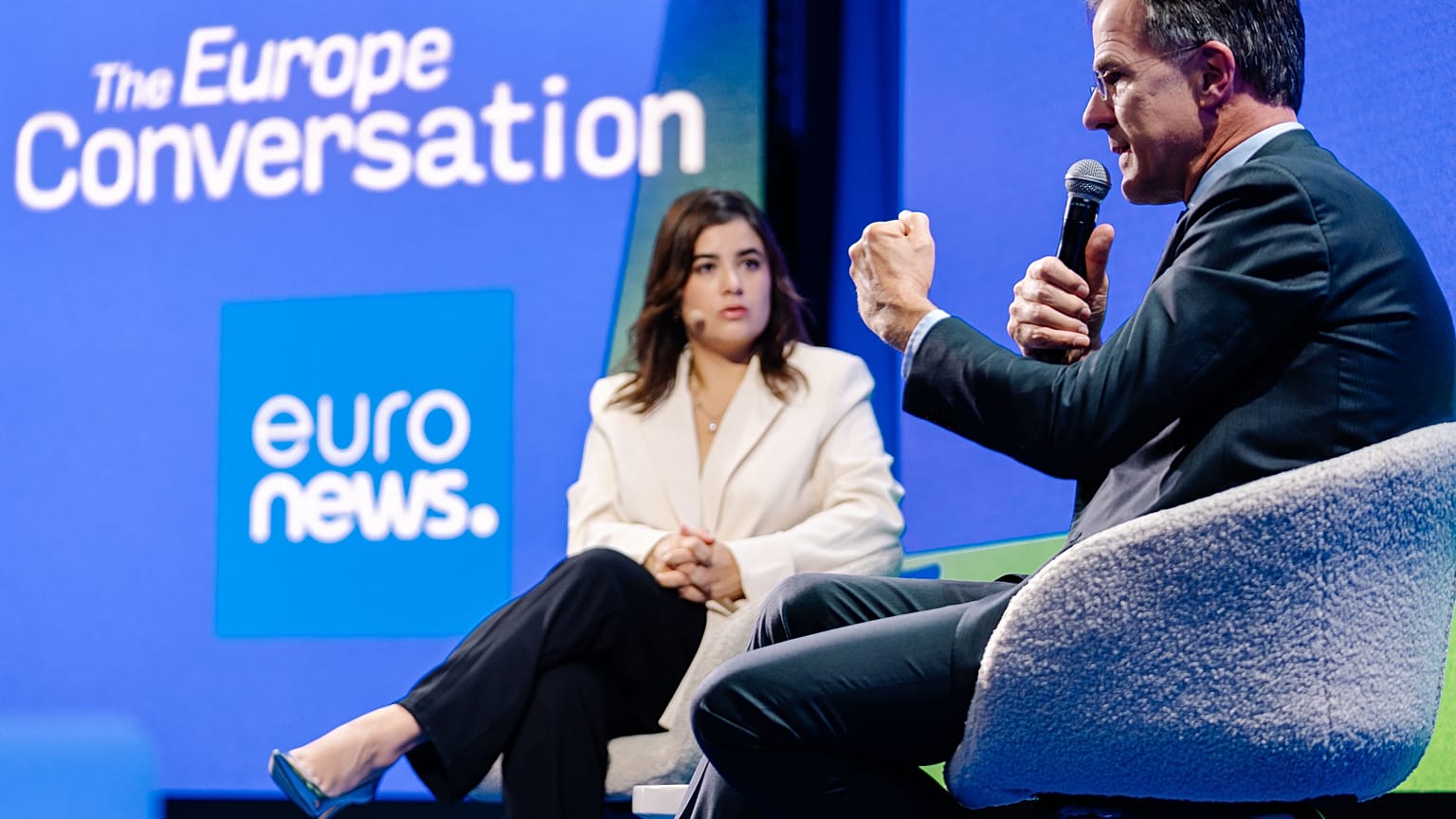













NATO chief Mark Rutte told Euronews the European preference debate is a "luxury" since neither Europe nor the US can meet the growing demand for defence products and the industry should ramp up its capacity.
A Brussels debate over a European preference in defence contracts ignores a basic problem: Europe's defence industry cannot produce enough, NATO Secretary General Mark Rutte told Euronews on Wednesday.
 ADVERTISEMENT
ADVERTISEMENT
ADVERTISEMENT
"The problem is not: do you buy in Europe or do you buy it in the United States? The problem is: can you buy? The money is there. But the defense industrial base in Europe is underdeveloped. It is not producing enough," Rutte said at the Euronews Defence & Space Summit in Brussels on Wednesday.
In recent months, the EU has debated whether to favour European-made products in public defence contracts, deeply dividing France, which wants a strict preference, and Germany, which favours a more open approach towards NATO allies.
Rutte, who said he comes from a free-market tradition, called the debate misplaced because neither European nor American factories can meet surging demand.
"It's always better if you have these free markets functioning as open and independent as possible. But at the moment, I think it is a discussion of luxury, whether you buy European or American, because we cannot buy on both sides. There's not enough production," he said.
He urged industry to invest to meet long-term demand and to innovate to develop state-of-the-art products.
"European companies like Thales are investing in the US. US companies are investing in Europe. It is a transatlantic defence industrial base that is working as one, and that's exactly as it should be," Rutte continued.
He cited Ukraine's urgent need for anti-ballistic missile interceptors, which neither the Franco-Italian SAMP/T nor US-made Patriot systems can be produced in sufficient numbers to supply.
"There is enough money for everybody. And there will be a defence dividend coming from this, because all these investments will also lead to societal returns, not only in the defence output and the defence industrial base, but also innovation and everything else," Rutte added.