

On the 800th anniversary of his death, Euronews revisits Saint Francis' meeting with the Sultan of Egypt and what this charismatic figure still has to teach us.
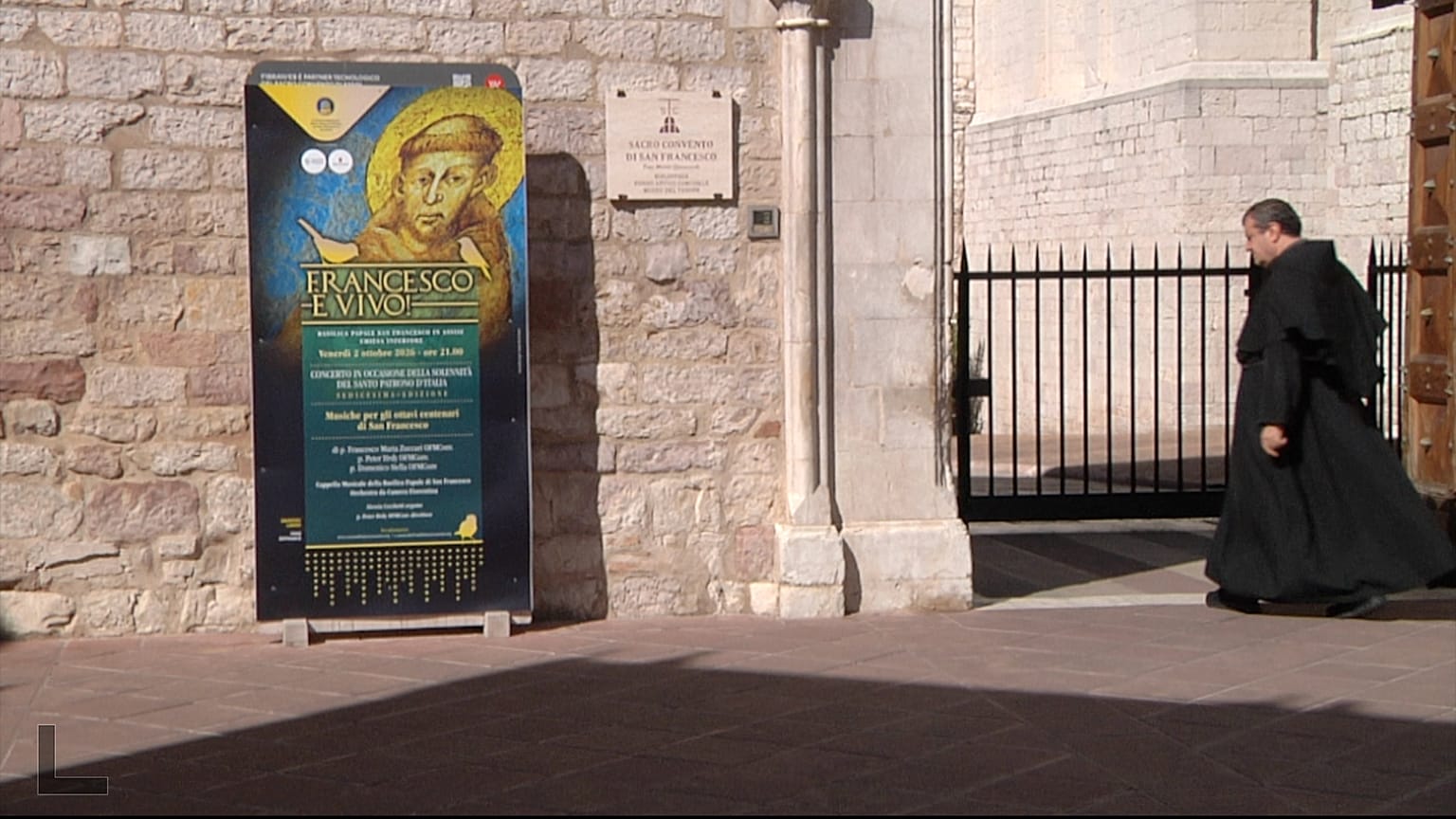
The bells of Assisi ring from midnight Saturday to mark the start of one of Italy's most significant new public holidays.
 ADVERTISEMENT
This Sunday, (4 October), the feast day of Saint Francis of Assisi is celebrated as a national holiday in Italy, the first time in half a century, honouring the values of peace, fraternity, solidarity and respect for the environment that the mediaeval friar came to embody for people across the world.
The holiday was abolished in 1977 on economic grounds. Nearly 50 years later, the Italian government voted to restore it, with 4 October returning to the national calendar for the first time this year.
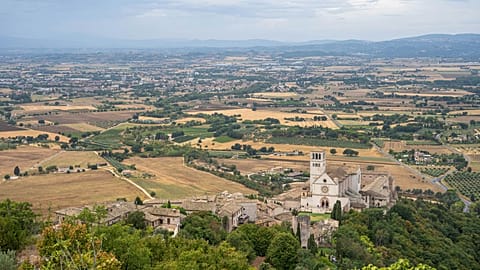
The celebrations are centred on Assisi, where the Upper Basilica will serve as the focal point for the official festivities.
Italy's President Sergio Mattarella on Sunday will attend the ceremony alongside ambassadors from across the globe, a reflection of the saint's significance well beyond Italian borders.
"Francis is not a gift only for Italy but for the world," said Friar Giulio Cesareo, director of the communications office of the Sacred Convent of Assisi.
Why does Saint Francis still speak to the modern world?
Eight hundred years after his death, Saint Francis of Assisi remains a figure of remarkable relevance, and the reasons why say as much about our time as they do about his.
According to Professor Antonio Musarra, a mediaeval historian at Sapienza University of Rome and Harvard fellow whose new book, The World According to Francis of Assisi (Il Mulino, 2026), examines the saint's enduring legacy, the Francis we recognise today is largely a 20th century construction.
"Francis has been reread throughout history in completely different ways," Musarra told Euronews. "The Francis we have today, Francis of peace, Francis the diplomat, Francis who tries to reconcile warring factions, is the one that begins to emerge after the First World War."
What makes him timeless, the professor argues, is not doctrine but method. It is his style, which is visible above all in how he approached the unfamiliar and the other.
"The other in one's own home, for instance, the leper whose encounter triggers his conversion, but also religious otherness, as when he met the sultan," Musarra said.
That meeting with the sultan, one of the most striking episodes of Francis's life, was considered significant enough to be depicted by Giotto in his celebrated fresco cycle on the life of the saint, painted at the end of the 13th century on the walls of Assisi's Upper Basilica, the same basilica now at the heart of this weekend's national celebrations.
Why the meeting between Francis and Saladin's nephew is so important
The meeting between Saint Francis of Assisi and the Egyptian sultan al-Malik al-Kamil took place during the Fifth Crusade in Damietta, Egypt. It is an encounter from which we can still learn today.
As Father Paolo Nicelli, a theology lecturer at the Catholic University of Milan and an expert on the relationship between Islam and modernity, explains to Euronews: "Damietta is a port, a major commercial hub and therefore of interest to both Christians and Muslims, and so the dispute is not spiritual but clearly of an economic and military nature."
He continues: "On the one hand we have Francis, a profoundly spiritual man; on the other we have a statesman, as is the case in Islam." Saint Francis is a man of faith and leaves the crusaders' camp to cross enemy lines, convinced that he will succeed in converting Saladin's nephew.
The conversion never took place, but Francis was received with respect by the sultan. Hagiographic tradition also tells of the legendary "trial by fire", in which Francis declared himself ready to enter the flames to prove the truth of his faith. The sultan declined the challenge but was struck by the courage of the poor man of Assisi.
This meeting with a representative of Islam based on words rather than weapons would, in the centuries that followed, become a model of peace and interreligious dialogue.
"An example of mercy and forgiveness," Nicelli adds. "A forgiveness that is even more necessary today, especially in a globalised society like ours. In this sense Francis's model is unquestionably countercultural, because it runs exactly against the prevailing values of today: careerism, individualism, selfishness, self-centredness, self-glorification and so on."
And it is perhaps for this reason that, 800 years after his death, his figure is still so widely celebrated and so important today.