












Underwater shades could help corals survive extreme heat, but researchers stress that they’re not a catch-all solution.
Can an umbrella work underwater? The answer appears to be yes, just not for the reason many might imagine.
 ADVERTISEMENT
ADVERTISEMENT
ADVERTISEMENT
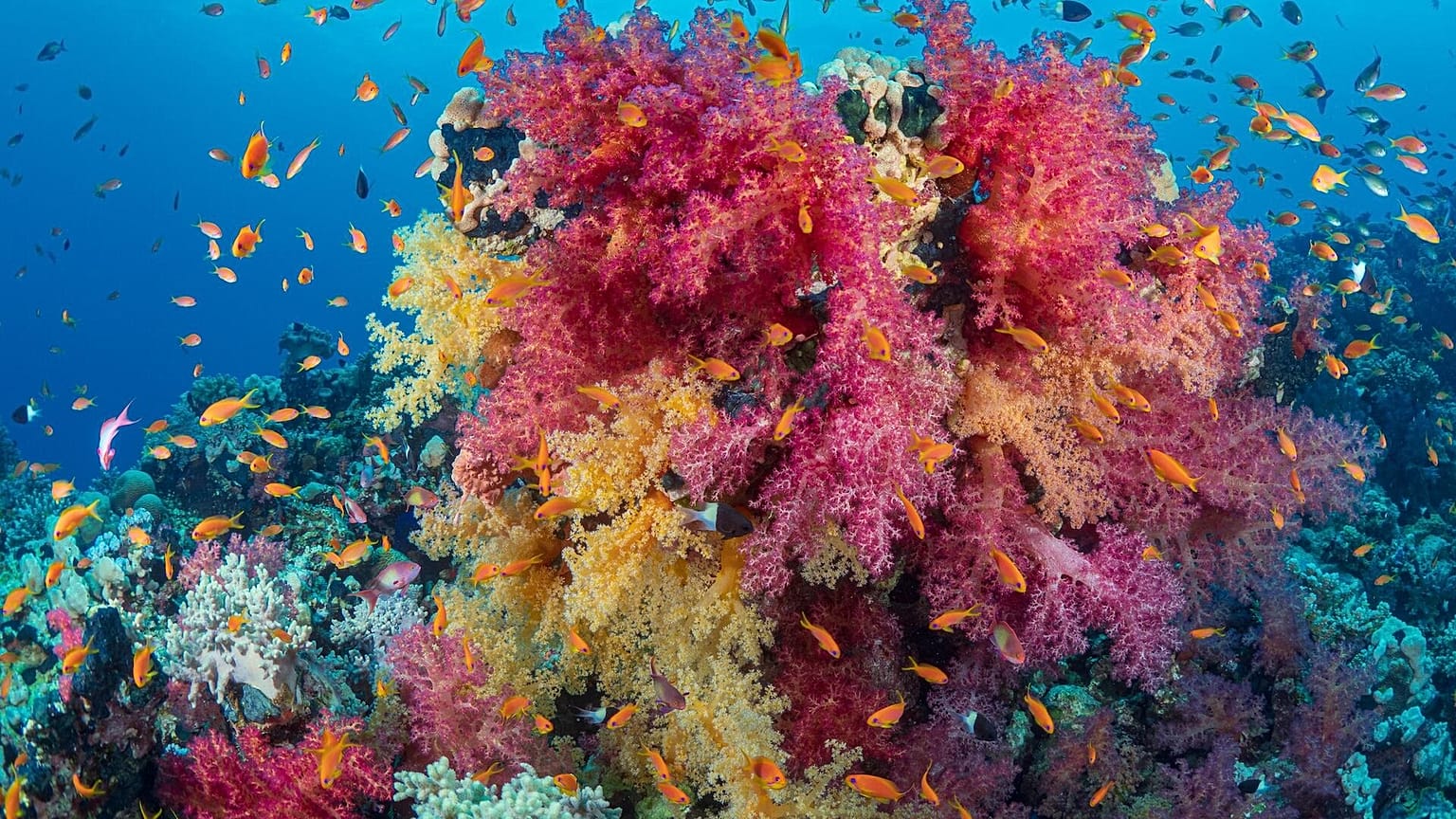
Around the world, marine heatwaves have put coral at risk of excessive heat stress. When ocean temperatures get too hot, stressed corals can expel the microscopic algae that live in their tissues, causing them to turn white and lose their main source of food – a phenomenon known as bleaching that is occurring with alarming frequency.
A group of scientists in Florida believes that underwater umbrellas could mitigate the damage.
“Heat-related coral bleaching is probably the biggest threat to reefs worldwide,” says Karen Neely of Nova Southeastern University, lead author of a research article published this week in Frontiers in Marine Science. “Solutions like shading can offer temporary protection on small scales.”
How underwater umbrellas protected Florida corals
The study came together after a record-breaking marine heatwave struck the Florida Keys in 2023.
At most sites, every kind of coral bleached, and branching corals – species that grow in tree- or antler-like formations, such as the aptly named staghorn and elkhorn corals – were almost wiped out. At one inshore site, more than half of the corals researchers monitored lost some or all their living tissue.
“This study stemmed directly from that event: we wanted to provide proof of concept for tools to save targeted corals in similar future events,” says Neely.
The following summer, the researchers selected 40 colonies belonging to two species of brain coral in the lower Florida Keys.
Half were left exposed and half were fitted with floating shades made from PVC frames and nylon mesh – like underwater parasols suspended about 30 centimetres above the coral.
The shades, the researchers stress, were not used to cool the water. Instead, they reduced the intense sunlight and ultravioletradiation that can make bleaching worse.
Divers began monitoring the corals in July 2024 and installed the umbrellas in August, when summer heat intensified. They continued until November, when temperatures cooled, tracking changes in their colour and the algae living inside their tissue.
Despite 2024 seeing the second-highest level of heat stress recorded at the site since 1985, some of the shaded corals began to regain their colour after the umbrellas were installed. The exposed corals became paler during the hottest part of the experiment.
But the umbrellas are still a temporary fix, the researchers stress.
Covering entire reefs would be impractical, so they see it primarily as a way to protect vulnerable corals during extreme heat. Ultimately, though, long-term protection depends on limiting the warming of the seas.
“Scaling is the big limitation of this study,” Neely explains. “Shading is not a cure-all.”
Marine heatwaves are bleaching reefs worldwide
Globally, ocean temperatures continue to break records. On 22 August, the average global sea surface temperature outside the polar regions reached 21.1°C, the highest daily temperature recorded.
Meanwhile, extreme heat is hitting coral reefs more often. In August, the Global Coral Reef Monitoring Network reported that bleaching events now occur roughly every five to six years, compared with about once a decade in the past.
Although corals can recover from bleaching when sea temperatures cool, frequent marine heatwaves can leave too little time for damaged reefs to repair themselves.
The most recent global bleaching event began in 2023. Between 2023 and 2024, hard coral cover fell by 8.9 per cent globally – the largest one-year decline on record.
By March 2025, 84 per cent of the world’s reefs had experienced temperatures hot enough to cause bleaching, while parts of Australia’s Great Barrier Reef recorded their largest annual losses of living coral in almost 40 years of monitoring.
Although coral reefs cover less than 0.2 per cent of the ocean floor, they are vital to life, both underwater and on land.
They provide food and shelter for at least a quarter of all marine species, including many fish caught for food, and are a natural shield for coastlines.
While underwater umbrellas may be able to prevent marine heatwaves, the Florida study suggests they could give these important creatures at least some protection as temperatures rise.