
‘Heartbreaking’ elephants and wily coyotes: Wildlife Photographer of the Year 2026 – in pictures













This year's winners showcase powerful stories from the natural world and the urgent need to protect it.
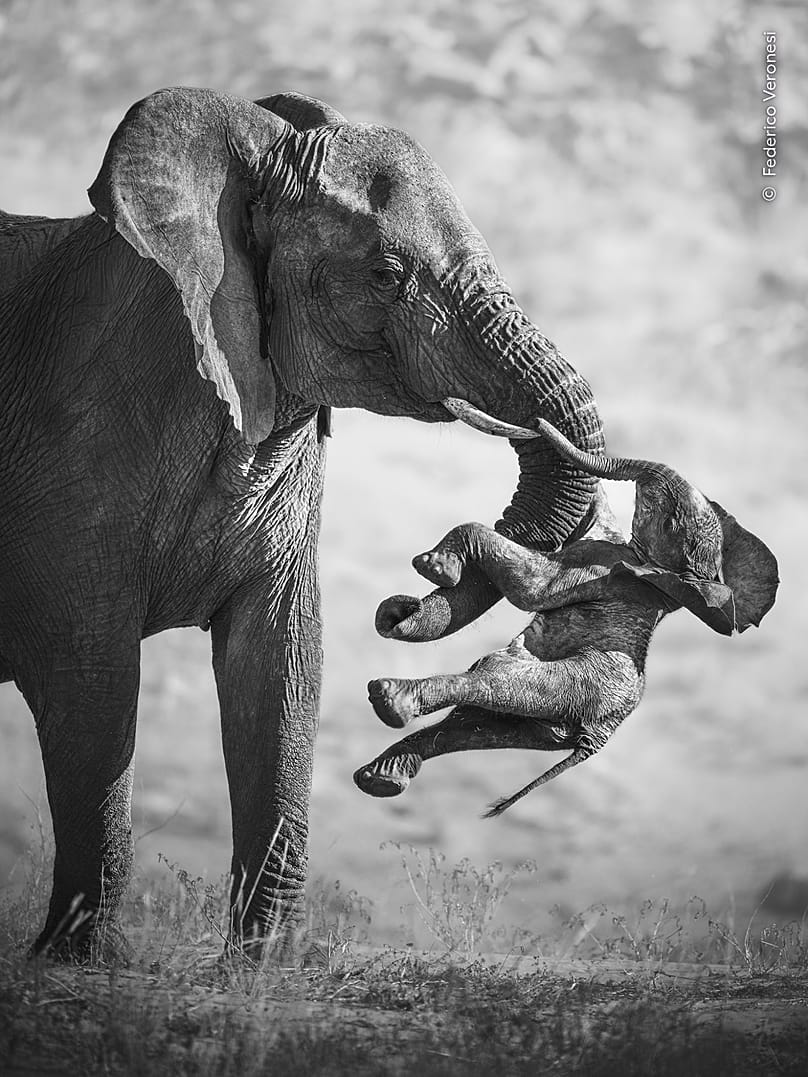
A poignant photo of a female elephant carrying a deceased calf has won the Wildlife Photographer of the Year competition 2026.
 ADVERTISEMENT
ADVERTISEMENT
ADVERTISEMENT
Titled ‘The Aftermath’, it was taken by Italian wildlife photographer Federico Veronesi while he was tracking elephants in Huab River Valley in Namibia.
After noticing an unusual pattern of drag marks in the sand of a dry riverbed, he caught up with a family of elephants, one of whom had the calf wedged between her tusk and trunk.
It isn’t the first time possible displays of grief have been witnessed in elephants, with previous behaviours including vocalisations, guarding the dead, and inspecting and handling bones.
The black-and-white image has been described by Kathy Moran, Chair of the Wildlife Photographer of the Year Jury, as an emotional “gut punch” and “heartbreakingly poignant” proof of the animals’ consciousness.
As well as the Young Wildlife Photographer of the Year 2026, a further 19 category winners were selected from a record-breaking 65,403 entries from 121 countries and territories.
Who won Young Wildlife Photographer of the Year 2026?
Oscar Whitfield, who was 14 when he captured his prize-winning photo, took home the main youth award this year for a shot of a dung beetle at work in Zambezi National Park, Zimbabwe.
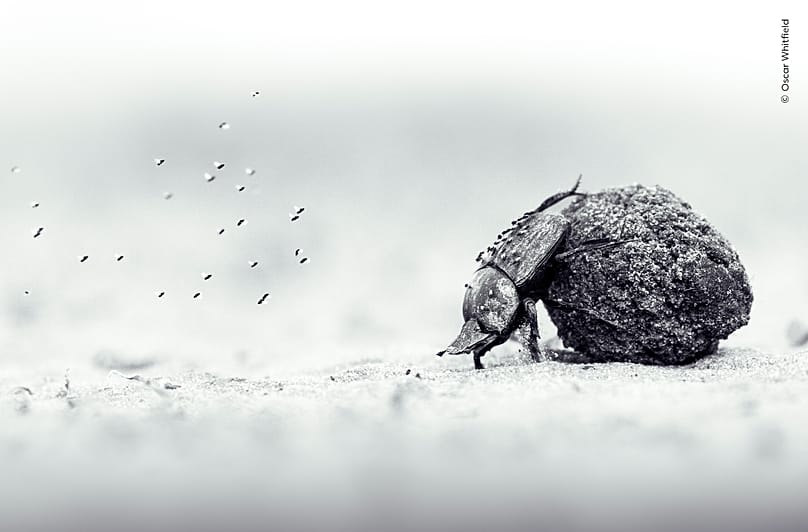
Though small, these powerful insects play their part in curbing the Earth’s greenhouse gases by breaking up and burying dung, preventing it from producing planet-heating methane. This also helps it decompose faster, reducing the number of pests affecting livestock and wildlife.
There are more than 5,000 species of dung beetle found around the world.
Prize-winning photographers capture urban wildlife
From coyotes roaming the hills of San Francisco to giant lizards hunting in Bangkok, this year’s winning photographs also revealed how animals are adapting to life alongside humans.
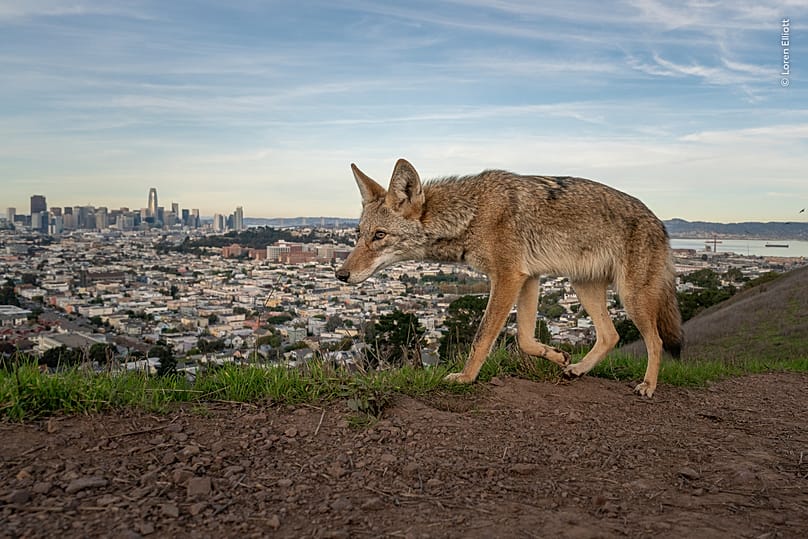
In his award-winning portfolio, ‘Wily Coyotes of San Francisco’, US photographer Loren Elliott documents a resident pack living among the city’s more than 800,000 inhabitants.
Around 100 coyotes are thought to live in the city, where attitudes towards the animals are mixed. While they sometimes prey on domestic animals, they also help control populations of disease-carrying rodents. Elliott’s photographs invite viewers to reconsider these often-misunderstood animals and their place in an increasingly urban world.
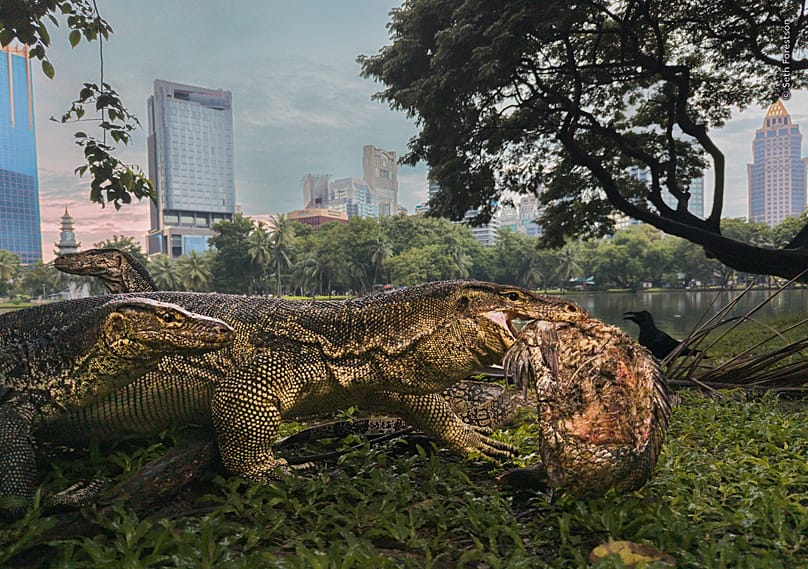
Another urban encounter by UK photographer Seth Forestson won the Urban Wildlife category.
Capturing a common monitor lizard carrying its prey through Bangkok’s Lumphini Park, Seth lowered himself onto the muddy ground to frame the creature against the city skyline.
Common water monitors have successfully adapted to the Thai capital’s urban environment, taking advantage of readily available food, including catfish and koi in Bangkok’s park lakes.
Underwater encounters reveal what’s hidden in the depths
Human impacts on wildlife are not confined to land. Beneath the surface, photographers are documenting both intimate animal encounters and the growing pressures on marine ecosystems.
Animal Portrait-winner Aaron Sanders had been diving off a Cornish beach when he noticed the footprints of octopus suckers through a thin blade of kelp. As a single eye emerged, “We remained perfectly still, watching one another with a seemingly shared curiosity,” he recalls.
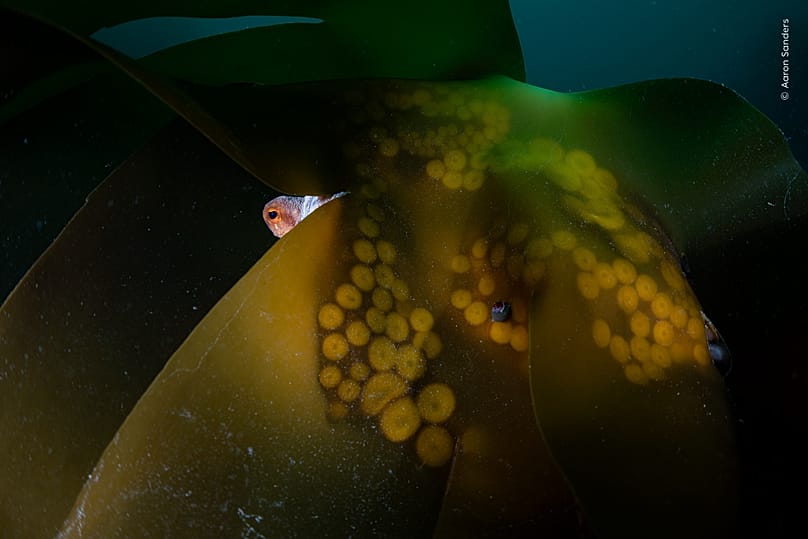
The encounter is a glimpse of a wider story brewing in the waters off southwest England, where sightings of common octopuses have increased dramatically. While the carnivorous predators are more commonly found in the Mediterranean, above-average spring sea temperatures have expanded their territory, with devastating impacts on local fishing industries.
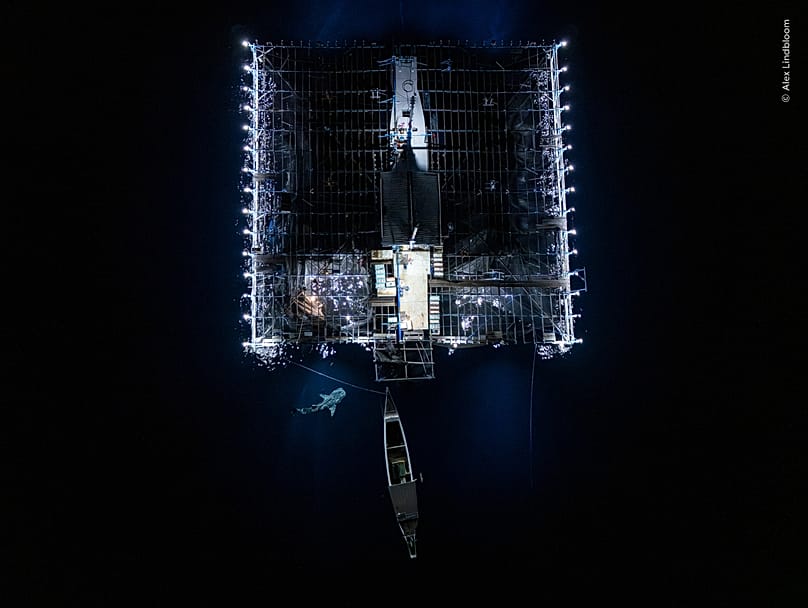
In another show of humans’ impact on marine life, US photographer Alex Lindbloom snapped a whale shark investigating the catch of a ‘bagan’, or mobile net-fishing platform, in the inky waters off Papua, Indonesia.
The species has declined sharply over the past 75 years mainly due to ship strikes, fishing gear entanglements and illegal fishing.
A watering hole brings wildlife together
Some of the winning images reveal the unexpected interactions that take place when different species gather in the same habitat.
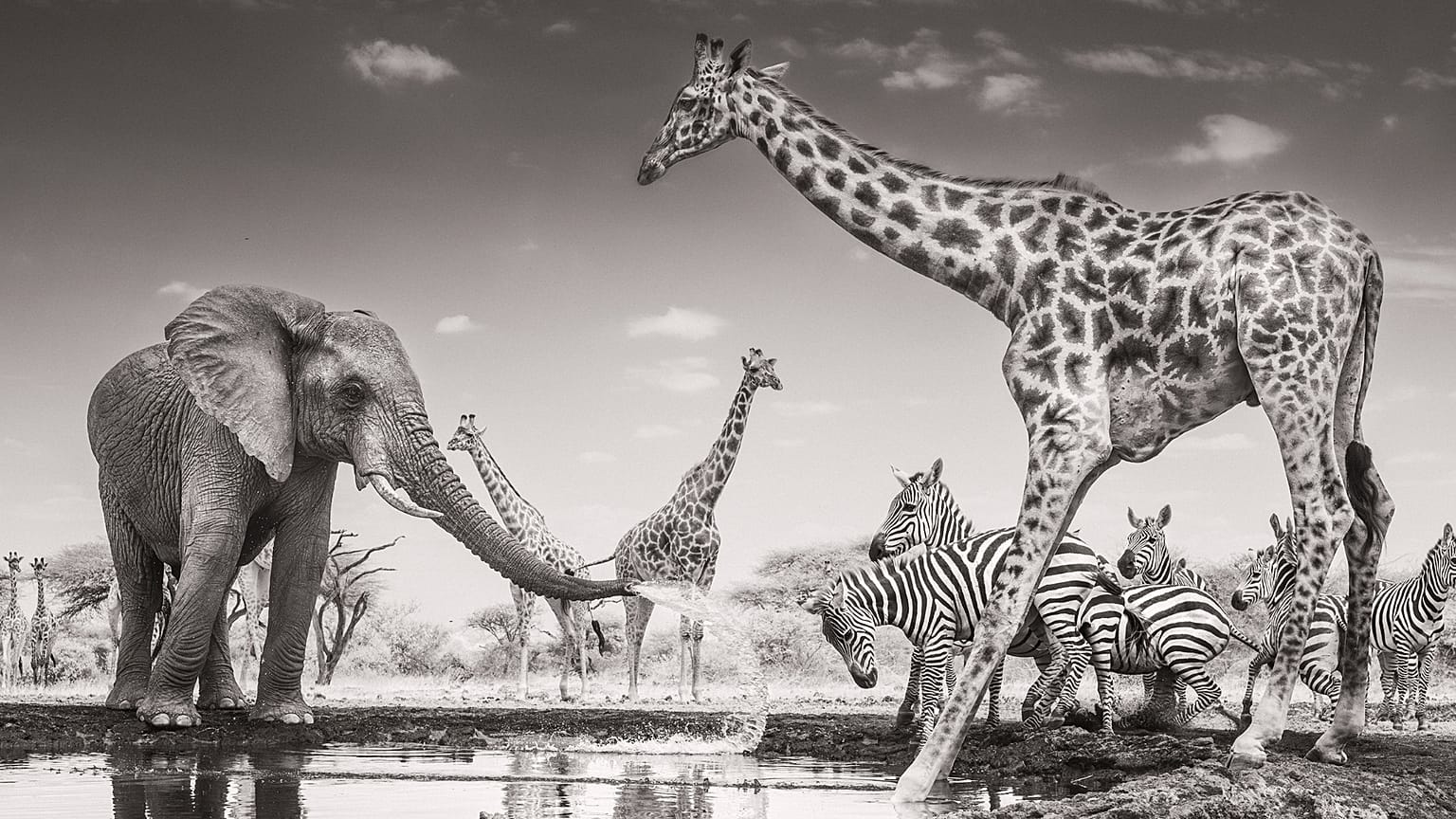
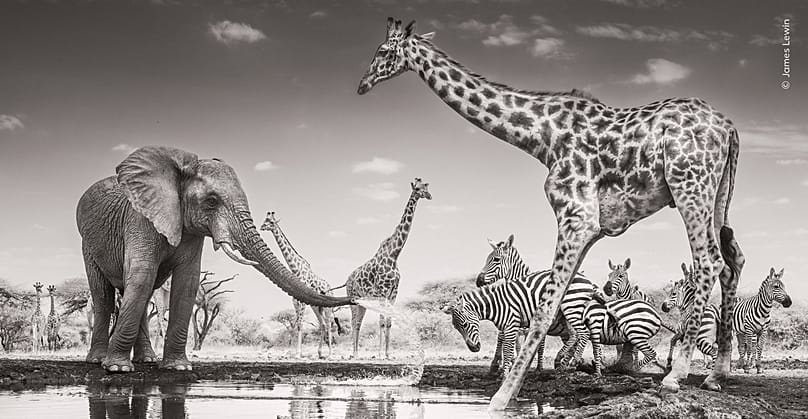
In ‘The Meeting Place’, UK photographer James Lewin captures a young bull elephant spraying a group of zebras as they congregate around a waterhole in Kenya’s Chyulu Hills. Lewin used an infrared-converted camera to soften the harsh light, giving the scene a dreamlike quality.
Waterholes can become vital lifelines during severe droughts, bringing together animals that might otherwise keep their distance.
Wildlife Photographer of the Year is developed and produced by the Natural History Museum, London. The winning photographs will be on display at the Natural History Museum from 16 October 2026 until July 2027.