




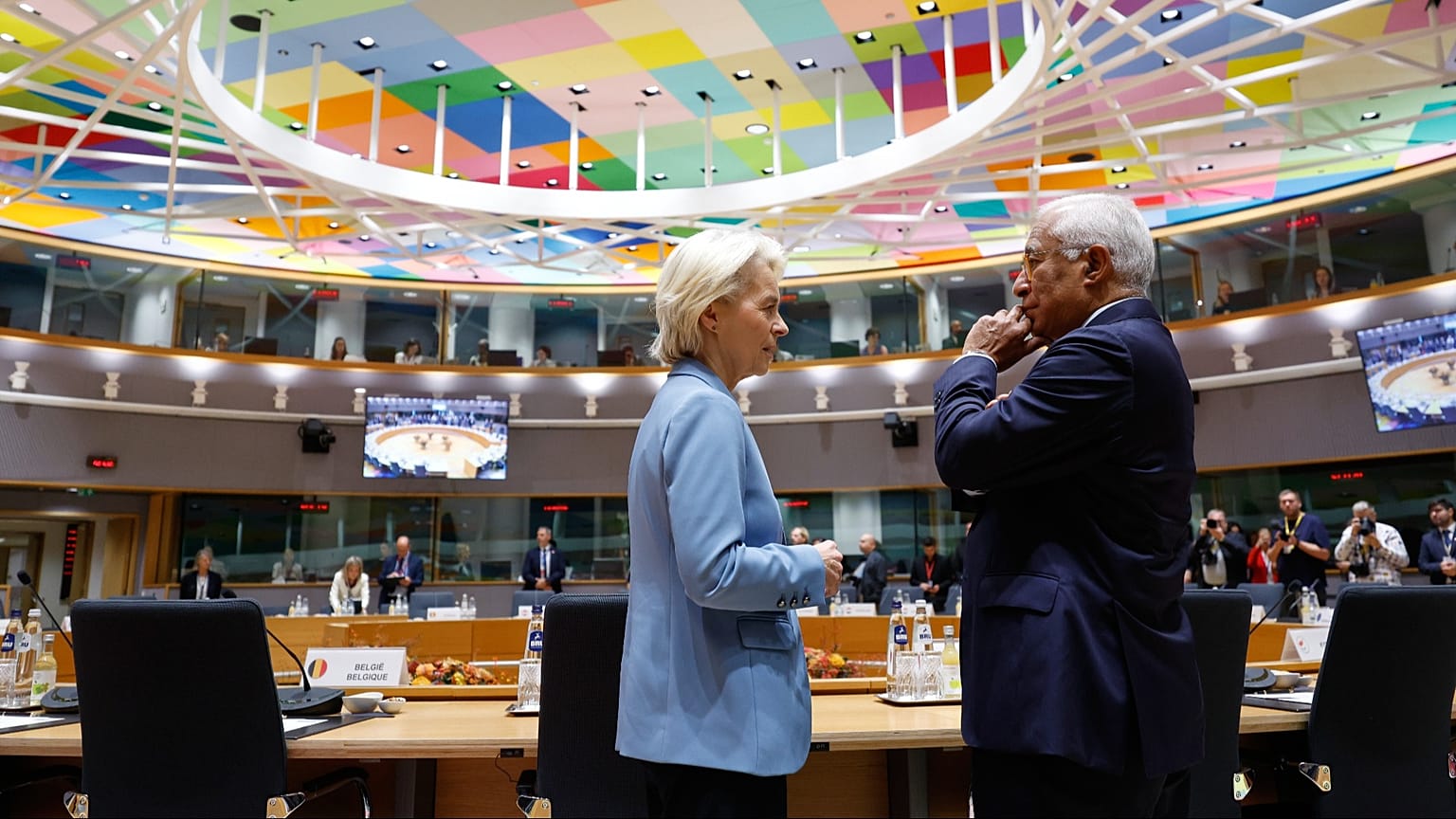














EU leaders are meeting in Brussels for a packed two-day summit. Energy prices, trade with China and the budget dominated Thursday's session.
Following today's inconclusive summit, António Costa, the president of the European Council, has taken charge of the EU budget negotiations.
 ADVERTISEMENT
ADVERTISEMENT
ADVERTISEMENT
Costa intends to reflect on the feedback provided by member states, which are still attached to their red lines and maximalist positions, and propose a new compromise text in the coming weeks.
The compromise will seek to explore a different logic than the one proposed by Ireland, which alarmed Brussels by cutting heavily on the emergency funds of the so-called EU Facility. Officials say the lessons from the past years (COVID, Ukraine, energy crisis, climate change) justify leaving a considerable amount of funds unallocated.
Another key priority for Costa is the New Own Resources, the EU-wide taxes that are meant to bring additional revenue into the common pot.
A special summit dedicated to the budget will be held on 26 November. Costa's compromise should be proposed before then.
Relive the day as it happened.

 ${title}
Live ended
EU budget talks hit an impasse
The negotiations over the next seven-year EU budget hit a new impasse on Thursday after leaders reaffirmed their attachment to their red lines.
With this, our blog closes to end.
We'll resume tomorrow with the session devoted to Ukraine in the presence of President Volodymyr Zelenskyy.
Inconclusive sparring at EU summit puts budget timeline into question
EU leaders stuck to their red lines on the next long-term budget at Thursday’s summit, with several now rejecting the presumed December deadline. Council Presi…
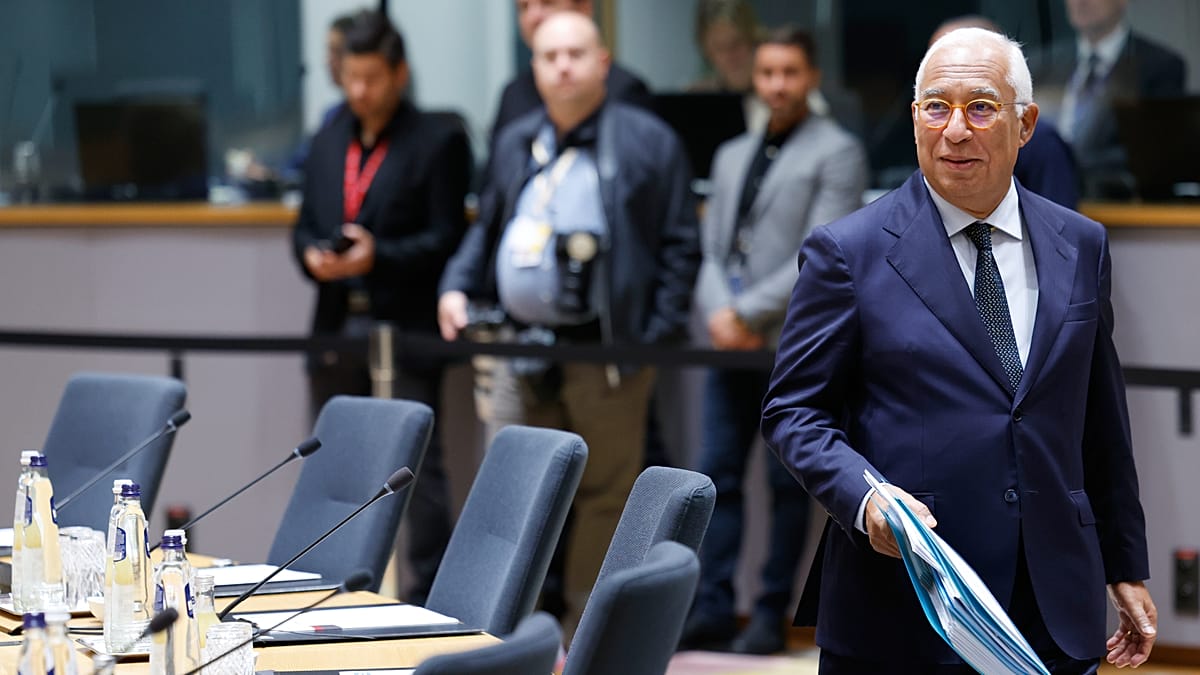
António Costa takes charge of EU budget talks
Following today's inconclusive summit, António Costa, the president of the European Council, has taken charge of the EU budget negotiations.
Costa intends to reflect on the feedback provided by member states, which are still attached to their red lines and maximalist positions, and propose a new compromise text in the coming weeks.
The compromise will seek to explore a different logic than the one proposed by Ireland, which alarmed Brussels by cutting heavily on the emergency funds of the so-called EU Facility. Officials say the lessons from the past years (COVID, Ukraine, energy crisis, climate change) justify leaving a considerable amount of funds unallocated.
Another key priority for Costa is the New Own Resources, the EU-wide taxes that are meant to bring additional revenue into the common pot.
A special summit dedicated to the budget will be held on 26 November. Costa's compromise should be proposed before then.
Credit: European Union
Press conference cancelled as budget talks run for too long
The press conference of the summit's first day has been cancelled after the debate on the next EU budget ran for too long. In parallel, a battle over the Emissions Trading System kept aides occupied.
Leaders have now moved to dinner, dedicated to enlargement and internal reforms.
Italy and Sweden clash over energy rules with conclusions at risk
Energy has emerged as the most contentious issue at the summit so far.
After three hours of debate, EU leaders turned to discussions on the bloc’s budget. However, diplomats were still negotiating the conclusions, with Italy and Sweden on opposing sides, according to two diplomats.
Rome is backing the four Visegrad countries — Slovakia, Hungary, the Czech Republic and Poland — in calling for the next Emissions Trading System (ETS2) to be postponed until 2030.
They argue that the conditions for introducing the system in 2028 have changed because of the war in the Middle East.
According to a third diplomat, the summit risks ending without endorsed conclusions on the 27 on one of the most politically sensitive issues.
Zelenskyy and Tusk meet
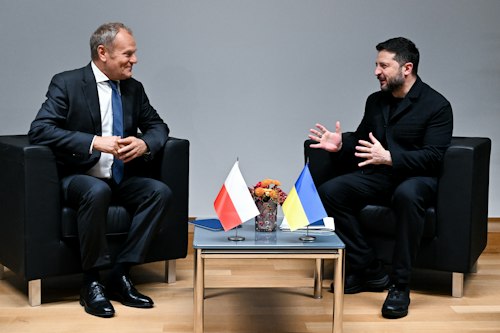
Ukrainian President Volodymyr Zelenskyy held a bilateral meeting with Polish Prime Minister Donald Tusk on the sidelines of the EU summit.
"We are not just neighbours. We are friends who can count on each other in difficult times. And no one will ever change that," Tusk said.
Relations between the two countries took a tumble earlier this year after Zelenskyy renamed a military unit in homage to the Ukrainian Insurgent Army (UPA). The UPA is admired in Ukraine for its resistance against the Soviet Union and the pursuit of an independent state. But in Poland, the UPA is held responsible for the massacres of Poles in Volhynia and Eastern Galicia, which Warsaw considers genocide.
Tusk, a staunch supporter of Ukraine, has striven to overcome the rivalry to focus on the common security threat: Russia.
"I thanked Donald for his clear and principled position on sanctions: there must be no steps that help Russia continue this war," Zelenskyy said.
Credit: European Union
EU budget talks lasting longer than expected
The discussions on the EU budget are lasting longer than originally expected and could take an additional two hours. The press conference tentatively scheduled for 19.30 CET has been delayed but should take place before leaders have dinner.
Leaders will close the day with a strategic debate on enlargement.
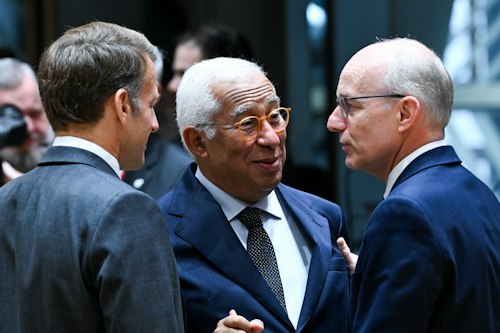
Credit: European Union
Watch: Euronews Special Report live from EU summit
Zelenskyy arrives at European Council for bilateral talks ahead of EU summit
Volodymyr Zelenskyy arrived at the European Council building in Brussels for a series of bilateral meetings on Thursday evening, ahead of his official participation in the EU summit on Friday.
He is expected to meet the Polish Prime Minister Donald Tusk leadership first, followed by French President Emmanuel Macron, Belgian Prime Minister Bart De Wever, and Denmark's Mette Frederiksen, in that order.
The meetings follow talks with NATO Secretary-General Mark Rutte earlier , with military assistance, energy security and Ukraine's EU accession among the key issues on the agenda.
Zelenskyy has no public programme at the Council scheduled for Thursday, with his official summit programme beginning on Friday morning.
Russia fires some 1,000 drones against Ukraine as Zelenskyy arrives in Brussels
Russia launched around 1,000 drones against Ukraine since midnight on Wednesday, President Volodymyr Zelenskyy said on Thursday, accusing Moscow of brazenly flouting Donald Trump's calls to reduce attacks.
"Unfortunately, Russia responded to yet another attempt by the American President to reduce the intensity of strikes with new waves of attacks on our energy, residential buildings, and other infrastructure," Zelenskyy wrote on X.
He said Ukraine faced several waves of ballistic missile strikes in recent days, while Russian Shahed drones remained in its skies almost constantly.
Zelenskyy began his visit to Brussels with a meeting with NATO Secretary General Mark Rutte, during which he stressed the urgent need for additional air defence supplies, particularly ballistic missile interceptors and F-16 munitions, amid restrictions on Starlink operations in Ukraine.
"Literally every day and every hour, such new packages can save the lives of Ukrainians," he said.
I began my visit to Brussels with a meeting with @SecGenNATO Mark Rutte. As always, we are coordinating closely to provide greater protection and security for…
Ukraine reportedly runs out of Patriot missiles
Ukraine has reportedly run out of interceptor missiles for its US-made Patriot air defence systems, leaving the country increasingly vulnerable to Russian ballistic missile attacks, CNN reported on Thursday, citing a source familiar with the situation.
The reports come as Volodymyr Zelenskyy begins his visit to Brussels with a series of bilateral meetings, with strengthening Ukraine's air defences and securing additional interceptor missiles among the most pressing issues on the agenda.
The reported shortage comes amid mounting tensions between Kyiv and Washington over US President Donald Trump's recent deal to import Russian diesel and pressure on Ukraine to halt strikes against Russia's oil infrastructure.
Meanwhile, Russia has intensified its aerial campaign against Ukraine. Zelenskyy said Moscow had launched around 1,000 drones since midnight on Wednesday, alongside several waves of ballistic missile strikes in recent days.
Leaders push to protect chemicals and machinery from Chinese competition
EU leaders on Thursday pushed for import quotas to protect the chemical and industrial machinery sectors from Chinese competition, Euronews has learned.
The issue was discussed at the summit lunch with European Commission President Ursula von der Leyen as they addressed the bloc’s record-high trade deficit with Beijing - and potential measures counter the wave of low-cost imports.
An EU diplomat confirmed to Euronews that the 27 member states were pushing the Commission to protect both sectors, which are among the hardest hit by Chinese competition.
A deal struck with Beijing last Friday includes negotiated safeguards to curb Chinese hybrid car exports to the EU. However, despite their importance to EU industry, Chinese car exports are worth just €15 billion, compared with the bloc’s €360 billion trade deficit with Beijing.
The deal was presented as the first phase of negotiations launched last June, but time is running out as the trade deficit with China continues to widen month after month. Chinese exports to the EU have surged by 25% over the past year, according to the latest Chinese customs data.
Analysis: Hopes dim for a budget deal in December
For months, European Council President António Costa has repeated time and time again, that leaders need to unanimously agree on the next seven-year budget by December at the very latest. If the negotiations spill over into next year, he warns, there won't be enough time to complete the complex legislative work that's necessary to get the budget up and running by 1 January 2028.
But leaders say they prefer to put quality over time. What matters for them is a good deal. The problem is that each one has their own vision of what a "good deal" looks like in reality.
The battle is split into two main camps: the frugals, who want steep cuts, versus the Friends of Cohesion, who oppose them.
However, these camps aren't uniform. Some of the cohesion friends, like Spain and Italy, have a vested interest in agricultural funds. Others, like the Baltics, are keen to boost defence spending. Among the frugals, Germany and Sweden are seen as the most radical. Meanwhile, France, the bloc's second-largest country, hasn't picked a side because it's trapped between its European ambitions and its borrowing constraints.
The red lines are so entrenched, and the space to compromise is so scarce, that Costa's December goal now looks increasingly precarious.
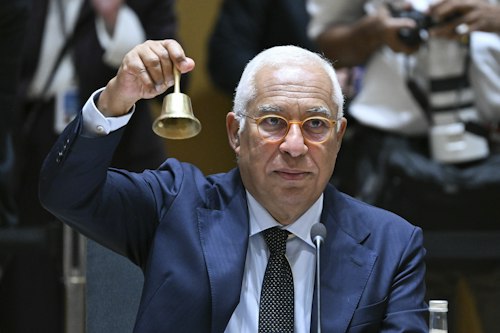
Credit: European Union.
EU leaders discuss new Europe-wide taxes to finance the bloc's budget
EU leaders have moved on to discuss the bloc’s next long-term budget, including several proposals to create new own resources, fresh taxes at the European level that would directly contribute to Brussels’ coffers.
Ireland’s latest compromise maintained the own resources proposed by the European Commission, in particular:
- Carbon Border Adjustment Mechanism (CBAM): a tariff on carbon-intensive imports. The tax is meant to create a level playing field with other countries and has received broad support from the member states, but faces opposition from the US. Ireland proposed increasing the call rate from 75% to 90%.
- Emissions Trading System (ETS): a tax on companies based on their greenhouse gas emissions, encouraging them to cut pollution most cost-effectively. Many member states have opposed moving the ETS at the EU level because it generates significant revenues for them. To mitigate this, the Irish have proposed a phase-in mechanism under the Modernisation Fund to compensate for the lost revenues.
- Tobacco Excise Duty Own Resource (TEDOR): a system under which 15% of national tobacco excise duty revenues collected by EU countries are transferred directly to the EU budget. TEDOR faces significant opposition from some member states that fear a lowering of the quality of tobacco products and an increase in the black market.
- Corporate Resource for Europe (CORE): a direct financial contribution levied on large corporations operating in the EU market. The proposal faces very strong opposition from a large majority of European governments that consider it runs counter to the competitiveness agenda.
- Electronic waste levy (e-waste): a financial contribution to the EU budget based on the amount of uncollected electronic equipment generated within a member state. The e-waste levy enjoys broad support among member states, with most of the open questions technical in nature.
- Custom duties: an already present own resources levied on products imported from non-EU countries based on the Common Customs Tariff. The member states currently retain 25%, while the Commission proposed dropping that percentage to 10%, leaving 90% of customs duties for the EU budget.
The Irish presidency has decided not to include the European Parliament’s proposals for EU-wide taxes on digital services, online gambling and crypto-assets. Critics argue that Ireland failed to act as an honest broker in this instance, in particular for the digital levy, since the country hosts the European headquarters of most Big Tech companies.
Rutte welcomes Zelenskyy amid fears US will cut off weapons sales
As the EU summit continues, NATO Secretary General Mark Rutte has met with Ukrainian President Volodymyr Zelenskyy amid rising tensions between the Ukrainian leader and US President Donald Trump.
"We talked about the importance of implementing an energy ceasefire as well as NATO Allies’ continuous support for Ukraine, including through the PURL mechanism," Rutte said on social media.
The meeting comes amid fears that the US will cut off weapons sales and intelligence sharing with Ukraine in retaliation for Kyiv's strikes on Russia's oil refineries. NATO officials insist this has not yet been the case.
Moscow, meanwhile, has rejected the idea of an energy ceasefire.
"Zelenskyy has made it clear that he is not interested in elections and has set conditions in advance that are obviously unacceptable. There will be no ceasefire to bring him back to his senses and rearm him," Russian Foreign Minister Sergey Lavrov said.
Good to see President @ZelenskyyUa in Brussels. We talked about the importance of implementing an energy ceasefire as well as NATO Allies’ continuous support f…
After delays, Ukraine adopts laws needed to unlock €3.7 billion in EU funding
As EU leaders meet in Brussels, the Ukrainian parliament has adopted a raft of laws needed to unlock the next payment of EU financial aid under the €90 billion loan.
The tranche, worth €3.7 billion, was expected to be released in September but was delayed after a bill designed to remove the duty-free exemption for international parcels was voted down on two separate occasions. The text proved contentious among Ukrainian legislators due to the popularity of Chinese marketplaces Temu and AliExpress.
The legislative backlog ruffled feathers among EU officials, who complained that Kyiv was asking for fast cash but failing to do the required homework. Kyiv got the message and submitted the bill for a third try, which has now succeeded.
"These reforms are essential for fiscal sustainability, reducing the shadow economy, strengthening transparency and moving forward on our European integration path," Finance Minister Sergii Marchenko said after the votes on Thursday. "Despite the war, Ukraine continues to deliver on reforms and fulfil its commitments."
The European Commission is set to confirm the €3.7 billion payment in the coming days.
Costa calls for stepping up negotiations with China
European Council President António Costa has called for the EU to “step up” negotiations with China, without explicitly mentioning the country, as the EU’s trade deficit with Beijing widens.
“We must step up a results-oriented dialogue with our international partners, while enhancing our toolbox of trade instruments,” Costa said on X.
Brussels began talks with Beijing last June in the hope of rebalancing its trade relationship with China. The two sides struck a deal last Friday, but it covers only Chinese hybrid car imports into the EU, worth €15 billion, while the bloc’s trade deficit with Beijing stands at €360 billion.
The EU’s strategy is to continue dialogue as long as it delivers concrete results, while strengthening the bloc’s trade defence instruments. France and Germany urged the Commission last week to develop a new instrument to respond swiftly to market disruptions caused by China, which has been accused of unfair trade practices.
Costa added that “European businesses must be able to compete under fair conditions.”
Next on the #EUCO agenda - trade. We will take stock of the imbalances affecting the global economy and their impact on European industry. We must step up a re…
Visegrad and Italian plan to delay ETS2 likely to hit the wall
A plan by the four Visegrad countries — Slovakia, Hungary, the Czech Republic and Poland — to delay the next Emissions Trading System (ETS2) until 2030 is likely to fail, according to several EU diplomats.
The ETS2 is the new carbon market set to cover fuels used in road transport and buildings as of 2029. The climate tool was already delayed once over concerns about its social impact on the most vulnerable, as ETS2 will inevitably increase energy bills further. The Visegrad countries argue "price differences between the EU regions and EU countries are enormous".
Despite the concerns raised by Visegrad — and backed by Italy — one EU diplomat told Euronews that the proposed amendments "will never get the required unanimity".
"There is little support for it and they know it. That's why they try it at the European Council instead of the Environment Council because there's no majority there for this," another EU diplomat said.
However, even if the talks on energy prices are over, the drafting of the Council conclusions is still ongoing, a third EU diplomat said.
Analysis: Ukraine isn't on the agenda today. But it's on everyone's minds
Believe it or not, Ukraine is not officially on the agenda of the EU summit today. However, the leaders will nonetheless discuss the situation in the war-weary country tomorrow, in the presence of President Volodymyr Zelenskyy, who has just arrived in Brussels.
Today's agenda is devoted mainly to energy, China and the EU budget. But Ukraine feels inescapable. It's on everyone's minds.
As they arrived at the Europa building, leaders didn't mince words as they expressed their frustration and even anger over Donald Trump's unilateral decision to strike a diesel deal with Vladimir Putin – undermining more than five years of Western economic sanctions along the way. Trump's harsh attacks on Zelenskyy, including calls for new elections, have rattled Europeans and brought back painful memories from the notorious White House clash in February 2025.
That episode prompted Brussels to convene an emergency summit to close ranks behind Zelenskyy and display a united front to counter Trump's go-it-alone diplomacy. The same will happen tomorrow.
Leaders discuss new EU trade defence tools
EU leaders meeting in Brussels on Thursday are discussing planned new trade defence tools with European Commission President Ursula von der Leyen to counter China’s aggressive trade policies, which threaten entire sectors of EU industry.
A senior EU official said the Commission would present a diversification instrument and a solidarity mechanism by the end of the year.
It comes after the EU accused China of weaponising its dependencies by blocking exports of rare earths, which are essential for the EU’s green technology and defence industries, in 2025 amid a trade war with the US.
The first tool aims to encourage EU businesses to diversify suppliers of strategic products whose shortages could threaten supply chains. The second,, the solidarity mechanism, is to help EU countries hit by Chinese retaliation if Beijing adopts countermeasures in response to EU moves to protect its interests.
The EU faces a daily €1 billion trade deficit with Beijing, with Chinese imports having surged by 25% over the past year, according to the latest Chinese customs data.
France and Germany also called last week for a new trade instrument that would allow the Commission to respond systematically and swiftly to market distortions. Measures adopted under the new tool could go as far as cutting off China’s access to the EU market entirely.
Why China isn't called China at EU summits
We just told you that EU leaders have started their debate on China. But if you think you're going to find that word in the conclusions, we'll have to disappoint you: China is almost never mentioned by name.
Instead, leaders use the vague moniker of "macroeconomic imbalances". The term has become a long-running joke in Brussels circles, given that everyone knows where those imbalances come from and who is responsible for them.
The tradition is maintained as diplomatic cover to portray the discussion as strictly country-agnostic – and avoid Beijing's accusations of being singled out. In practice, though, the moniker is irrelevant. Beijing is quick to lash out at any hint of condemnation from Brussels, regardless of euphemistic manoeuvres.
What’s in the trade deal the EU clinched with China?
Brussels struck a deal last Friday to limit Chinese exports of hybrid cars to the EU as it seeks to rebalance its trade relationship with Beijing.
Under the deal, the EU will introduce country-specific quotas allowing 350,000 Chinese hybrid cars onto the European market annually over four years, with a fixed annual adjustment rate of 6%.
The EU faces a record-high €360 billion annual trade deficit with Beijing whose exports threaten entire sectors of EU industry.
Last Friday, Beijing also agreed to ease export licensing requirements for rare earths, which are essential to EU industry, and to remove tariffs on EU car parts, olive oil and footwear, representing nearly €4 billion in current export value.
The deal should generate at least €225 million in tariff savings, the Commission said.
Read more on Euronews about the EU-China trade deal.
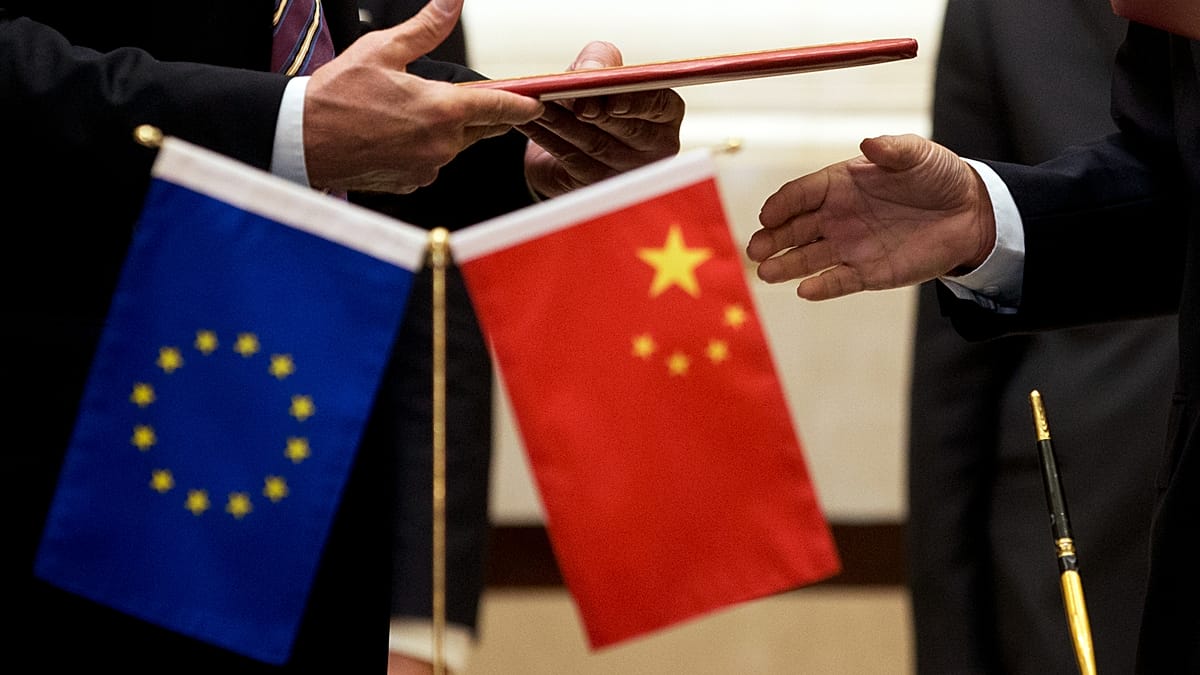
EU and China clinch deal over EVs after weeks of heated trade talks
EU Trade Commissioner Maroš Šefčovič described the deal as marking the end of the “first phase” of negotiations. Brussels is pushing for a fundamental rebalanc…
Top MEP warns EU not to sideline Parliament in budget talks
Siegfried Mureșan (Romania/EPP), a key European Parliament representative in the EU budget negotiations, has warned member states that MEP requests need to be considered to secure a majority.
“Our mission is to make sure the main demands of the Parliament are in. If the main demands of the Parliament are not in, we will not be able to secure an absolute majority in the Parliament,” he said.
Mureșan, who is also a leading contender to become Romania’s next prime minister, said that if all the parties currently in government at the national level voted in favour of the budget, it would still only have the support of 270 MEPs, 91 short of a majority.
He warned EU leaders against forcing the Parliament to back a budget against their wishes – like they did with the Mercosur agreement – as it might be rejected.
"Each prime minister wants to pay as little as possible to Europe and benefit as much as possible," he said. "It will be our obligation to see that, in the end, besides the national envelopes of member states, the European priorities are sufficiently funded."
EU leaders discuss strategy to counter China’s trade policies
The 27 EU leaders began discussing a strategy over lunch with European Commission President Ursula von der Leyen to counter the surge in low-cost imports from China.
Brussels struck a trade deal with Beijing last Friday aimed at curbing Chinese car imports. However, EU diplomats say it will not be enough to reduce the bloc’s €360 billion trade deficit with Beijing.
EU countries, all of which now have a trade deficit with China – including Germany, the EU’s largest member state — want the Commission to prepare a new approach for the next phase of talks.
One question is whether the EU executive — which leads talks with Beijing on behalf of the 27 member states — should seek new sector-specific concessions from China or broader commitments across the board.
Chinese car exports to the EU amount to just €15 billion, a relatively small figure compared with the bloc’s overall trade deficit.
“We need to have the capacity to protect the sectors that are exposed at the same time, so it will require a combination of measures,” an EU diplomat said. “And it is up to the Commission to tell us, sector by sector, in what order this should be done and which instrument is best suited to each sector.”
Debate on energy is over
EU leaders have concluded their debate on high energy prices. We're still awaiting the conclusions to see what they agreed to.
Now, they're on a break before tackling China.
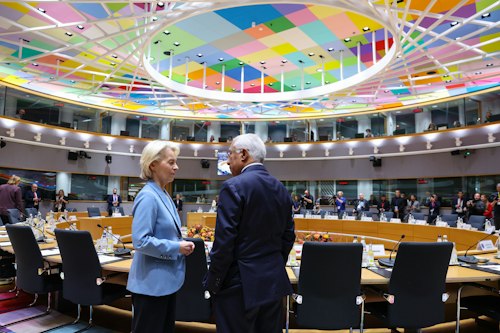
Credit: European Union.
Zelenskyy to meet French, Polish, Danish and Belgian leaders in Brussels tonight
Ukrainian President Volodymyr Zelenskyy is due to meet the leaders of Poland, France, Belgium and Denmark on Thursday evening, ahead of his official participation in the EU summit in Brussels on Friday.
He is also set to meet NATO Secretary-General Mark Rutte before heading across town to the European Council for the bilateral talks.
The meetings come as Kyiv seeks to consolidate European support amid growing tensions with Washington, with military assistance, energy security and Ukraine's EU accession among the key issues.
On Friday morning, Zelenskyy is also expected to hold his first formal bilateral meeting with Hungarian Prime Minister Péter Magyar, as Kyiv and Budapest seek to reset relations after years of diplomatic disputes.
Zelenskyy's official summit programme also includes meetings with European Council President António Costa and European Commission President Ursula von der Leyen, before joining EU leaders for talks on Ukraine.
Already in Brussels with my team to attend the European Council meeting and hold talks with our partners. Important meetings are scheduled for today with the N…
Tusk to Ukrainians: 'You are not alone'
Polish Prime Minister Donald Tusk has sent a message of support to the Ukrainian people and their president, Volodymyr Zelenskyy, as relations with the United States rapidly degrade in the aftermath of a diesel supply deal with Russia.
"After my talks with European leaders in Brussels today, I can reassure you, dear Ukrainian friends and President Zelenskyy: YOU ARE NOT ALONE," Tusk wrote on social media.
Renew urges EU to find alternative to Starlink for Ukrainian army
The EU should find an alternative to Elon Musk’s Starlink to ensure that Ukraine can defend itself, Renew Europe, the European Parliament’s liberal group, said on Thursday.
Renew sent a letter to European Council President António Costa and European Commission President Ursula von der Leyen, calling on them to ensure that Ukraine retains access to satellite links by using European capabilities.
Ukrainian forces reported restrictions on the military use of the Starlink satellite communications system on Wednesday, saying that a change introduced overnight had disrupted several drone missions amid escalating tensions between Kyiv and Washington.
Renew Europe called on the EU to mobilise “all available European satellite communications” to fill the gap, urging EU governments to provide bilateral support.
“We must not leave it up to Elon Musk and Donald Trump to decide whether Ukraine will be able to defend itself or not,” the letter reads.
EU and US need each other to support Ukraine, Metsola says
The European Union and the United States need each other to help Ukraine remain sovereign and independent, Roberta Metsola said following her customary address to EU leaders at the summit.
The European Council is poised to include a statement lamenting the US's recent decision to temporarily lift sanctions on Russian diesel in its conclusions.
When asked if she felt let down by US President Donald Trump’s actions, Metsola said support for Ukraine remained strong among both Republicans and Democrats in the US Congress and Senate.
“We will see what happens at the midterms [elections], but I will never give up trying to convince our transatlantic partners that it is better for us to be united than divided on this,” the European Parliament president said.
Visegrad countries seek to freeze new EU carbon market until 2030
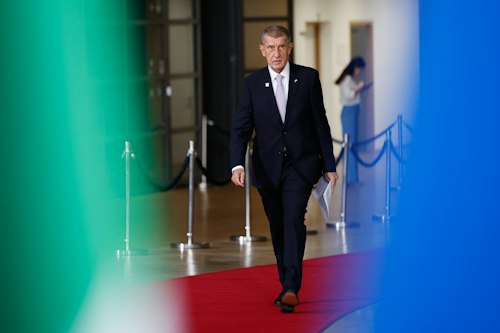
The Visegrad countries — Slovakia, Hungary, the Czech Republic and Poland — are pushing for a major delay to the ETS2 — the new carbon market covering fuels used in road transport and buildings — which is due to take effect in 2029, according to an EU diplomat.
Arguing that households and small businesses will inevitably face higher costs, the Visegrad countries are urging the Commission to review the system’s design, safeguards and implementation timeline, calling for its launch to be postponed until 2030.
Metsola warns EU leaders not to take Parliament for granted in budget talks
EU countries should not take the European Parliament for granted in negotiations on the bloc’s next seven-year budget, the assembly's President Roberta Metsola said after addressing EU leaders at the start of the summit.
The debate on the budget, scheduled for the afternoon, is expected to be tense, as EU countries are divided over spending priorities and the size of their contributions.
European Council President António Costa is pushing for a unanimous agreement by the end of the year, a goal with a 50% chance of being achieved, according to a diplomat.
However, the final budget must also be approved by the European Parliament by a simple majority.
Metsola said MEPs “will never rubber-stamp” the Council’s decision, arguing that EU countries should take the Parliament’s position into account when reaching a final compromise.
“First, [an agreement] on the overall number needs to be the starting point before we go into the individual files,” Metsola said.
At the moment, the gap between the Parliament’s and the Council’s positions is substantial. The Parliament is pitching a total of €1,938 billion for the next seven years, while the latest proposal from the Irish presidency of the Council puts the figure at €1,622 billion, 16% less.
Europe provides two-thirds of intelligence to Ukraine: French foreign minister
French Foreign Minister Jean-Noël Barrot said on Thursday that Europeans were now Kyiv's main intelligence source, after Ukrainian President Volodymyr Zelenskyy accused the US of withdrawing intelligence-sharing on Russian strikes.
Zelenskyy will join the EU summit on Friday, where EU countries will discuss the war.
“Two-thirds of the intelligence provided to Ukraine now comes from Europeans, particularly France,” Barrot told French radio station France Inter.
He added: “The truth is that Europe, we Europeans, have long been providing the bulk of support to Ukraine and exerting most of the pressure on Russia.”
In recent days, the EU has transferred €6 billion to Kyiv and imposed new sanctions on nearly 1,600 individuals and entities linked to Russia’s war.
Zelenskyy said on Wednesday that he felt betrayed after Trump announced a deal to purchase diesel from Russia and said that the current Ukrainian president should be replaced as Ukraine’s leader.
EU-Gulf summit postponed amid Houthi attacks
The European Union's scheduled summit with the Gulf Cooperation Council, originally planned for 24 October, has been postponed in the wake of escalating attacks on Saudi Arabia by the Yemeni armed group Houthis.
The summit was set to take place in the Saudi capital, Riyadh, whose airport has been the subject of repeated and deadly strikes from the Houthis in recent days. The postponement has been agreed with the Gulf countries, and it is too early to determine a future date, Euronews has learned.
The EU institutions and Italy have asked member states to bolster the European naval mission in the Red Sea, seen as the main vector for the bloc’s security presence in the region.
However, so far only two additional ships have been committed, well below the minimum of 10 that EU foreign policy chief Kaja Kallas said would be needed.
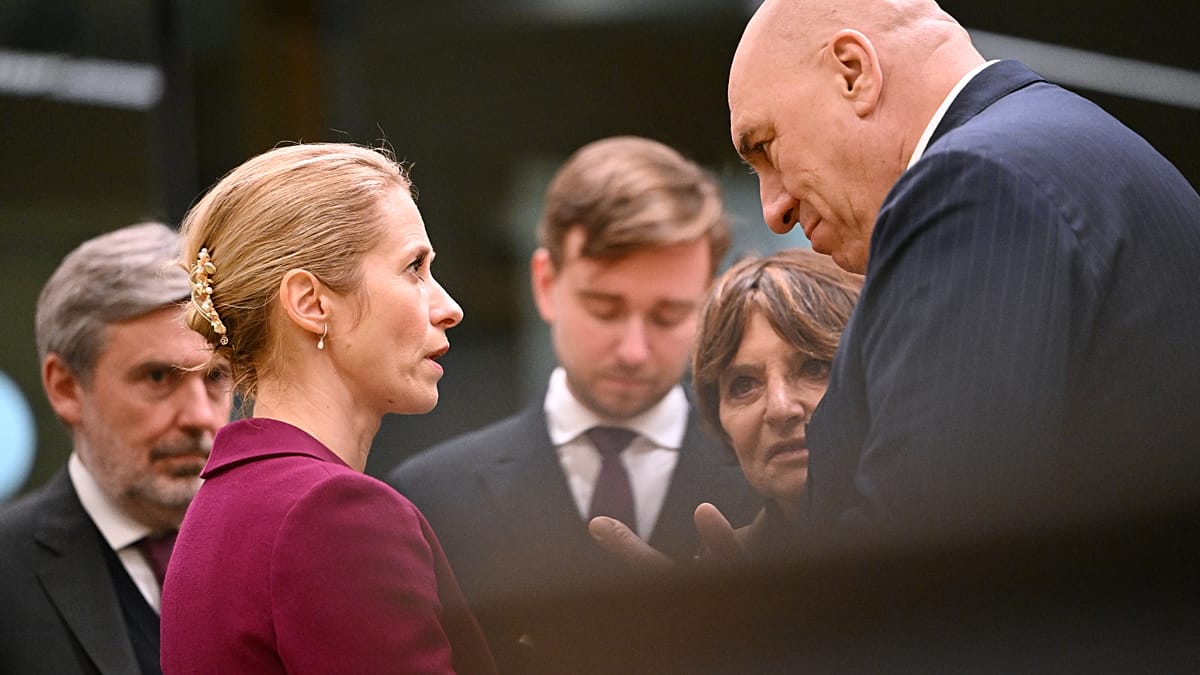
EU struggles to ramp up Red Sea mission as Houthis escalate attacks
The EU and Italy are pushing member states to bolster the Aspides naval mission in the Red Sea, but only two more warships have been pledged, exposing Europe’s…
Full story: Bulgarian PM stuns Brussels by backing Trump-Putin diesel deal
Read more about the Bulgarian prime minister's shocking remarks this morning.
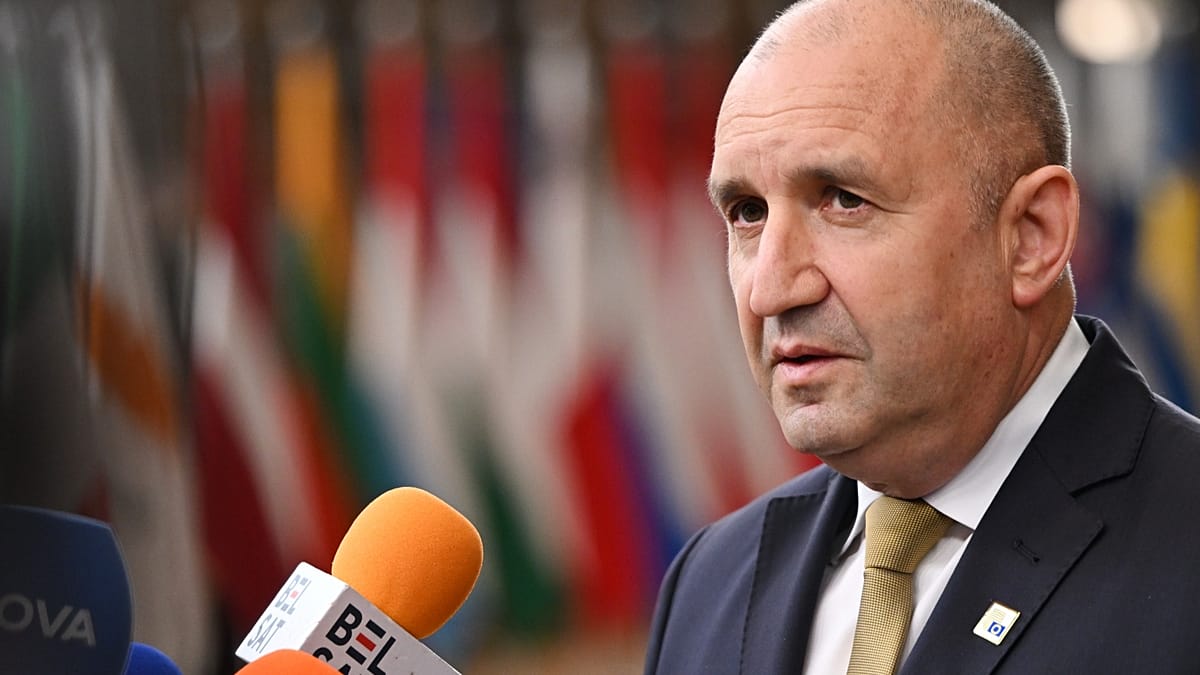
Bulgarian PM breaks ranks to back Trump-Putin diesel deal
Despite widespread criticism over the Trump-Putin diesel deal, Bulgarian Prime Minister Rumen Radev has broken ranks and welcomed the controversial agreement.…
What can Commission do to tackle high energy prices?
Ever since the US-led war against Iran began in February, the European Commission has proposed many measures to fight rising energy prices, most of which to encourage EU capitals to cut energy demand and allow emergency energy tax cuts.
As the energy crisis drags on, EU governments are seeking more support – but without incurring massive debts.
Commission President Ursula von der Leyen will outline some options at the European Council to extend temporary state aid support for the heavy-industry sectors struggling with skyrocketing prices.
EU leaders also expect guidance from the Commission on how to revamp the lost capacity of EU refineries, in decline since 2009.
With fears rising over supplies, particularly on diesel and jet fuel, EU countries are assessing with the Commission options to bundle energy demand on a voluntary basis to avoid panic buying and higher prices.
Von der Leyen to brief EU leaders on negotiations with China
European Commission President Ursula von der Leyen is set to brief EU leaders over lunch on Thursday on negotiations with China, after the EU executive struck a deal last Friday to curb Chinese car exports.
EU member states have welcomed the deal, which follows from the dialogue launched last June to address the EU's record-high €360 billion trade deficit with China.
The agreement, which EU Trade Commissioner Maroš Šefčovič described as the end of a “first phase” of negotiations, will introduce country-specific quotas allowing 350,000 hybrid cars onto the European market annually over four years, with a fixed annual adjustment rate of 6%.
However, “it’s not the end of the story,” an EU diplomat told Euronews. The Commission will now have to assess the best approach for the next round of negotiations between Brussels and Beijing, scheduled for January and March.
“We cannot take a sequential approach,” another EU diplomat said. “We cannot simply say that every three months we will tackle a sector worth €13 billion, because by the time we achieve a reduction in the deficit, the other sectors will have disappeared.”
US sending "hostile" signals towards Ukraine, Frederiksen says
The diesel deal that US President Donald Trump announced with Russia last week should be seen as a hostile signal against Ukraine, and that puts Europe in a difficult position, according to Danish Prime Minister Mette Frederiksen,
"We are meeting for the EU summit today against a backdrop of signals from the US that are hostile towards Ukraine," she said as she arrived at the European Council.
Frederiksen lambasted the diesel deal for hurting the EU. “We, the Western alliance, are in a worse position now than we were a few days ago,” she said. “We in Europe know full well that when we buy anything from the Russians, we’re funding the killing of Europeans.”
Asked whether the US government should be able to turn off Starlink whenever they wanted, Frederiksen said that the Americans should restore the satellite-based internet service, otherwise it would be impossible to protect Europe and NATO.
“If we allow Ukraine to fall, I believe we will have opened the door for the Russians to move into other parts of Europe, and that is why we must continue to regard Ukraine as our line of defence for Europe,” she said.
The Danish leader also dubbed as “deeply problematic” the fact that the Europeans were highly dependent on a privately owned communication system that provides a lifeline for their armed forces.
“It is yet another example of how the tech giants have gained far too much power and far too much influence,” she said.
EU leaders tackle high energy prices as monthly inflation hits 3.3%
EU leaders have begun their European Council summit with a debate on high fuel prices, as they seek action to tackle an unprecedented energy crunch.
Rising energy prices have combined with inflation hitting 3% in September to prompt several EU capitals to ask the European Commission for more support.
Italy and Greece, backed by other EU countries, recently urged Brussels to allow for extra spending without incurring infringements due to the extraordinary circumstances posed by the energy shock — a tall ask for the Commission, which could find itself confronted with policing ballooning debts from several EU countries.
The International Energy Agency (IEA) warned on 14 October that diesel markets are expected to remain tight well into 2027 and wholesale diesel prices in Europe could rise again in the coming weeks.
Diesel prices have retreated from September’s records above $200 a barrel, but benchmarks "remain nearly double the price of crude oil and their pre-crisis levels", the IEA stated.
As for natural gas, the Dutch TTF, the EU's benchmark for pricing gas, is trading at around €85.69 to €87.32 per MWh, nearly triple since the war against Iran.
Finland's Orpo calls for short-term measures to tackle rising energy prices
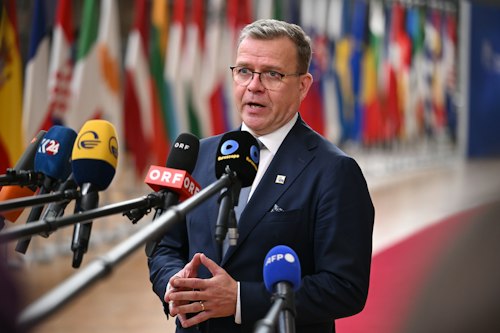
Finnish Prime Minister Petteri Orpo has called for immediate action from the EU to address soaring energy prices.
"We need short-term measures because we have to guarantee cheap prices for people and companies," he said.
Orpo was careful to stress Helsinki's intention to continue pursuing the EU's climate targets, particularly the ETS, the bloc's carbon market.
"It is our strategy, and we need to be more independent of fossil fuels and more independent of energy in Europe, Orpo added, noting the country boasts almost 100% clean energy production that has helped shield prices.
"Many investments are coming to Finland because our strategy is also a strategy for Europe. And that is why I want to defend it strongly. It is a system," Orpo said.
Denmark's Frederiksen: EU budget deal could be 'as difficult as last time'
Finalising an agreement on the EU long-term budget “will probably be as difficult as it was last time. Or even more difficult,” Denmark’s Prime Minister Mette Frederiksen has said.
Speaking as she arrived at the European Council, Frederiksen added that the EU should refocus its money toward new priorities, namely defence, border security, fighting illegal immigration and economic competitiveness.
Asked about what she made of the Irish compromise, which proposed budget cuts of €141bn, Frederiksen said that spending was still too high.
“We are still focusing too much on areas where we used to spend a lot of money. And now we have to prioritise, and we have to look into the future,” she said. “The negotiating box we now have received from the presidency does not recognise, I think, the needs of the future.”
EU leaders begin charged debate on energy prices
EU leaders have closed their short exchange on competitiveness and begun their hotly anticipated debate on high energy prices.
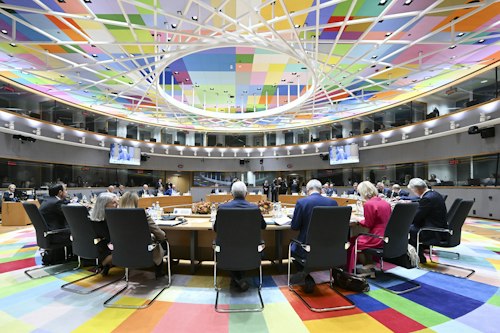
Credit: European Union.
Finland's Orpo: 'Financing Ukraine is the most important issue'
Finland's PM Petteri Orpo said the "most important issue" for Helsinki is to guarantee that Ukraine has enough funding for next winter and next year.
"The situation is very dangerous and very difficult in Ukraine because they don't have enough air defense systems," Orpo said, noting the sky "is open" and the new diesel deal between the US and Russia will reinforce Moscow's war machine.
Meanwhile, a Ukrainian drone attack on Russia's Ryazan region sparked a firet at an oil refinery on Thursday, according to the regional governor.
Enlargement should not be derailed by bilateral issues, Kallas says
EU foreign policy chief Kaja Kallas has warned that the bloc's enlargement process should not be derailed by bilateral issues.
She was speaking after Croatia issued a position paper setting out its list of grievances with Montenegro, the frontrunner to become the next member of the bloc, which Zagreb wants to be resolved before accession is finalised.
“Europe is a very small continent. We actually need to be stronger together with those countries that are in Europe,” she said.
EU leaders will discuss enlargement over dinner this evening, including the European Commission’s recent proposals to introduce stronger institutional safeguards for newcomers and change the way the institutions make decisions in an expanded bloc.
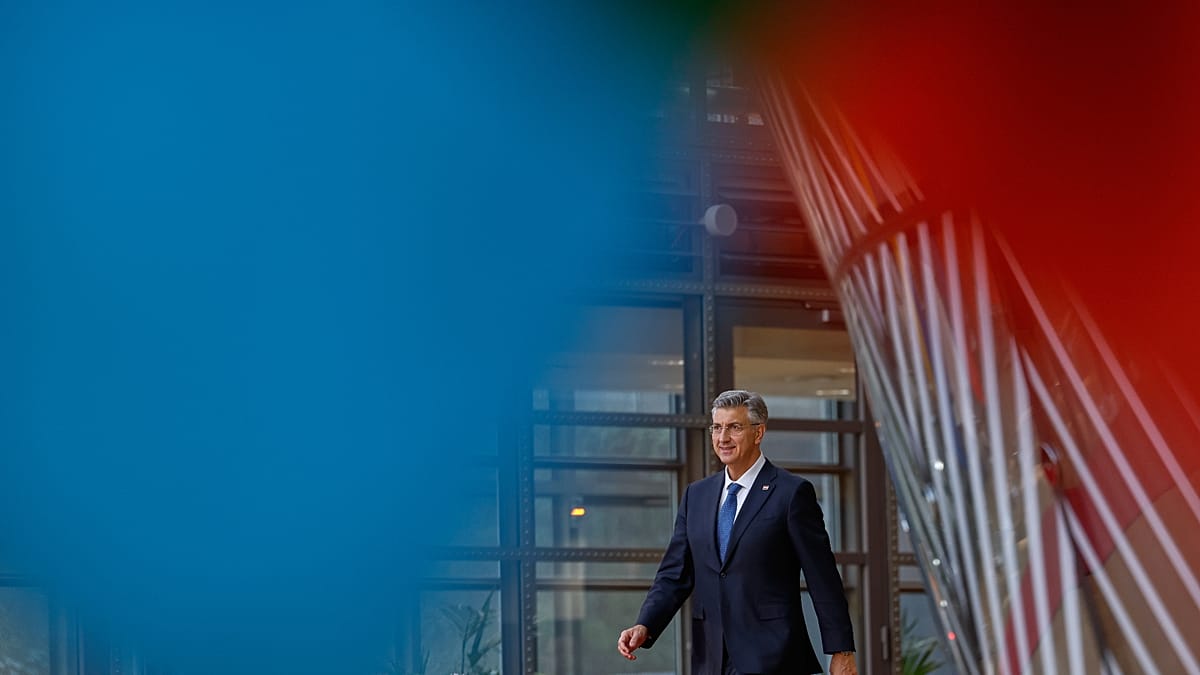
Croatia’s wartime grievances threaten Montenegro’s EU hopes
Croatia’s list of grievances with Montenegro include missing persons, war crimes, prison camps, property seizures and borders. Podgorica has closed 21 of 33 ch…
Leaders begin debate on competitiveness
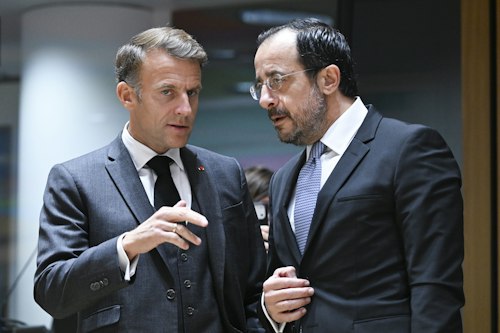
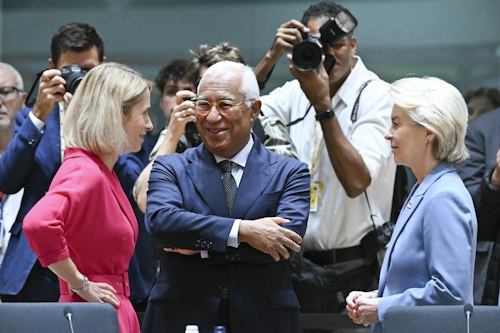
Credit: European Union.
Friends of Cohesion call for ambitious budget, reject rebates
The so-called Friends of Cohesion, the 17 EU countries backing more spending, have jointly called for an EU budget with a bigger capacity to deliver, ahead of expected tense talks at the European Council summit.
“We believe the final agreement should ensure that the EU budget can address existing and emerging priorities while preserving key policies,” the statement reads, referring to plans by the Irish presidency of the EU to cut the seven-year budget by €141bn..
The coalition met at a breakfast organised by Italy and Romania ahead of the summit and pushed against rebates, a discount large net contributors usually receive toward the end of the negotiations to secure their support.
The 17 have defended traditional EU policies like the funding for farmers and the poorest regions, for which “adequate resources must be accompanied by rules that safeguard the specific objectives of these policies and allow member states and regions to make effective use of the available funds.”
They also called for a balanced compromise in terms of revenues, asking that the new EU-wide taxes fairly distribute the financial burden among all member states.

Access Denied
Reference #18.dfe24817.1792055238.1f9a681
Sánchez thanks EU leaders for solidarity with Ceuta after border crisis
Spanish Prime Minister Pedro Sánchez has thanked his fellow EU leaders for standing with Ceuta after the border crisis that saw more than 82,000 people from Morocco suddenly cross into the exclave in late July, shocking the continent.
"I want to thank member states for their solidarity," Sánchez said as he arrived at the summit.
The initial reaction from other EU leaders was critical, pointing the finger at Spain's migration policies and asking for the country to be temporarily expelled from the passport-free Schengen Area – even though the Schengen rules do not cover Ceuta.
The tensions have since subsided, and the summit's draft conclusions feature a mention of Ceuta and Melilla. Italy, however, still applies border checks at airports for flights from Spain, while Madrid has responded in kind.
Sánchez did not address his spat with Italian Prime Minister Giorgia Meloni but defended his country's track record of managing migration in a "responsible way" that is "according to human rights".
Migration will be debated tomorrow as the last item of the EU summit.
EU corporate tax incompatible with competitiveness: Luxembourg PM
Luxembourg’s Prime Minister Luc Frieden has said that the EU cannot introduce a corporate tax while pushing for economic competitiveness, as he attacked the proposed EU-wide taxes to finance the European budget.
“My country has now cut corporation tax twice, and we cannot do that at European level,” the PM said.
The proposed Corporate Resource for Europe has faced significant opposition by many member states, but was still included in Ireland’s compromise proposal shared a few days ago.
On the budgetary negotiations, Frieden noted that he expects everyone at the table to be willing to meet each other halfway to find an internal balance.
“Many countries have budgetary problems, so we cannot simply keep paying money into the European pot. On the other hand, we need a strong Europe. Whenever we have a crisis in Europe, people call for European help. And that is why we must have a budget that is flexible,” he said.
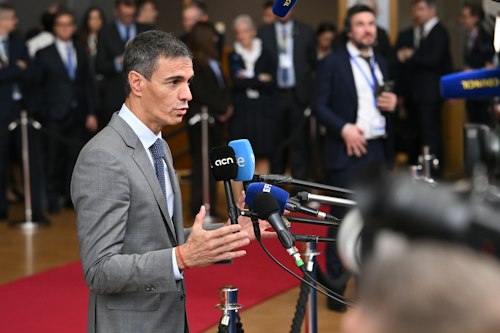
Sánchez blasts cuts to EU budget
Spanish Prime Minister Pedro Sánchez has slammed proposed cuts to the next EU budget, warning they would undermine the bloc's ability to respond to modern-day priorities.
"The proposal is clearly insufficient," he said, as he arrived at the European Council. "It's not acceptable, and that's what I'm going to say."
"We often speak about the EU as a geopolitical actor," he added, "but this is not enough, not even close, to tackle these challenges."
Sánchez stressed that the traditional policies (agriculture and cohesion) should also be protected. He noted his country was open to negotiating EU-wide taxes to bring additional revenue to the common pot.
With its above-average economic growth, Spain will soon become a net contributor to the EU budget, Sánchez said, something that "makes us responsible but also proud".
Credit: Associated Press.
Metsola would welcome UK back into the EU
European Parliament President Roberta Metsola said she would “absolutely” welcome the United Kingdom back into the European Union.
British Prime Minister Andy Burnham said two weeks ago that he was considering a “range of options” for the future relationship with the EU, including the prospect of rejoining the bloc.
“I had meetings with a number of ministers from Burnham’s government over the last few days. I think the movement [to rejoin the EU] is very welcome and the numbers are very encouraging,” Metsola said as she arrived at the European Council meeting.
Anything that would bring the EU and the UK closer together would be “extremely welcome” in the European Parliament, she said. London is expected to flesh out new options for its relationship with Brussels ahead of an EU-UK summit in November.
Magyar says ‘Friends of Cohesion’ reject current EU budget proposal
Hungarian Prime Minister Péter Magyar said the so-called Friends of Cohesion, the member states calling for more EU spending, had rejected the latest plans for the next long-term budget, the Multiannual Financial Framework (MFF).
The group met this morning ahead of the summit, in a session led by Italian Prime Minister Giorgia Meloni.
“We agreed with the Friends of Cohesion that it is not acceptable in its current form, as the EU budget proposal stands,” Magyar told reporters as he arrived at the European Council.
He welcomed the stronger wording on migration in the summit’s draft conclusions.
“We continue to see that the mainstream European position is increasingly approaching the Hungarian position. It’s a good direction. It is very important to us that the word ‘instrumentalisation’ has been included in the text, in the context of criminal groups,” he said.
Magyar also confirmed that he will hold his first bilateral meeting with Ukrainian President Volodymyr Zelenskyy on Friday morning, on the margins of the summit. He said the two would briefly review progress made over the past few months on their high-level political agreement.
Magyar praised the deal reached with Ukraine on safeguarding the educational rights of ethnic Hungarians in the country. He added that he was ready to meet Zelenskyy in Berehove, in western Ukraine, to inaugurate a Hungarian-funded institution.
Luxembourg PM Frieden: Europe needs to keep diversifying energy sources
Europe has begun diversifying its energy sources following Russia’s invasion of Ukraine, but it needs to keep doing so to boost its energy security, according to Luxembourg Prime Minister Luc Frieden.
“Diversification both geographically and in terms of what kind of energy we have. So we need to accelerate the production of renewable energy. What a number of countries, including my own, are doing,” he said, as he arrived at the European Council.
Europe needs to look at all possible geographical options in terms, Frieden added.
EU summit begins
The two-day EU summit has begun.
The first item on the agenda is an exchange on competitiveness with European Parliament President Roberta Metsola.
The #EUCO meeting has started! Welcoming @EP_President Roberta Metsola to take stock of progress on our “One Europe, One Market” agenda. We are turning commitm…
Watch: Bulgarian PM breaks ranks and backs Trump-Putin diesel deal
Merz calls for EU budget cuts to boost competitiveness
German Chancellor Friedrich Merz said Berlin is in "extremely difficult negotiations" over the EU's budget and regretted the Irish Presidency's proposal for being overly ambitious.
"We must significantly reduce the common budget compared to the European Commission’s proposals. No member state can afford to contribute to the European Union on such a scale," Merz said.
Greek PM ties EU budget fight to energy crisis
Greece's Prime Minister Kyriakos Mitsotakis challenged the EU’s proposed long-term budget, arguing that Brussels cannot pursue ambitious goals while not providing enough support to tackle rising energy prices.
Athens has attacked the Irish EU Presidency’s proposal for the next multi-annual budget, warning of an “inconsistency” between the European Commission’s ambitions and the resources available to deliver them.
Greece, part of the 16-country “Friends of Cohesion” group, has criticised planned cuts to cohesion funding and the Common Agricultural Policy.
Mitsotakis says he hopes to conclude negotiations at the December European Council but warns that so-called frugal countries must be convinced to protect key EU spending priorities.
Montenegro should make progress to join the EU, Croatian PM says
Montenegro should make progress if it wants to conclude its EU accession negotiations, Croatian Prime Minister Andrej Plenković told reporters ahead of the European Council meeting.
Croatia considers that a series of unresolved disputes with Montenegro, including wartime abuses, property claims and contested borders dating back to the breakup of Yugoslavia in the 1990s, could stand in the way of the country’s ambition to join the EU by 2028.
“There are issues which we have signalled to our Montenegrin neighbours for years [...] In the last two years, there has been no progress whatsoever,” Plenković said, claiming that his country has been “extremely constructive” in the accession talks with Montenegro.
EU leaders will hold a strategic debate on enlargement tonight, and Montenegro is widely regarded as the frontrunner among countries seeking EU membership.
Merz puts EU competitiveness at centre of budget battle
German Chancellor Friedrich Merz says the EU is falling behind on its commitments to strengthen the single market and improve competitiveness.
“If we cannot significantly cut back on excessive bureaucracy in Europe, then discussing money makes relatively little sense," Merz told reporters.
He wants the bloc to cut bureaucracy and prioritise competitiveness and defence in its next long-term budget, arguing that spending more makes little sense without structural reform.
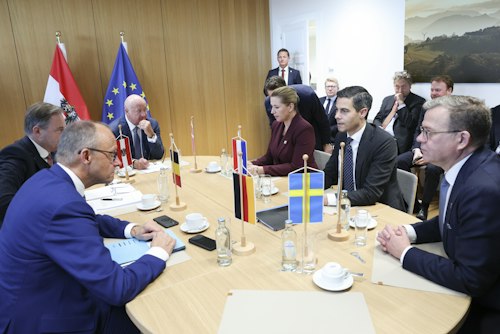
EU budget frugals meet ahead of summit
The six leaders of the fiscally conservative "frugals" – Austria, Denmark, Finland, the Netherlands, Sweden and Germany – met on Thursday morning to reaffim their opposition to a large EU budget.
The six countries want to slash several hundred billion from the budget and focus on modern priorities, such as security, research and climate action, rather than the traditional envelopes of agriculture and cohesion.
Their stance sets them on a collision course against the 17 "Friends of Cohesion", led by Spain and Italy.
The EU budget debate, scheduled for this afternoon, is expected to be fraught, and positions around the table remain far too apart, making the prospect of a unanimous deal by the end of the year inceasingly remote.
Credit: EU Council.
Europe is leading international support to Ukraine, Irish PM says
Asked whether the recent diesel deal between the US and Russia meant that Europe was now alone in supporting Ukraine’s war efforts, Ireland’s Prime Minister strongly rebuffed the idea.
“What we've witnessed in recent times is that there has been a gravitation towards Europe by many countries; Canada, even the United Kingdom, is working solidly with the European Union in respect of Ukraine,” he said.
The Irish leader said the Europeans had to continue their engagement with the United States, as even in the past there had been moments of transatlantic divergence, but they were resolved thanks to effective outreach from Europe to the US.
“The most fundamental thing we can do in Europe now is to recommit to opening all clusters in respect of Ukraine's application. That would send a powerful signal to the people of Ukraine that Europe is really progressing its pathway to accession,” he concluded.
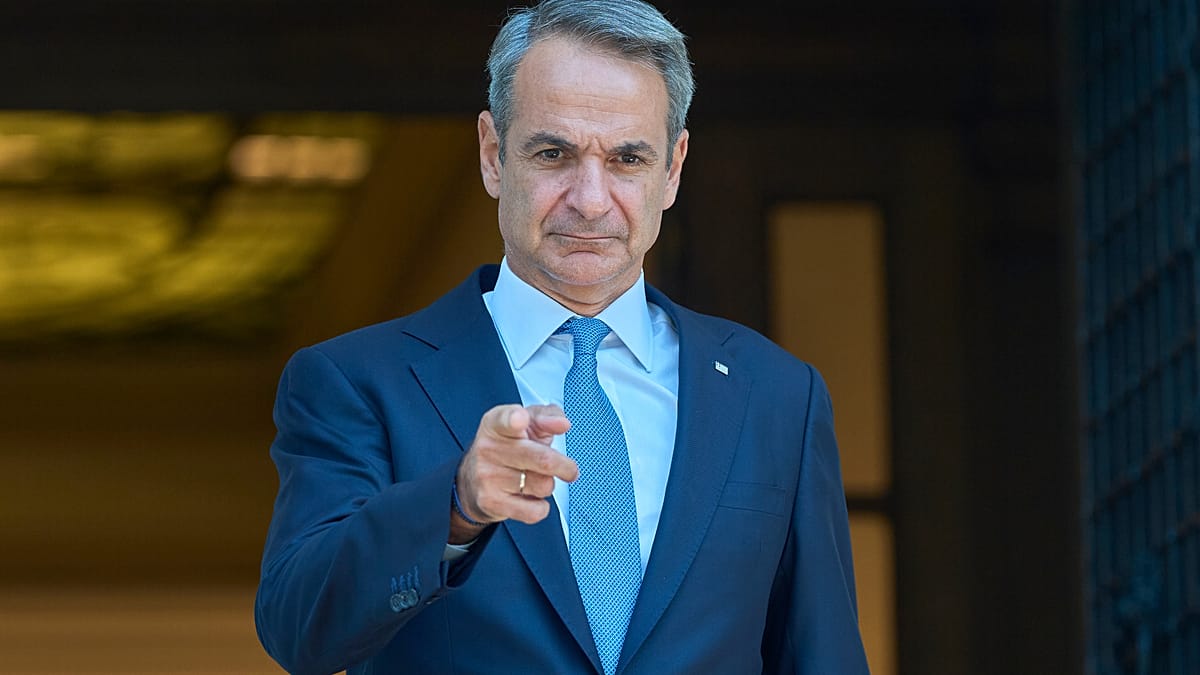
Greece pushes for EU action to tackle energy costs
Greece will press for more measures to help households and businesses cope with rising energy costs, Prime Minister Kyriakos Mitsotakis has said, adding that the price surge is fuelling European inflation.
“We will ask the Commission to come to the table with additional proposals, beyond those already submitted,” Mitsotakis told reporters.
He said that prudent fiscal policies have given Greece room to support consumers, including through heating oil interventions and heating allowances ahead of a difficult winter.
Greece urges EU to loosen fiscal rules as energy crisis deepens
High energy prices and military escalation at energy facilities in the Middle East prompted Greek Prime Minister Kyriakos Mitsotakis to ask Brussels for greate…
Greece warns energy prices are fuelling inflation
Rising energy costs are driving a fresh surge in European inflation, Greece’s PM Kyriakos Mitsotais said, calling for a coordinated EU response rather than relying solely on national measures.
“Energy costs have fueled a new surge in European inflation,” he said, arguing that Brussels must consider “additional measures and further flexibility” to help the most vulnerable households and businesses.
The Greek leader cautioned that negotiations would take time, saying he did not expect a deal “today or tomorrow”.
Bulgarian PM: 'Assumptions' but no 'solid evidence' over responsibility for Black Sea drone attacks
Bulgarian Prime Minister Rumen Radev said there were “certain assumptions” about who was behind a series of drone attacks that have sunk and damaged vessels off Bulgaria’s Black Sea coast in recent days, but said he would not attribute blame while investigations were ongoing.
However, “logic” would suggest that one country stood to benefit from the incursions: Russia, he said.
“I summoned the Russian ambassador in Bulgaria because we don't believe that Ukraine will attack its own ships and crews. It is there is no logic here,” he said in response to questions asked by Euronews.
“The results of this attack favour Russia. However, we don't have any solid evidence that the drones are Russians.”
Radev added that an investigation into one of the sunken vessels had yielded no conclusions. A “full terror investigation” would soon begin into another vessel, which was damaged after an attack by three drones on Tuesday morning.
“Once the ship arrives in our harbor, we'll launch a full terror investigation, trying to find any drone debris. Then we'll have a solid, solid evidence to blame any of the countries,” he said.
Irish negobox ‘catalyst’ to get budget negotiation going, PM Martin says
Ireland’s Prime Minister, Micheál Martin, rebuked the accusation that the negotiating box on the EU budget presented a few days ago has only attracted criticism, arguing that the reaction behind the scenes has been positive in relation to how these negotiations work.
“We were never going to please everybody on this one,” he said. “There's a journey to go. It's challenging, and it's complex. There's a wide divergence of opinion.”
The Irish PM pointed out that a large majority of member states want to protect the Common Agricultural Policy and cohesion funding, while a group of net contributors wants to scale down the overall volume, considered too ambitious.
“It's a very difficult balancing exercise. But the function of the nego-box was to be a catalyst to get negotiations going in earnest. That will happen,” Martin added.
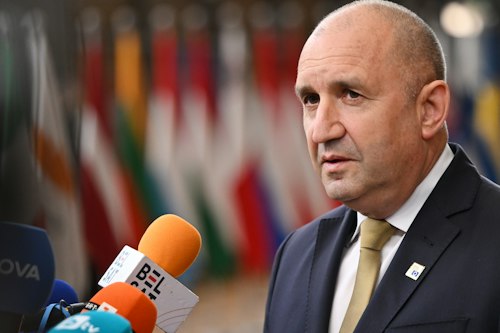
Bulgarian PM breaks ranks with EU leaders, backs Trump-Putin diesel deal
Bulgarian Prime Minister Rumen Radev broke ranks with his fellow EU leaders by expressing support for the diesel deal struck by US President Donald Trump and Russian President Vladimir Putin in defiance of Western sanctions. He also condemned Ukraine's airstrikes against Russia's oil refineries, which EU leaders back, given that it's the main advantage that Kyiv has over Moscow.
On the diesel deal: "You know what is our problem right now in Europe? High fuel prices. Any step in reducing the fuel prices and to guarantee our competitiveness, we appreciate."
On Ukraine's strikes: "I don't support strikes on any refineries. I don't support strikes on any energy power plants, like Russian attacks on energy power plants in Ukraine, because this hits us back. The prices in Europe are (skyrocketing)."
On peace talks: "We should have more dialogue and look for more dialogue and peace."
Credit: Associated Press
EU budget deal needed by end of year: Cyprus president
EU leaders must reach an agreement on the bloc’s next seven-year budget by the end of the year, Cyprus President Nicos Christodoulides said as he arrived at the European Council, adding that funding for new EU priorities should not come at the expense of existing policies.
His remarks come as EU leaders face splits over the next long-term budget, with the so-called frugal member states pushing to limit spending, while others advocate expanding the EU’s own resources.
“New policies of the European Union will be reinforced, security protection, competitiveness, immigration, but at the same time, these should not become the burden of the common agricultural policy, of the co-operation fund, of the political co-operative that the European citizens benefit from,” Christodoulides said.
The Cyprus president added that an agreement must be reached by the end of the year, despite elections in Spain and Sweden, which he warned “are likely to create some issues.”
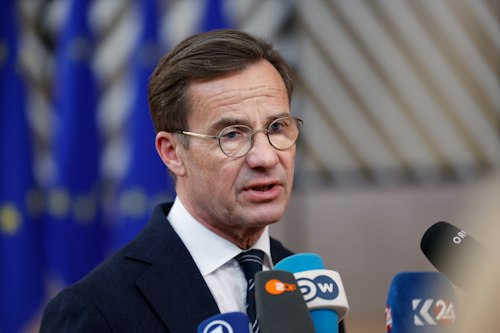
EU budget is 'no-go zone', Swedish PM Kristersson says. 'I'll simply say no'
As expected, Swedish Prime Minister Ulf Kristersson has come out strongly against the proposed EU budget, even after the steep cuts proposed by Ireland, saying it is "unacceptable". Sweden is considered the most radical among the frugal camp.
"I think this is not even a starting point for these discussions. This is far too big, far too expensive. It would increase the Swedish net contribution (by) over 60%. That is simply totally unacceptable," he told reporters. "So I will simply say no to today's proposals. And this is not a starting point for the final agreement."
"It's simply not acceptable. It's a no-go zone."
Kristersson predicted today's debate on the next seven-year budget, scheduled for the afternoon, will be "pretty tense" and cast doubt on the goal to reach a unanimous agreement in December.
"We are not reaching an agreement this month. Not next month. I don't know even if it's possible to reach an agreement before the end of the year," he said. "I think we are not in a hurry. Honestly, we need to have a budget that can combine modernisation, resources for Ukraine and traditional things as well. But all the titles need to be decreased."
Credit: Associated Press.
Swedish PM backs Ukraine's strikes against Russian refineries
Swedish Prime Minister Ulf Kristersson has defended Ukraine’s strikes on Russian oil refineries despite US pressure to halt them. President Donald Trump has blamed the attacks for rising fuel prices, while energy experts point to his war on Iran as the main driver.
Kristersson, whose country is a leading donor to Ukraine, also decried the diesel deal that Trump has struck with Russian President Vladimir Putin in defiance of Western sanctions.
'We very much regret this agreement on diesel. It's obviously not a very big part, but still it's in the wrong direction," the Swedish premier said. "Every step now to help the Russians to increase their financing of the war is a bad sign. So we very much stick to Volodymyr Zelenskyy's view."
Ukrainians "need to limit the money that Russia can gain from (oil) exports," he added. "That's also a way of saying that the agreement between the US and the Russians right now is a bad sign, of course."
Estonian PM Michal: US needs reminding of 'what is right' with Ukraine
Estonian Prime Minister Kristen Michal said the US President Donald Trump remains a steadfast ally to Tallinn within NATO, but that even close allies sometimes need reminding of what is right.
"NATO is working well, and the US is a partner in NATO," he said on his way into the European Council.
"Trump has assured us...that he is following NATO and also Article 5 so we rely on them, and also sometimes even good friends need a reminding of what is right."
His comments came amid questions over Trump's diesel deal with Russian President Vladimir Putin, which EU leaders say undermines Ukraine.
Michal said that, during his two years as prime minister of Estonia — a country bordering Russia — he had witnessed numerous hybrid warfare incidents, including cable cuts and damage to critical infrastructure such as pipelines.
"We have had Russian fighter jets in our airspace. We even had had to shoot down different drones in our airspace," the Baltic leader said.
"Help came from NATO, and we still have NATO ships on the sea guarding our critical infrastructure."
Portugal PM: 'The US deal with Russia won’t solve high prices'
Portuguese Prime Minister Luís Montenegro describes the US decision to strike a diesel deal with Russia as "incoherent" and "inconsequent".
Montenegro said it gives a "bad signal" as high prices will be limited.
"We need one intervention that will be diplomatically efficient to sustain this surge in prices, which are absurd and insane," Montenegro added.
Lisbon recently hailed its transatlantic relationship with the US after US Secretary of State Marco Rubio visited last week.
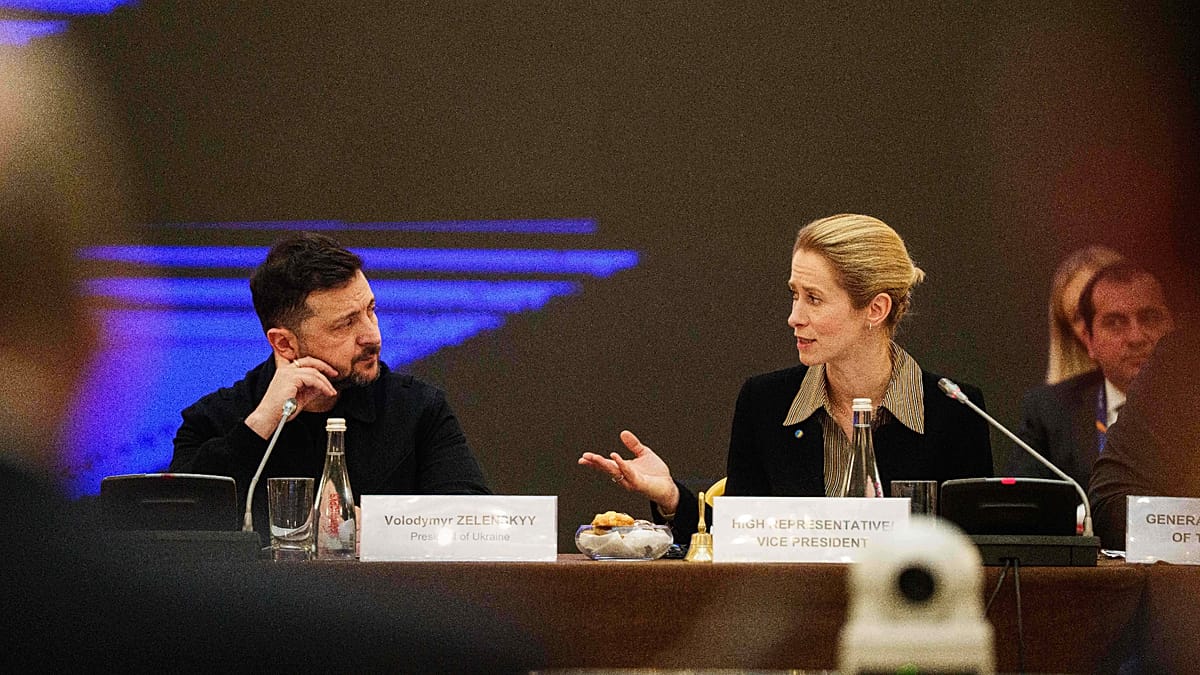
Ukraine's strikes on oil rafineries are in line with international law, Kallas said
The EU's top diplomat told Euronews that Russian oil refineries are to be considered legitimate targets, since they are the main source of financing for Moscow's war of aggression.
“If we look at international law, it is clear that [hitting refineries] is in defence of Ukraine because that is where the funding comes from for this war to kill Ukrainian people every day,” she told Euronews in an exclusive interview.
The remarks come after the US government announced a deal for Russia to supply more than 300,000 tonnes of diesel and an "energy ceasefire" between the two belligerents.
Meanwhile, Ukrainian President Volodymyr Zelenskyy said Kyiv will resume strikes on Russian oil refineries, accusing Washington of suspending intelligence-sharing and disrupting Starlink satellite internet services amid intensified Russian attacks on Ukraine.
Kallas: Ukraine’s attacks on Russian refineries are self-defence
EU foreign policy chief Kaja Kallas says Ukraine’s strikes on Russian refineries are legitimate, as Kyiv vows to resume them despite Trump’s energy ceasefire.…
'EU can't rearm with an economy running on expensive energy': Latvian PM Kulbergs
Europe’s defence ambitions risk being undermined by its energy costs, Latvia’s PM Andris Kulbergs warned, arguing that the EU must tackle expensive energy if it wants to strengthen its military capabilities and remain economically competitive.
Responding to questions about resistance from countries such as Germany to spending more on European security, the Latvian PM linked the political dispute over funding directly to the weakness of the European economy.
“If we would have a flourishing economy, the discussions would be much easier,” he said, describing energy as the fuel for production, exports and economic growth.
Czech Prime Minister attacks ETS, says market speculators undermine EU economy
Czechia’s Prime Minister Andrej Babis sharply attacked the Emissions Trading System (ETS) and carbon taxes, blaming carbon market speculators for destroying Europe's competitiveness.
“Someone is making billions at the expense of the European industry, which is in decline and which of course has major problems,” Babis said.
Babis said EU climate policies are "ideological stuff" that ignore economic realities. He added that carbon allowance prices skyrocketed far past original forecasts, arguing that the system rewards financial gamblers while punishing traditional manufacturing and regular citizens.
Babis and his Italian counterpart Giorgia Meloni have recently urged Brussels to provide immediate economic oxygen to struggling European factories.
Lithuania's Nausėda: Western 'family' must stand united against Russia
Lithuanian President Gitanas Nausėda has warned that Europe and its allies must continue to support Ukraine against Russia as it is a "family" and that the Kremlin wants more than just territorial gains.
"Please let's stay united in our family, because Russia is challenging our style of life, our rules, our rule of law, democratic rules, human rights, everything," he said as he arrived at the European Council summit on Thursday.
"It would be naive to expect that they (just) want to conquer more territories. They are challenging the Westerns' style of life."
Lithuania, alongside fellow Baltic nations Estonia and Latvia, remains among Ukraine’s strongest supporters within the EU, having repeatedly warned against international leniency towards the Kremlin.
The Baltic trio are expected to use the European Council summit to revive previously rebuffed plans to restrict visas for Russian nationals, alongside other measures.
'We should execute sanctions against Russia,' Kulbergs says
Latvia's PM Andris Kulbergs said Brussels should "execute sanctions" against Russia, highlighting the EU’s failure to harmonise restrictions on the company’s products, which ultimately reach Russia.
"If we put them in place, we should execute them," the Latvian leader said, noting that Russia is getting its upper hand by transiting the grain through Baltic countries.
"That's putting a big pressure. And that's not the way it should happen (...) We don't want to fuel the Russian war machine, and unfortunately, that's happening," Kulbergs said.
Russia will not get what it wants by dealing with the US alone, Kallas says
The Russians will not get what they want by reaching a deal with the US alone, the EU's top diplomat told Euronews in an exclusive interview, arguing Moscow has miscalculated because the Europeans have kept supporting Ukraine and Kyiv has not surrendered.
“The message is that you need to talk to the Europeans," she said, arguing that the diesel deal and energy ceasefire are a gift to Russia's President Putin.
Kallas reiterated that international pressure should fall on the aggressor to stop the war, not on the victim to surrender, a position she said Europe has consistently held.
“If we did this together with the US, then the message to Russia would be clear: stop this war, and all your worries when it comes to oil refineries and whatnot will also stop,” she added.

Russia miscalculated in sidelining Europe, Kallas tells Euronews
EU foreign policy chief Kaja Kallas tells Euronews Russia has miscalculated by seeking a deal with Washington alone, stressing that Europe will continue to bac…
Better good deal than bad deal on EU budget: Dutch PM Jetten
Dutch Prime Minister Rob Jetten, a leading member of the so-called "frugals" seeking to cut spending, has renewed his plea for a slimmer, more modern EU budget. The current proposal drafted by Ireland's EU presidency has enraged the frugal camp, who aim for even larger cuts. The topic is set to divide leaders later today.
"In the end, we need a good Multiannual Financial Framework (MFF). So, of course, everyone wants to make speed. But it's more important to have a good deal than a bad deal," Jetten said as he arrived.
"At the moment, the proposal by the Irish presidency is not good enough to reach an agreement. And we have to downsize and modernise this MFF if we want it to be fit for the future," he added.
"The MFF proposal as we have on the table right now is not good enough for the Netherlands because we want to prioritise what's ahead of us: our competitiveness, our safety and our future welfare. And if you want a budget that's fit for that, we need to downsize and modernise the proposal that's on the table right now."
The stark differences among capitals bode ill for the goal of reaching a unanimous deal by December this year.
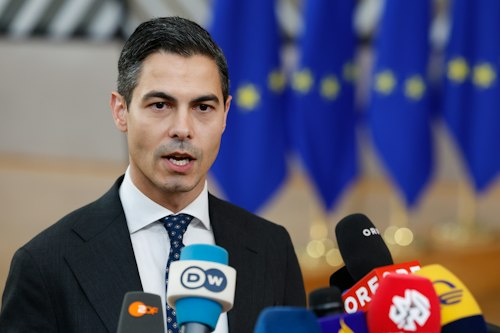
'Let's step up our game and make sure that they can win this senseless war,' Dutch PM says
Rob Jetten, the prime minister of the Netherlands, is among the first to arrive at the summit. In his remarks, he urged his European allies to ramp up financial and military aid to Ukraine.
"There is only one reason why this senseless war of aggression is continuing, and that's because Putin chooses to do so. He is the one who can end this war by starting negotiations for a just and lasting peace," Jetten said, reflecting on the latest US overture to Moscow.
"And as long as he doesn't, the Ukrainians will have to defend themselves and defend European values. And we stand shoulder to shoulder with the Ukrainians, and they have to do whatever is necessary to protect the Ukrainian people," he went on.
"I call upon all the European leaders to do more financially, militarily and non militarily because a lot of European countries are lagging behind in the support for Ukraine. So let's step up our game and make sure that they can win this senseless war."
The Netherlands, a leading donor to Ukraine, has long complained that other EU countries are not doing enough to back Kyiv's fight against Russia. The country is among those that support the use of the immobilised Russian assets, which would exempt European taxpayers.
Credit: Associated Press.
Nordic trio warns EU against watering down carbon market
Finland, Denmark and Sweden warned EU leaders that watering down the EU's carbon market, the Emissions Trade System (ETS), would undermine investment in clean technologies and those who have already invested.
"Any weakening of the ETS would undermine the predictability on which investment decisions depend and risk slowing the pace of industrial decarbonisation," reads a letter penned by the three EU countries and seen by Euronews.
The Nordics argue that cutting ambition would also "shift the burden of emission reductions to other sectors of the economy", where mitigation options are often more difficult and politically difficult.
The ETS debate is about to heat up again as EU leaders try to counter soaring energy prices and argue that carbon pricing is yet another deterrent to the bloc's competitiveness — clashing with the EU's climate ambitions.
Meloni slams Trump's Russia diesel deal as ‘very risky choice’
Italian Prime Minister Giorgia Meloni sharply criticised Donald Trump's diesel deal with Russia, calling it a “very risky choice” that legitimises Moscow while undermining Western sanctions.
Speaking in the Italian parliament on Wednesday ahead of the EU summit in Brussels, Meloni warned that the agreement could weaken economic pressure on Russia and undermine efforts to bring Vladimir Putin to the negotiating table.
Volodymyr Zelenskyy, who was visiting London on Wednesday, responded in a post on X, thanking Meloni for her “clear, unequivocal, and principled stance” and for understanding what was needed to secure a dignified and lasting peace.
Zelenskyy also praised British Prime Minister Andy Burnham during their talks at Downing Street, as the UK pledged to accelerate military assistance to Ukraine and pursue further sanctions against Moscow.
Burnham reaffirmed Britain's unwavering support for Ukraine, pledging to accelerate deliveries of air-defence missiles, while also saying he would seek to repair relations between Kyiv and Washington following Trump's controversial diesel deal with Moscow.
Zelenskyy says he feels betrayed by Trump as he seeks Europe's support at crucial EU summit
Volodymyr Zelenskyy said Ukraine is losing a key ally in the US and admitted feeling betrayed by Donald Trump, as relations between Kyiv and Washington hit a new low ahead of a crucial EU summit in Brussels.
Speaking to British broadcaster Piers Morgan during his visit to London on Wednesday, Zelenskyy was asked whether Ukraine was losing American support.
“Yeah, but not because of us. We can't be weak,” he replied.
“It's painful when President Trump chooses one side, not our side,” Zelenskyy said.
Asked whether he felt betrayed, he answered: “Really, yes,” although he stressed that the situation was more complicated than his personal feelings.
His remarks come as Washington eases restrictions on Russian diesel exports while stepping up pressure on Kyiv over its strikes on Russian oil infrastructure.
Zelenskyy is due in Brussels on Friday to seek renewed European backing, with EU leaders set to discuss continued support for Ukraine as the country braces for another difficult winter
BREAKING: President Zelensky tells Piers Morgan he feels 'betrayed' over Trump announcing an energy ceasefire and diesel deal with Putin. 'This is not the righ…
Europeans rebuffed plan to release Russian assets: FT
Ukraine's European allies rebuffed a plan floated by the United States to release a share of the immbolised assets of the Russian Central Bank as a way to incentivise Moscow into the peace talks, according to the Financial Times.
The plan was presented last Friday during talks in Miami that included US special envoys Steve Witkoff and Jared Kushner and senior officials from Germany, the United Kingdom, France, the European Commission and NATO.
According to EU law, the Russian assets can be released only if three conditions are met:
- Russia ceases its war against Ukraine
- Russia pays reparations to Ukraine
- Russia ceases to represent a risk to the European economy
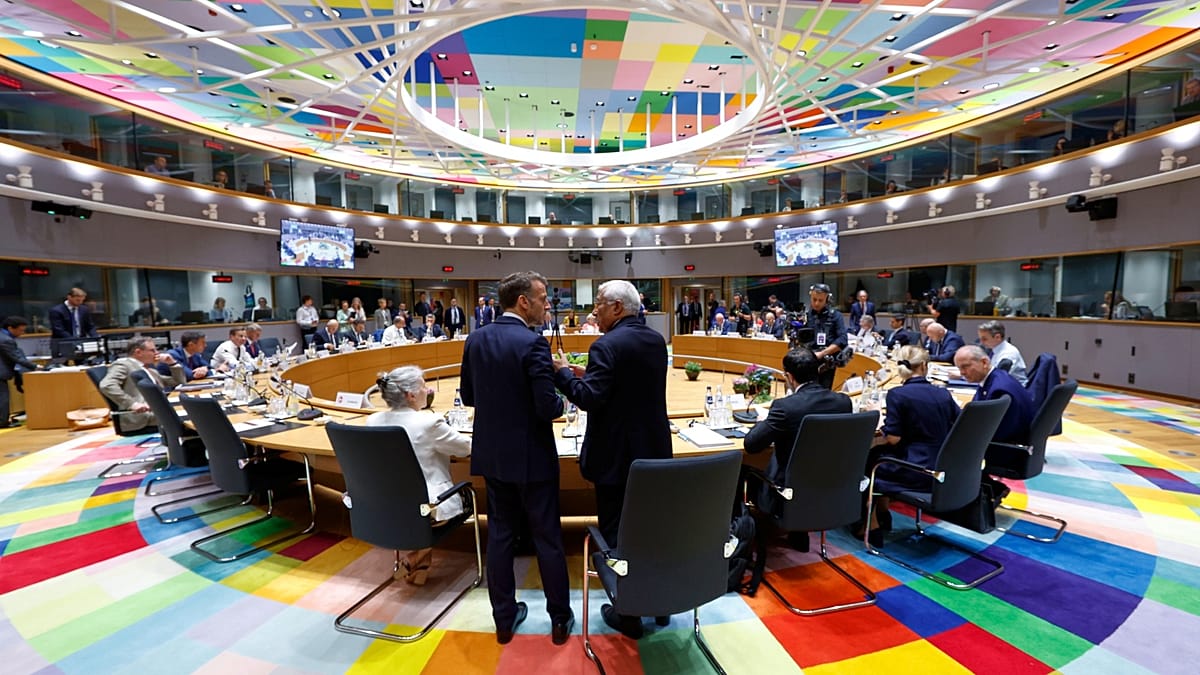
What's on the agenda of the EU summit?
This two-day summit is particularly packed when it comes to hot-button issues: energy, China, budget, enlargement, Ukraine, hybrid and migration are among the topics. Here's what to expect.
EU leaders tackle energy prices, spar over budget and unite on Ukraine
The two-day summit of EU leaders comes with a packed agenda topped by energy prices, the long-term budget and Russia’s war on Ukraine. Hybrid warfare, enlargem…