


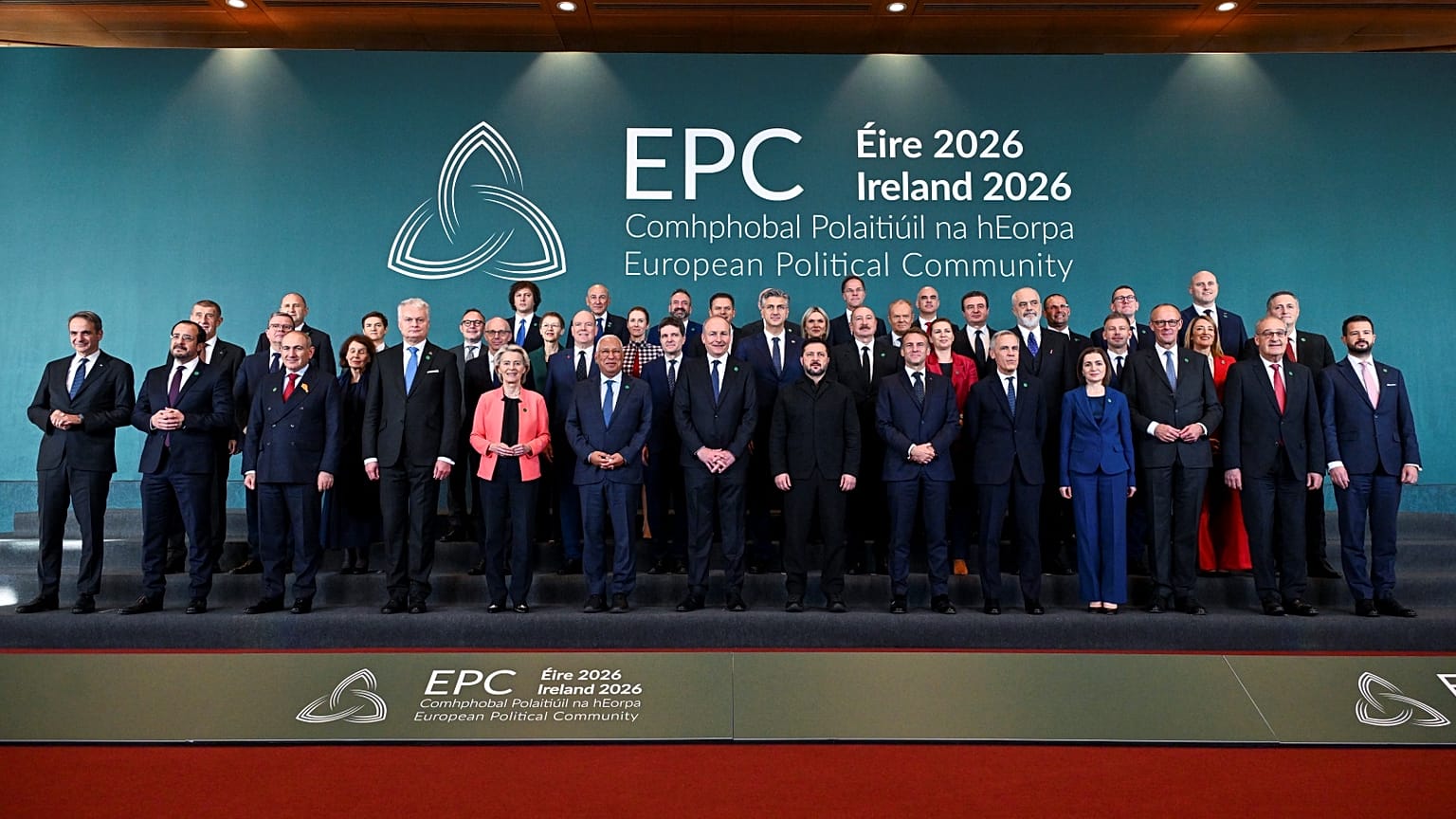


European leaders have pushed back against Russia's attempt to revise the continent's security architecture as part of the Ukraine peace talks.
Europe's leaders have told Russia that the future of the continent's security architecture cannot be decided without Europeans at the table, following a round of peace talks in which Moscow's delegation rejected a multilateral format.
 ADVERTISEMENT
Russia has put the issue of security architecture at the very top of its priorities, triggering pushback from Europeans, who believe this is a ploy to divert attention from the war in Ukraine and advance its longstanding ambition to reassert itself as a great power.
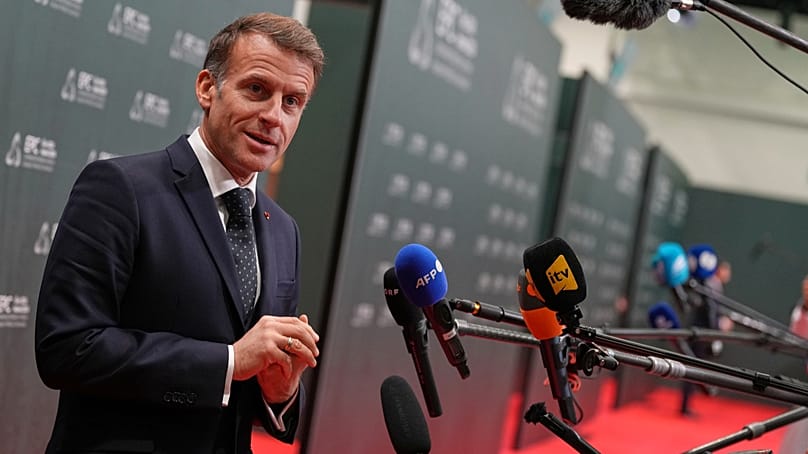
"At the end of the day, we will be the ones to define and decide for our future security as Europeans. I have no doubt about that," French President Emmanuel Macron said on Thursday at the start of a leaders' summit in Dublin, Ireland.
"Europe must first be clear about what it wants. Currently, Europe is very clear regarding its support for Ukraine. Now, we must articulate a concrete vision for our peace plan and for the future security architecture."
Echoing Macron's point, German Chancellor Friedrich Merz urged Russia to engage face-to-face with European representatives, something that Moscow has yet to consent to.
The last round of talks in Abu Dhabi featured senior officials from France, Germany, the United Kingdom, Italy, the European Commission, the European Council and NATO. But none of them interacted with the Russian team.
"Ukraine must sit at the table. Europeans must sit at the table. The Americans and, of course, Russia must sit at the table," Merz said upon arrival.
"It is important that Russia comes to the table and that Russia is ready for talks."
High Representative Kaja Kallas stressed the importance of "sequencing" the diplomatic process: first, a ceasefire in Ukraine; second, a peace settlement; and, at the last stage, a discussion on European security architecture.
"We already have a European security architecture in place," she said, citing the 1975 Helsinki Accords, the 1990 Paris Charter and the 1994 Budapest Memorandum.
"The problem is that Russia is not keeping to those agreements."
Estonian Prime Minister Kristen Michal said the renewed talk about security architecture was a "trap" set by Moscow to achieve "everything impossible", including the roll-back of NATO, a grievance that Russian President Vladimir Putin has made a strategic goal.
In the weeks leading up to the full-scale invasion of Ukraine, the Kremlin issued an ultimatum to NATO to halt its eastward expansion and withdraw troops from members that joined after 1997. The demands were outright rejected. A few months later, Finland and Sweden, two historically neutral countries, applied to join NATO.
Lithuanian President Gitanas Nausėda insisted the negotiations should take place under "fair conditions" and with European presence.
"Discussions should be avoided behind the back of the Ukrainians, and, of course, discussions about the future security architecture of Europe should be with the involvement of the European Union," Nausėda told reporters.
The collective pushback comes a day after Vladimir Medinsky, Russia's chief negotiator for the peace talks, doubled down on Moscow's interest in broadening the diplomatic scope beyond Ukraine to encompass the entire security architecture.
"The whole organism is ailing, and Ukraine was just a place where an abscess has burst. Therefore, the entire organism must be treated. A simple adhesive bandage will not suffice," Medinsky said in Abu Dhabi, using crude terms.
Medinsky, however, refused to engage with the Europeans due to their military and financial support for Ukraine. (The opposition, though, is not a blanket ban: last month, Putin held a 90-minute phone callwith the leaders of Finland and Norway.)
The focus on security architecture has been amplified by US President Donald Trump and his special envoy, Jared Kushner, who recently shocked Europeans with an extensive social media post laying out principles for a post-war framework.
While in Abu Dhabi, Kushner asked Russians to come up with "proposals" to be discussed face-to-face with Europeans. Kushner then flew to Moscow to secure Putin's "blessing" to bring the negotiations into a multilateral format.
Ukrainian President Volodymyr Zelenskyy called the approach "a bit strange" and advised Europeans to "pay close attention".