

Mongolia is facing growing political and economic uncertainty after Parliament approved the resignation of president Khurelsukh Ukhnaa. Rising inflation and fuel shortages are adding to economic pressures, while rival factions within the ruling People's Party compete for political influence.
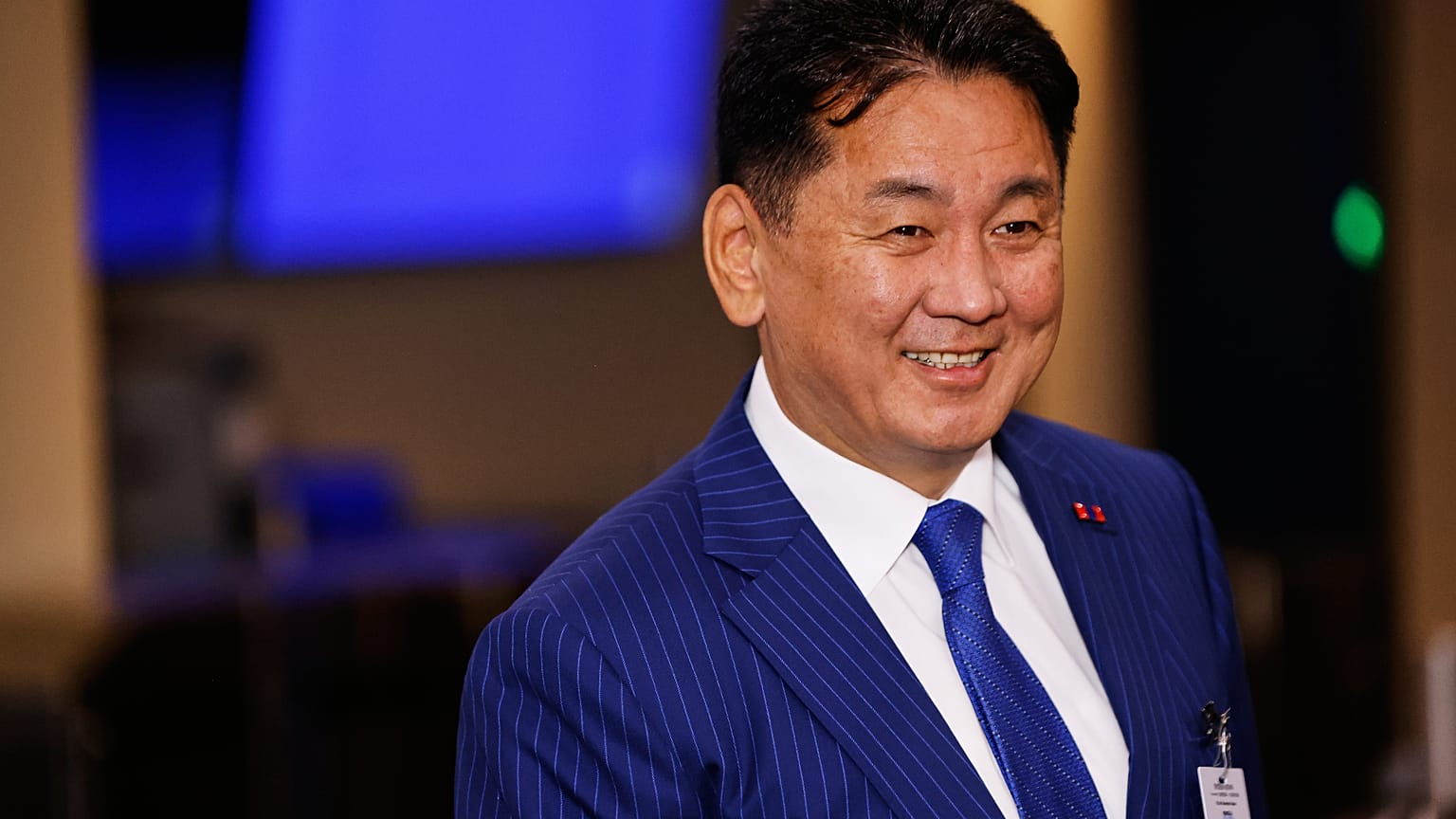
Mongolia will hold a snap presidential election after President Khurelsukh Ukhnaa resigned amid corruption allegations which he has rejected.
 ADVERTISEMENT
The State Great Khural, Mongolia's Parliament, accepted the country's first-ever presidential resignation on Thursday, with 96 of the 104 lawmakers present voting in favour of the motion, according to the state news agency.
The former minister of Justice and former mayor of Ulaanbaatar, Nyambaatar Khishgee, accused president Ukhnaa and other top officials of corruption. The outgoing president denied any wrongdoing and said he decided to resign to allow him to prove his innocence.
This marks the first time in Mongolia's democratic history that a sitting president has resigned before completing their term, ahead of a presidential election scheduled for June 2027.
During a Facebook Live broadcast, which local authorities claim was streamed from Canada, Nyambaatar Khishgee accused that the president allegedly received over $22 million in connection with the Tavantolgoi-Gashuunsukhait railway project, when Khurelsukh served as prime minister.
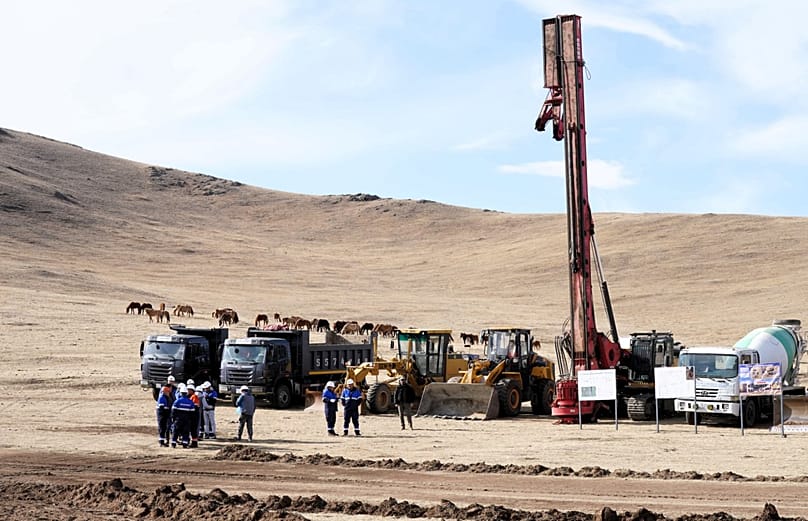
The Tavantolgoi-Gashuunsukhait Railway is a strategic 234-kilometre heavy-haul railway in southern Mongolia, connecting the Tavan Tolgoi coal deposit in the Omnogovi Province to the Gashuunsukhait border port with China.
Khishgee claims that the Mongolian president would have ensured that the railway contract was awarded to Bodi International LLC in 2019 without a competitive tender.
Mongolia’s deputy minister of Justice and Home Affairs Munkh-Erdene Dembereltseren, and the head of the Cabinet secretariat Enkhbayar Battumur were also mentioned in the accusations.
In a news conference on Tuesday, outgoing president Ukhnaa stated he had faced sustained attacks on his reputation and rejected accusations.
"I have never stolen from my people or my state," Khurelsukh Ukhnaa said, adding that "I will hand over my duties as president and become an ordinary citizen."
The opposition Democratic Party then called on Khurelsukh to resign.
The resignation was approved by 96 of 104 lawmakers (92.3%), while eight voted against it, including Prime Minister Nyam-Osoryn Uchral.
The company behind the railway construction rejected the allegations, saying the project was completed between 2019 and 2022 within the budget approved in 2013.
"The advance payment of 286 billion Mongolian tugrik (around $79 million) transferred by the project owner was used strictly for its designated purposes, as evidenced by project performance records, financial transactions, and bank statements," the company said in a statement.
According to the statement, "documentary evidence also confirms that the project cost was not increased by a single tugrik (MNT) throughout its implementation."
Power struggle within Mongolia's ruling party
Behind the latest political turmoil in the country is a growing struggle for power within the ruling Mongolian People’s Party, which has governed Mongolia since 2016.
Nyambaatar Khishgee belongs to the ruling Mongolian People’s Party, the same as the president, but is from a different faction.
"Rival factions within the governing party can become the main source of opposition, turning internal disputes into national political crises," Undral Amarsaikhan, the CEO of Mongolian media company Tenger TV told Euronews.
He also pointed to the economic impacts of political uncertainty, as inflation has reached 13.6%, its highest level since 2022, while fuel shortages have been visible since the summer.
"Mongolia has had three governments in the past year, and the divisions involving former Prime Minister Oyun-Erdene and rival factions have become increasingly public. This confrontation is about both accountability and control over the party’s future," Amarsaikhan added.
The former president said that he will work alongside the people to clear his name and pursue justice, and that he will serve wherever the nation calls.
"At this stage, it feels more like the beginning of another period of uncertainty. The coming presidential election, followed by parliamentary elections in 2028, gives rival factions strong incentives to compete for influence now," Amarsaikhan said.
"The resignation may resolve the immediate question of who occupies the presidency, but it does not resolve the divisions within the governing party. If the outgoing President remains politically active while pursuing constitutional change, the struggle could become broader and more intense," he added.
According to Mongolia's Constitution, Parliament Speaker Sandag Byambatsogt will serve as acting president. A new president is expected to be elected within four months.
Before leaving office, Khurelsukh called for a constitutional referendum alongside the upcoming presidential election.
He suggested either introducing a bicameral parliament that would elect the president or shifting to a presidential system with greater executive powers.
Parliament has yet to announce a referendum on the proposed constitutional changes.
Relations with Europe
Mongolia has been seeking to improve relations with international partners other than its two powerful neighbours, China and Russia.
The country has long followed a foreign policy known as the ‘Third Neighbour Policy’, with the aim of improving relations with international partners, including the European Union.
Just one month before his resignation, Khurelsukh went on a state visit to Germany. During this visit, he met German President Frank-Walter Steinmeier.
As part of the visit, Mongolia and Germany signed a joint declaration to strengthen their existing strategic partnership. This includes cooperation on renewable energy, education and security.
In a statement following a meeting in Brussels on 29 June, the EU reaffirmed its support for Mongolia’s Third Neighbour Policy.
The EU described its partnership with Mongolia as based on democracy and the rule of law, while reaffirming its support for the country's economic diversification.