

The Belarusian leader said medieval history cannot justify territorial claims, since Russian lands were themselves once under Mongol rule, and traced East Slavic statehood to Kyivan Rus'. He then appeared to soften the remarks, saying Putin "perfectly understands this" and is "misinterpreted".
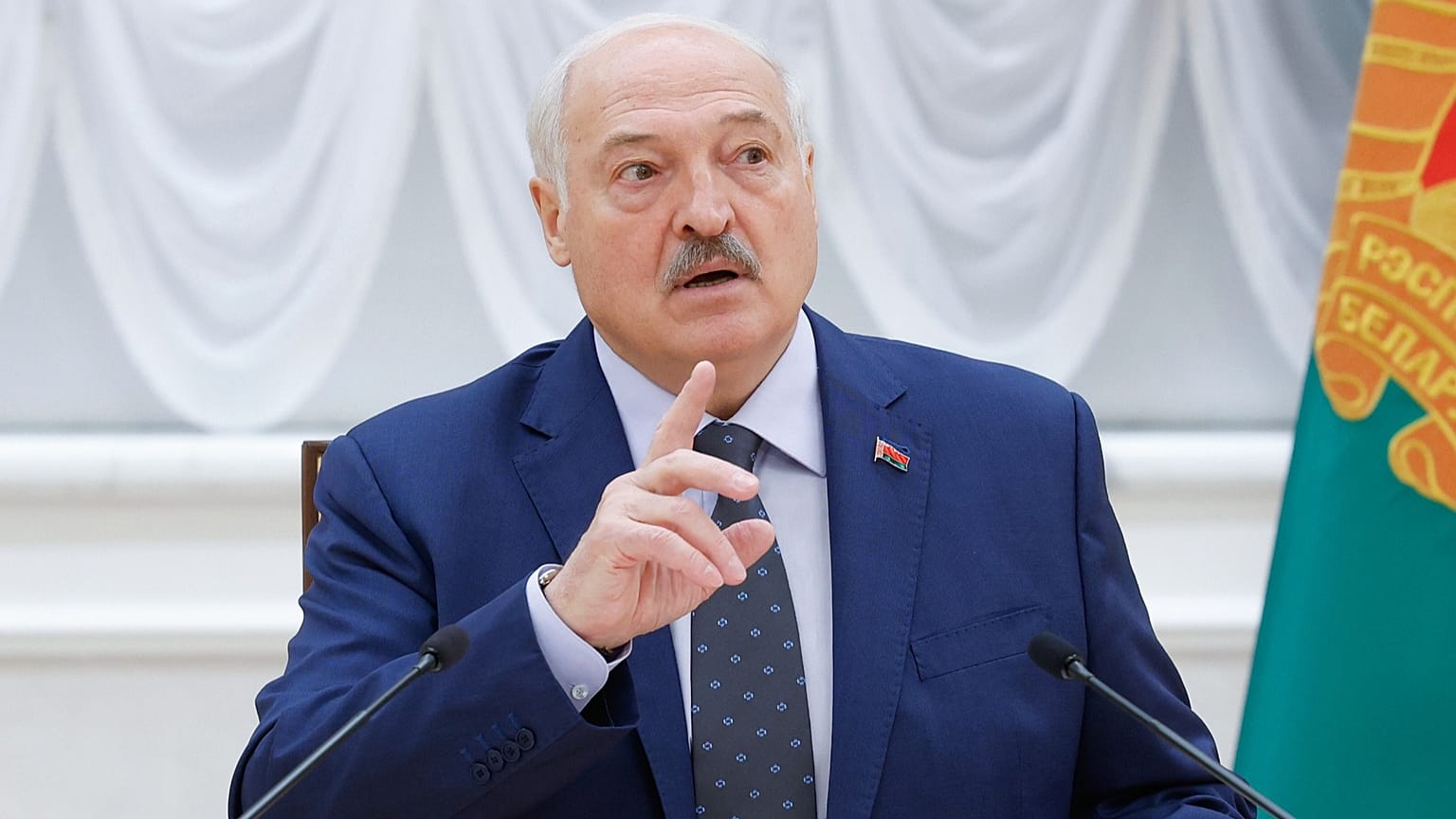
Belarusian President Aliaksandr Lukashenka has questioned the logic behind Russia's claims to Ukrainian territory on historical grounds, saying in an interview that following the same reasoning Russia itself should be returned to Mongolia.
 ADVERTISEMENT
Speaking to French magazine Le Point, Lukashenka said that attempts to justify territorial claims by appealing to medieval history were misplaced, citing the period of Mongol domination over the Russian principalities between the 13th and late 15th centuries.
"And today to say that these lands are Russian and have been since time immemorial… At some point they were Russian. But if you look more deeply, Russian lands themselves were once Mongol-Tatar, remember? Then we should hand over the whole of Russia to whom, Mongolia?" Lukashenka said.
He traced East Slavic statehood to the era of Kyivan Rus' in the 11th and 12th centuries — in what is now Ukraine — and said later historical periods could not be used to justify claims on today's independent states.
Lukashenka then appeared to soften the remarks, insisting that Putin "perfectly understands this" and does not dispute the existence of the Ukrainian people or Ukrainian statehood, and that he is simply "misinterpreted".
He added that he shares Moscow's position on "the need for a common future for the peoples of the region."
The remarks echo a 2024 post by former Mongolian president Tsakhiagiin Elbegdorj, who published a "Mongolian historical map" from 1471 on X after Putin gave US conservative journalist Tucker Carlson an extended account of Russian history, showing a diminished Russia within a vast Mongol domain.
"Don't worry. We are a peaceful and free nation," Elbegdorj wrote.
History of ahistorical claims
Putin's argument that parts of Ukraine are "primordially Russian" has been central to the Kremlin's official rhetoric since his 2021 article "On the Historical Unity of Russians and Ukrainians".
On the eve of Russia's full-scale invasion of Ukraine on 24 February 2022, Putin invoked those historical claims explicitly, using them to deny Ukraine's legitimacy as an independent state and to frame the invasion as a correction of a historical injustice.
Historians and international observers have described the Kremlin's attempt to use this precedent as selective and ahistorical.
Lukashenka has ruled Belarus since 1994, making him Europe's longest-serving leader. Following a disputed 2020 presidential election that triggered mass protests and a violent crackdown, he relied on the Kremlin's support to remain in power.
The EU and Western governments did not recognise the election result. Thousands of protesters were arrested, and opposition figures were imprisoned or forced into exile.
Belarus allowed Russia to use its territory to launch parts of its full-scale invasion of Ukraine, with Russian forces advancing toward Kyiv from the north before being repelled.
Minsk has since remained a close military and political ally of Moscow, although it has stopped short of committing its own troops to the war.
Belarus has faced successive rounds of Western sanctions over both the crackdown on dissent and its role in the war.