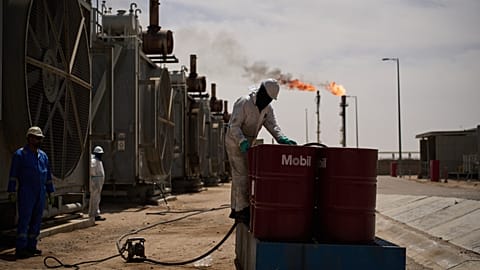
















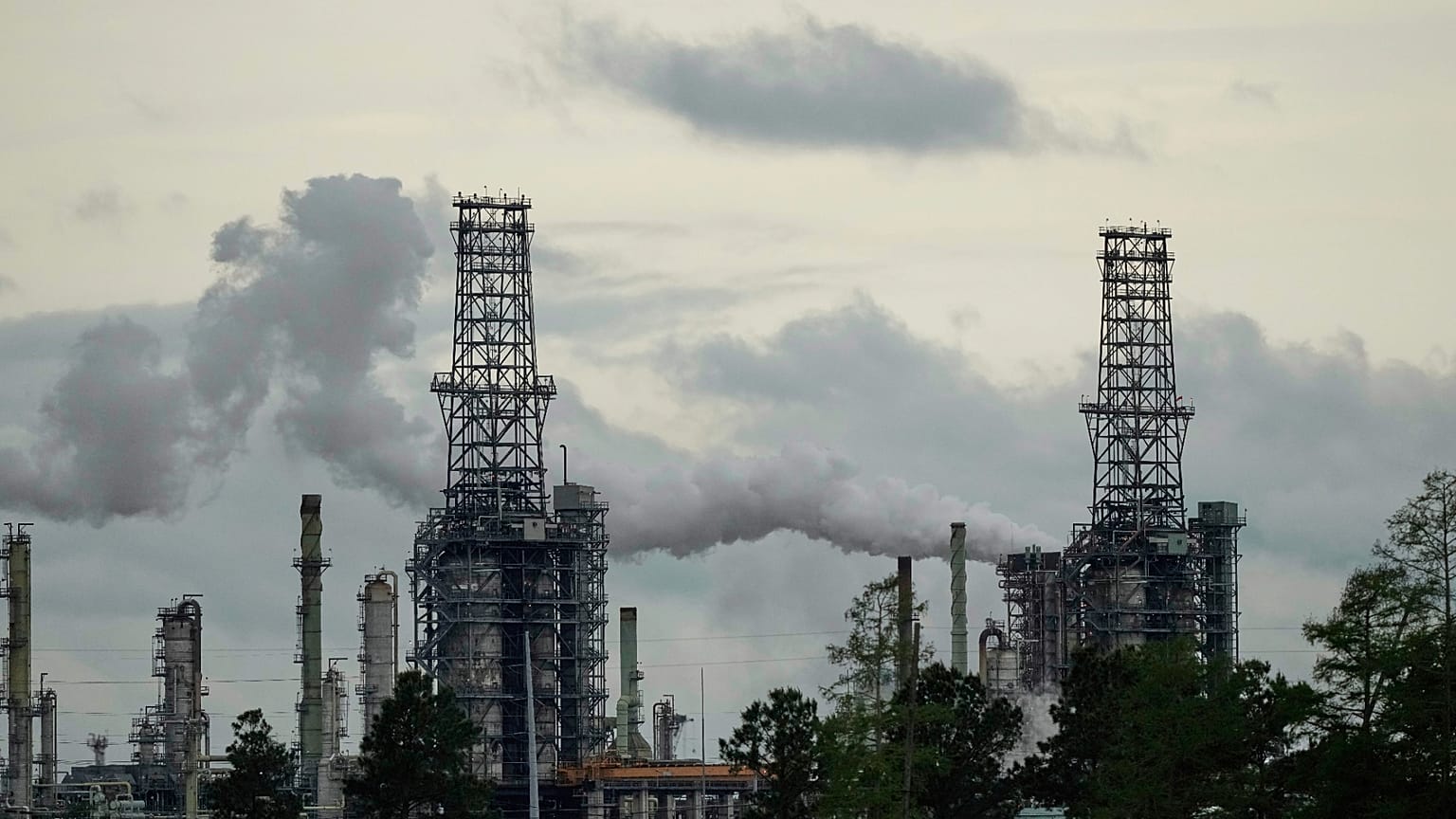













Oil prices jumped on Monday morning while European markets edged lower and Asian stocks rose to new all time highs after US President Donald Trump rejected Tehran’s response to the latest proposal on ending the war in Iran.
Oil prices surged in early trade as investors digested the latest developments in the Middle East, with both Brent and US crude climbing over 4%.
 ADVERTISEMENT
ADVERTISEMENT
ADVERTISEMENT
It comes after US President Donald Trump rejected Tehran’s response to the latest proposition to end the conflict in Iran, and consequent blockade of the Strait of Hormuz, to an end.
Details about the proposal have not been made public. However, Trump stated it was "totally unacceptable".
As a result, the front month contract on Brent crude traded around $104.75 per barrel while US crude, or WTI, was up to roughly $98.90.
On Friday, Brent had closed around $100 while WTI was at roughly $95 per barrel.
As US markets opened on Monday afternoon, prices were slightly down but still up from last week with Brent trading around $103 per barrel and WTI at $96.2.
All US indices were slightly in the green at the open, trading in a 0.3% range with the tech-heavy Nasdaq 100 leading.
In Europe, markets had a mixed reaction throughout the day as they digested the developments. The Euro Stoxx 50 was down over 0.75% but the broader pan-European Stoxx 600 was trading 0.25% higher in the afternoon.
The UK's FTSE 100, Germany's DAX 30 and Italy’s FTSE MIB were all trading within a 0.3% range while France's CAC 40 dropped over 1.2%.
In Asia, indices seemed unaffected by the bad news. Tokyo’s Nikkei 225 fell 2% but only after briefly reaching another record high in intraday trading.
South Korea’s Kospi also hit an all-time intraday high, gaining 4.1% and reaching 7,804.71, led by gains from tech-related stocks including Samsung Electronics and memory chip maker SK Hynix.
Technology-related stocks and growing AI-related interest have supported markets in Japan and South Korea despite the Iran war, with the Nikkei 225 and Kospi rising more than 10% and 30%, respectively, over the past month.
This week, US President Donald Trump is expected to head to China for talks with his counterpart, Xi Jinping. This could be the first US presidential visit to China since Trump went to Beijing in 2017.
The two leaders are expected to discuss a wide range of topics, including trade concerns.