




























A sudden influx of jellyfish forced EDF to shut down three reactors at a plant in northern France. In early August, heatwave and jellyfish left a fifth of France's nuclear capacity offline.
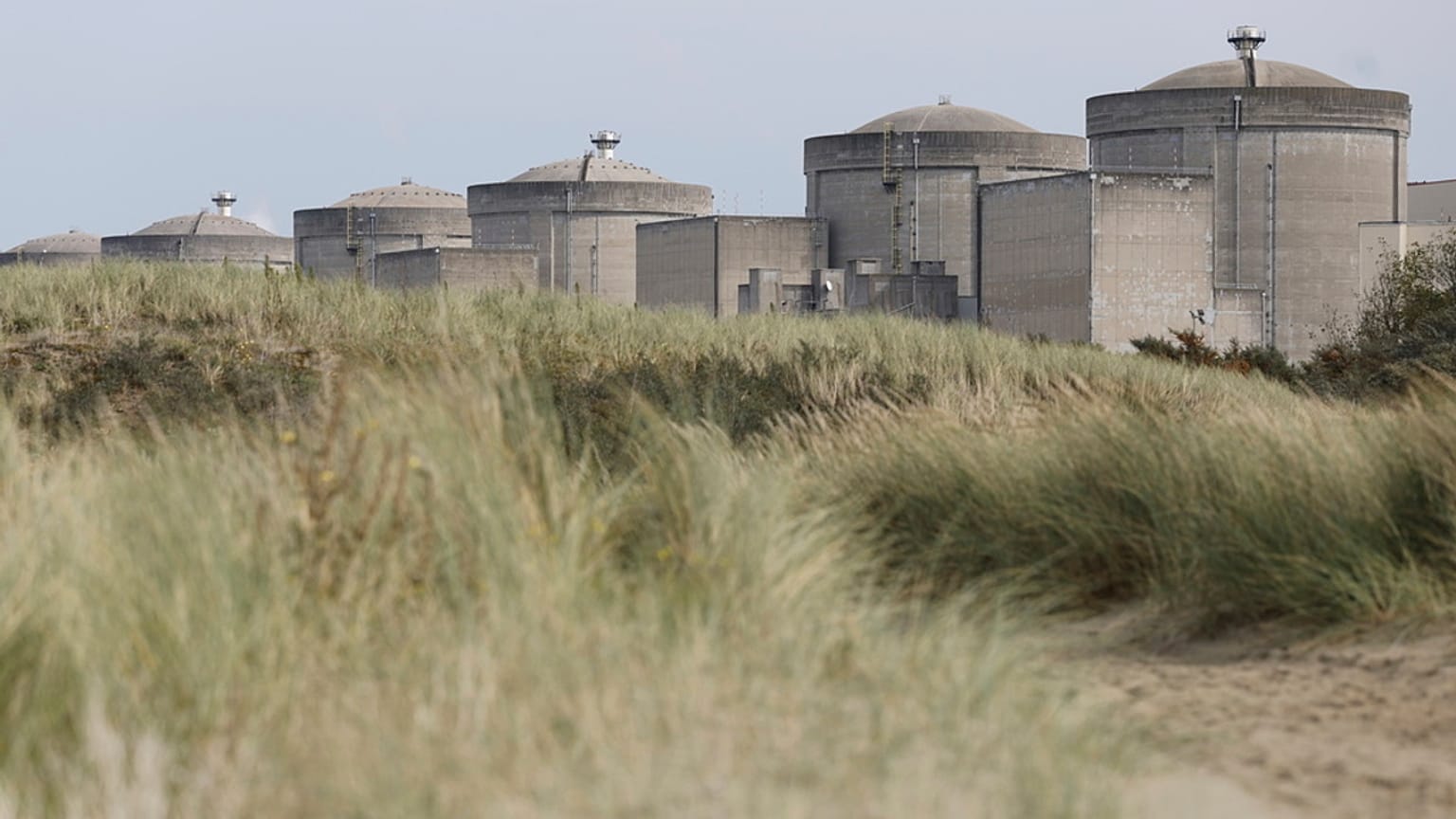
The French government has authorised energy producer and supplier EDF (100% owned by the state) to begin preparatory work for the construction of two future EPR2 reactors at the Gravelines nuclear power station in the Nord département.
 ADVERTISEMENT
ADVERTISEMENT
ADVERTISEMENT
Under a decree published in the Official Journal, the authorisation grants the energy company the "environmental authorisation" to start site preparation work for the EPR2 reactors.
The list of "activities, installations, structures and works" includes in particular the servicing of the platforms and the creation of construction facilities, the relocation of the rail terminal of the Gravelines nuclear power plant (CNPE), earthworks and the creation of a watertight enclosure beneath the footprint of the buildings of the future industrial block, as well as ground reinforcement, initial civil engineering works and the construction of an intake channel.
The project also provides for the relocation of protected fauna and flora (to be carried out during favourable periods) and the construction of a new public information centre.
The work will take place in the municipalities of Gravelines and Longs-Plage, with the exception of a car park located in the municipalities of Craivic and Bourbourg.
According to a statement from EDF, the decree "allows EDF gradually to launch the first operations aimed at preparing the site for the future construction project", the company told AFP. It "does not constitute authorisation to create the two EPR2 reactors and does not permit the construction of buildings intended to house nuclear materials or equipment needed for nuclear safety".
"Environmental monitoring will be carried out throughout the duration of the work, under the supervision of the competent authorities", the company added.
The decree was signed by Prime Minister Sébastien Lecornu, Minister for Ecological Transition Monique Barbut and Minister for Cities Vincent Jeanbrun.
It comes more than four years after President Emmanuel Macron announced plans to build six new-generation pressurised water nuclear reactors, with an option for eight more.
The sites chosen for the first three pairs of units are Penly (Seine-Maritime), Gravelines and Bugey (Ain). The first pair of reactors (in Normandy) is due to come on stream around 2038.
Two 1,600 MW EPR reactors are planned at the Gravelines site, which will be added to the six 900 MW reactors already in operation. The project is a major undertaking for the Dunkirk region, which is striving to decarbonise its industry, currently reliant on fossil fuels.
The final investment decision on the construction of these six new EPR2 reactors is expected by the end of 2026.
Jellyfish brings Gravelines nuclear power plant to standstill
Generation units 2, 3 and 4 at the Gravelines nuclear power station shut down automatically between 11 pm and midnight on Sunday 9 August.
The Gravelines plant, western Europe's largest nuclear power station, draws its cooling water from the port of Dunkirk, where several thousand jellyfish had drifted.
The presence of the gelatinous creatures in the plant's pumping stations forced a shutdown of electricity production in the three units that were then in operation. The two others, units 1 and 5, were undergoing maintenance.
At the time, the Nuclear Safety Authority said the incident "did not affect the cooling of the equipment".
Plants in the United States, Sweden and Scotland have experienced similar incidents.
On Wednesday 12 August, France recorded a shortfall of more than 20% in its nuclear electricity production capacity, a new record level of unavailability due to "environmental constraints" or "external causes linked to the environment": drought, extreme heat and invading jellyfish.
In all, 13 of the 57 reactors in France's nuclear fleet were affected. Eight were completely shut down (Bugey 3, Cattenom 1, Chooz 1 and 2, Golfech 2, Gravelines 2, 3 and 4) and five were operating at reduced output (Saint-Alban 2, Tricastin 1 and 4, Gravelines 1 and 6).
Eight reactors were totally shut down, while five were operating at reduced power.
Nuclear energy accounts for around 70% of electricity production in France. This year, output has been disrupted by multiple heatwaves and episodes of drought.