












Brent crude fell on Wednesday morning after Donald Trump said US and Iranian representatives had held what he called “very productive” talks. Reports that Saudi Arabia is restarting a key oil pipeline also weighed on prices.
Oil prices fell on Wednesday after US President Donald Trump said American and Iranian representatives had held talks at the United Nations.
 ADVERTISEMENT
ADVERTISEMENT
ADVERTISEMENT
Brent crude, the international benchmark, was trading at $98.41 a barrel in the morning in Europe. US benchmark West Texas Intermediate cost $89.21 a barrel for next month delivery.
Brent has repeatedly risen above $100 since the Middle East war began in February.
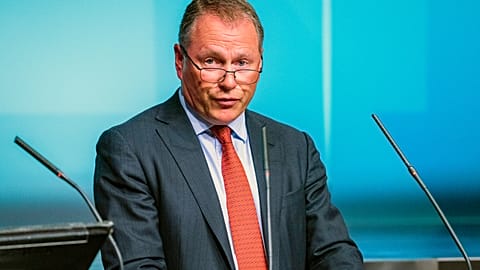
The three-hour meeting was “very good” and “very productive”, Trump told reporters during a meeting with Ukrainian President Volodymyr Zelensky. He said another meeting was planned soon.
His comments came hours after he told the UN he faced a “big decision” on whether to reach a deal with Iran or “annihilate the Islamic Republic and do it quickly”.
The US and Iran remain at an impasse. Iran has kept the Strait of Hormuz closed, while the US has maintained a blockade of Iranian ports. Fighting involving Saudi-backed government forces and the Iran-backed Houthis in Yemen has also disrupted energy exports through the Red Sea.
“The three-hour US-Iran meeting matters because it shifts the market from pure escalation pricing toward a genuine diplomatic process, even if a final deal still looks distant,” said Stephen Innes of Quintex Intel.
Prices also fell following a report that Saudi Arabia had restarted operations along its East–West Pipeline. The route allows Saudi crude to reach the Red Sea without passing through the Strait of Hormuz. Saudi Arabia said this month that drones launched from Iraq had forced it to close the pipeline.
The kingdom hopes to resume exports later this week, Bloomberg reported, citing a source. Saudi Aramco has reportedly told Asian refiners that they may soon be able to collect crude from the Red Sea port of Yanbu. European refiners, however, have reportedly been told they will receive no Saudi crude under their October supply agreements.
Global stocks edge higher ahead of Trump–Xi meeting
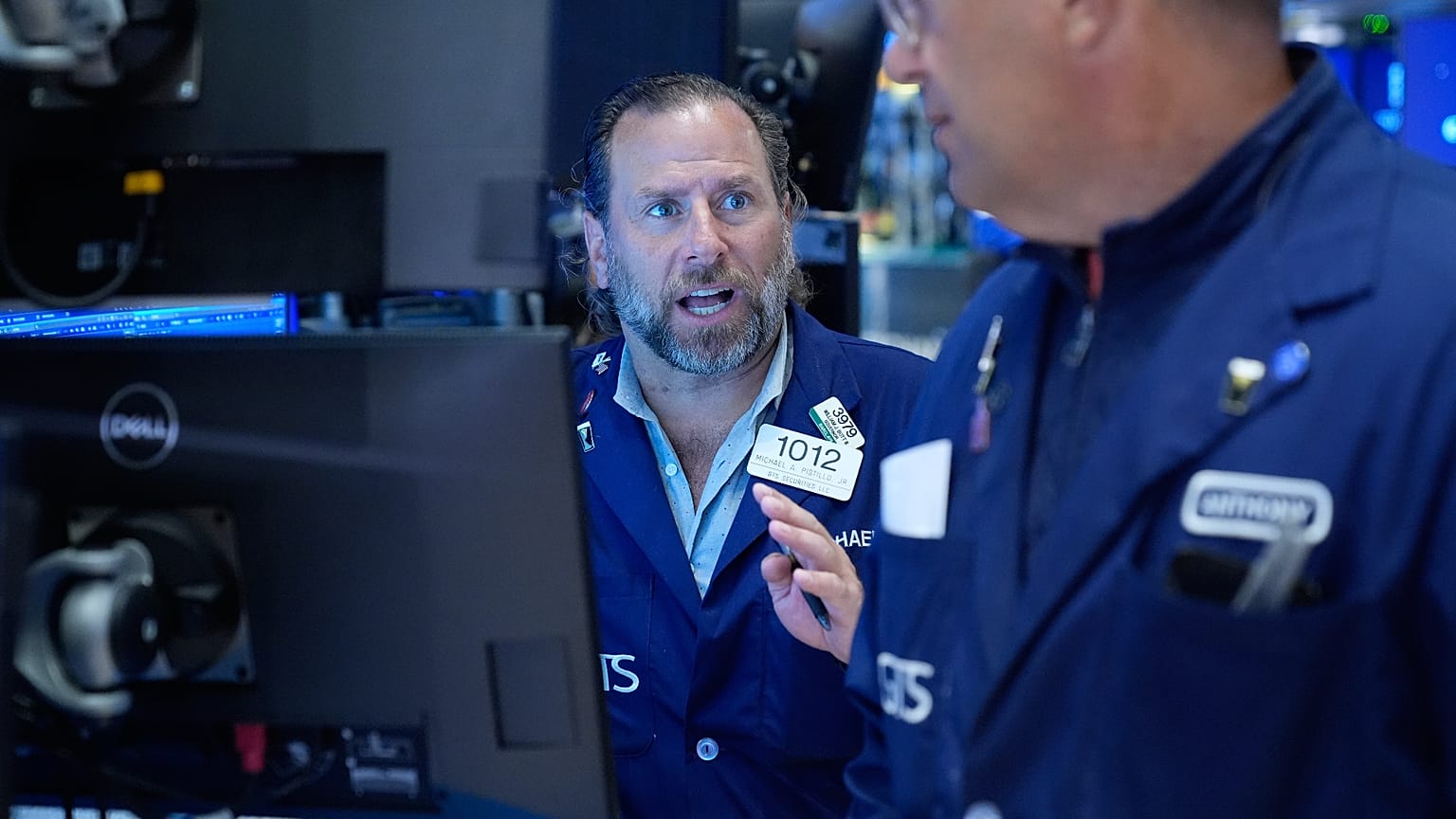
European stock markets had mixed reactions at the open.
The Euro Stoxx 50 was about 0.1% lower in early trading while the broader pan-European Stoxx 600 traded over 0.3% higher.
The UK's FTSE 100, France's CAC 40, Italy’s FTSE MIB and Switzerland's CH20 all traded around 0.1% higher.
However, Germany's DAX 30, Spain's IBEX 35 and the Netherlands' AEX all traded between 0.3% and 0.4% lower than their Tuesday close.
Asian shares mostly rose. South Korea’s Kospi gained 1.2%, with Samsung and SK Hynix both up more than 2%. Taiwan’s Taiex rose 0.9%. The MSCI index of Asia-Pacific shares outside Japan gained 0.5%, its sixth consecutive daily rise. Japan’s stock market was closed for a holiday, although Nikkei futures traded higher.
On Wall Street, the Nasdaq rose 0.5% to a record close on Tuesday. The S&P 500 was little changed, while the Dow fell 0.4%.
In currency markets, the euro traded at $1.1429, near a two-month low, as investors considered the possibility of another US interest rate rise. The dollar also edged up against the yen to 157.60 yen.
Gold traded at $4,379 an ounce. US Treasury futures rose slightly as oil prices eased, keeping the yield on the 10-year government bond below 5%.
Investors were also looking ahead to a meeting on Thursday between Trump and Chinese President Xi Jinping. Trade and competition over AI are expected to be on the agenda.
Kyle Rodda, a senior financial market analyst at Capital.com, said the war in the Middle East could prove more consequential for markets, including whether the US could persuade China to use its influence with Iran.