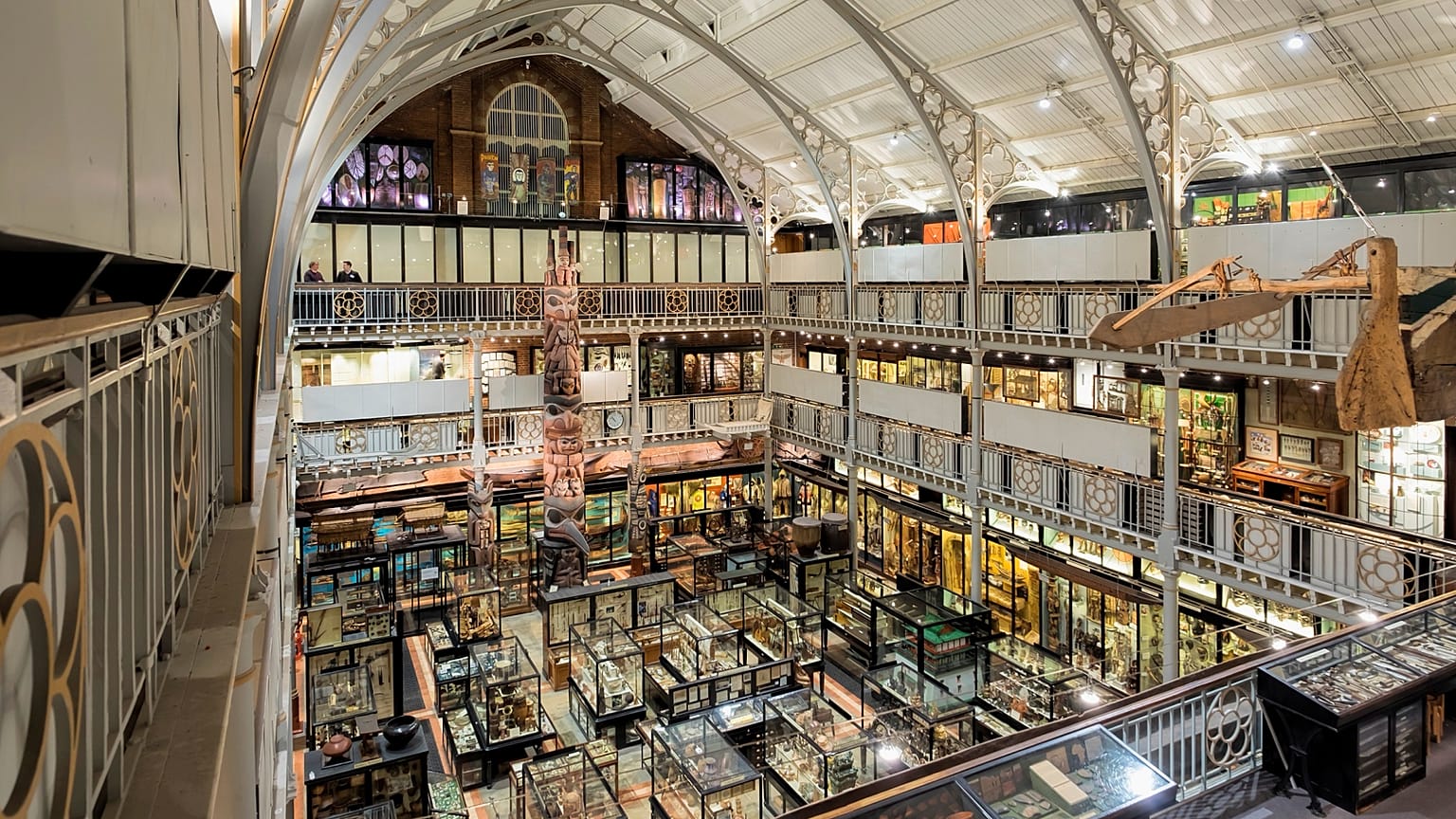













The Pitt Rivers Museum said it has been "working closely" with the Naga people on finding a date for a handover ceremony, after which a Naga delegation is set to accompany the remains home.
A museum in the UK has agreed to return a collection of human remains taken during Britain's colonial era to the Naga community in northeast India.
 ADVERTISEMENT
ADVERTISEMENT
ADVERTISEMENT
Oxford University's Pitt Rivers Museum, which holds the world's largest collection of Naga material, is set to repatriate the remains of 39 Naga people following years of negotiations.
Many of the Naga artefacts held at the museum were gathered by colonial administrators in the early 20th Century. The museum says it removed all human remains from display in 2020.
It comes after Oxford University received a claim for 40 sets of ancestral remains kept at the museum in February 2026. In July, the university agreed to return 39 of them, saying the remaining set did "not have a clear provenance as Naga."
In a statement to Euronews, the museum's director, Professor Laura Van Broekhoven, the director of the Pitt Rivers Museum, said it had been "humbling" to have been part of the process working towards returning the remains.
"I feel honoured that we walked alongside our partners to find the path to return for these 39 Naga ancestors, who have been away from their homeland for far too long," she added.
The museum said it has been "working closely" with the Naga people on finding a date for a handover ceremony, after which a Naga delegation is set to accompany the remains home.
The deal has been welcomed by the Forum for Naga Reconciliation (FNR) and other Naga groups.
"Repatriation, for the Nagas, is not simply about bones and ancestral remains finding their way back to the land but importantly about memory returning to where it belongs," the FNR and other Naga organisations said in a statement sent to the AFP news agency.
According to the Pitt Rivers Museum's website, the museum first received Naga ancestral remains more than 100 years ago from John Henry Hutton, an anthropologist and colonial administrator in the Indian Civil Service.
Hutton and a fellow administrator, James Philip Mills, are said to have brought the museum most of the Naga remains in its collection between roughly 1910 and 1940.
"Their 'collecting' was not the neutral, scholarly activity the word implies," the museum says, adding that "remains and objects were frequently confiscated during punitive military expeditions, rather than freely given."
The Pitt Rivers' Naga collection includes thousands of objects in total.
"Within it, 219 items are listed as Naga human remains: 39 ancestral human remains (primarily skulls) and 178 objects that contain, or may contain, human hair. The current return concerns the 39 ancestors," the museum says.