












French Touch has never been so widely acclaimed. Now hailed as a "national pride", the movement still divides over what it is today and what it leaves to future generations.
Will the 21st century be the era of the "great transfer"? This notion, which first emerged in Anglo-Saxon private finance under the name _"_Great Wealth Transfer" before being taken up in economic and sociological research, refers to the transfer of wealth linked to the gradual disappearance of the baby-boomer generation.
 ADVERTISEMENT
ADVERTISEMENT
ADVERTISEMENT
In France, experts estimate that several trillion euros could change hands over the coming decades.
Culture is also a matter of transmission, and economic stakes are never far away. Can a music scene become part of our heritage? Musical cycles move much faster than generations: in the space of around twenty years, a movement can go from marginal to a point of reference, and from a reference to part of the cultural canon.
Feeding into a national narrative
The French Touch is a good way to measure that journey. This tricolour musical movement, which propelled France onto the international stage in the 1990s and 2000s, has, after the pioneers, seen its own heirs emerge. Now an object of memory, it has gradually been woven into the national story – to the point where it is today claimed both by institutions and by political leaders.
The shift is now official: French electronic music has been added to the National Inventory of Intangible Cultural Heritage. The Culture Ministry’s dossier, drawn up when Rachida Dati held the portfolio, pays tribute to figures such as Daft Punk, AIR and Laurent Garnier, who in the 1990s helped "establish French electronic music as an international benchmark".
"Today these genres are diverse and experienced collectively across all regions," the ministry stated, adding that they are "anchored in French society, bringing together different audiences, fostering social and cultural mixing, and encouraging experimentation, collaboration and free expression."
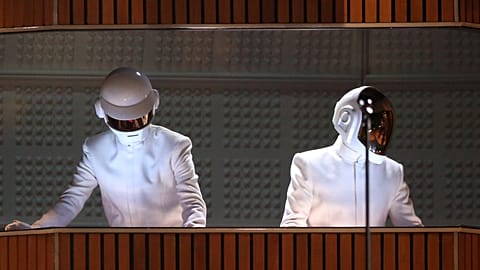
French Touch had already been given front stage at the Paris 2024 Summer Olympics. Two years later, a tragic event in turn underlined the place it now holds: the death of Kavinsky and the wave of tributes that followed.
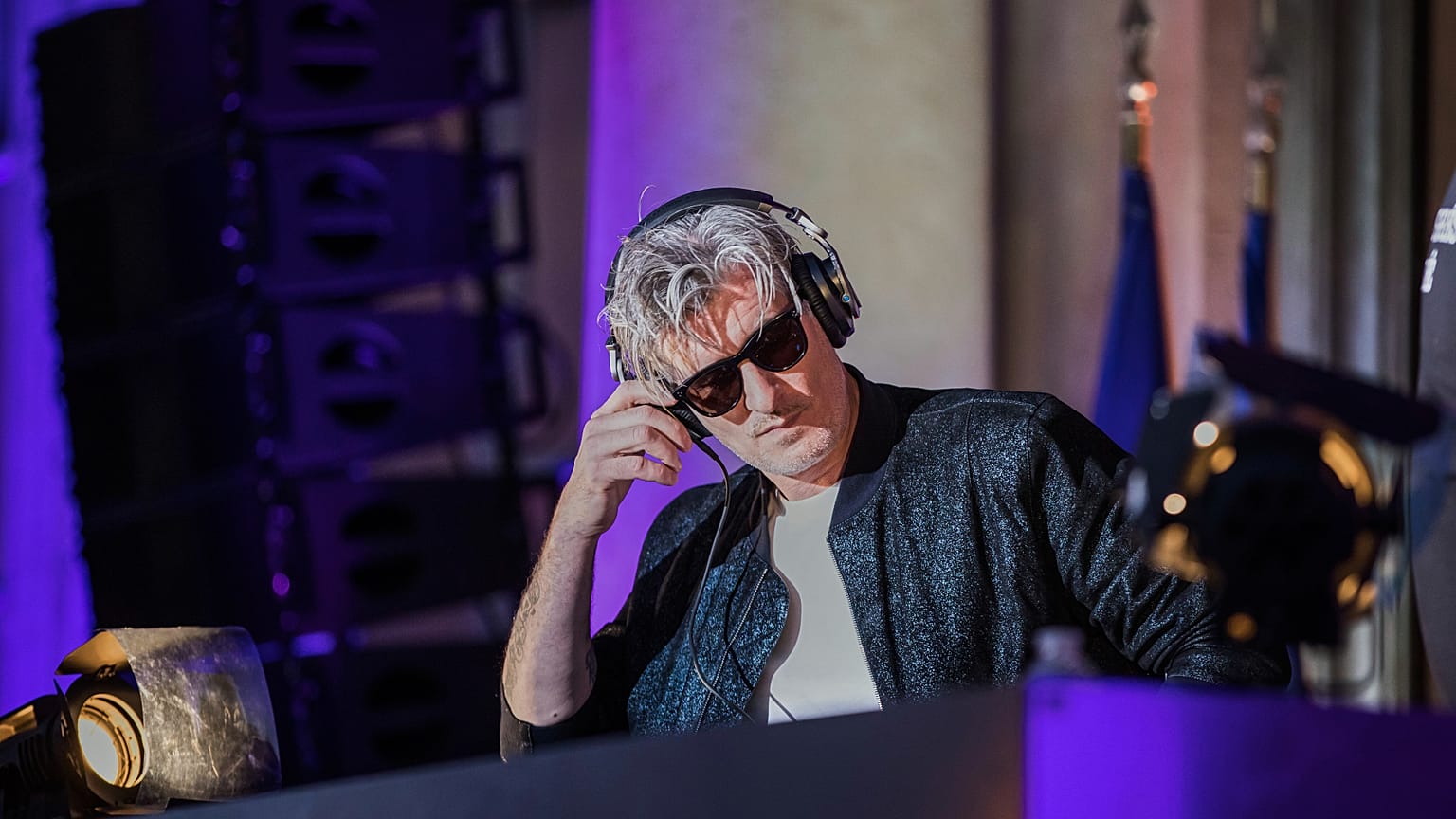
The French producer and DJ, whose real name was Vincent Belorgey, was found dead at his home on 28 July 2026, at the age of 50. He is believed to have died of a stroke.
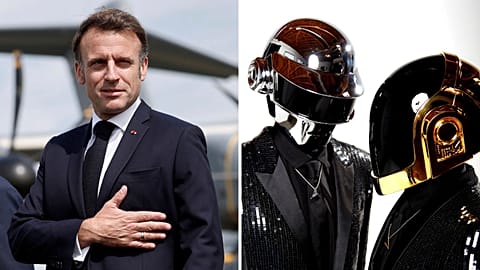
"Kavinsky, French pride for ever," Emmanuel Macron said simply on Instagram in a post (source in French). The statement (source in French) from the Elysée Palace was less laconic, describing him as a "towering figure of electronic music and the French Touch, a distinctive voice who made people dance and dream", before recalling: "Invited to perform at the Fête de la Musique at the Elysée in 2018, in 2024 he brought his emblematic track 'Nightcall' to the closing ceremony of the Paris Olympic Games, alongside Angèle and the band Phoenix. That night, French electronic music rang out before the whole world."
_"_At once danceable and nostalgic, his music will continue to transcend generations and borders," the new culture minister Catherine Pégard felt moved to add on X.
"Bourgeois, or the children of bourgeois"
Political interest in this legacy does not, however, date from Emmanuel Macron’s time in office.
Speaking to Euronews, Stéphane Jourdain, a journalist at France Inter and co-author of the podcast "Histoire secrète de la French Touch" (source in French), who also wrote the book "French Touch, 1995–2015: une épopée électro" (source in French), recalls the controversy that followed the decision by Renaud Donnedieu de Vabres, Jacques Chirac’s culture minister, to make the duo AIR, Philippe "Zdar" Cerboneschi (half of Cassius) and Dimitri From Paris knights of the Order of Arts and Letters.
"Awarding them an official decoration of the Republic caused a stir, it sparked debate in the scene: Daft Punk refused the honour. Laurent Garnier did too."
"Zdar told me: when somebody offers me a decoration, I accept it – my mother is going to be so proud. He brushed the criticism aside," says Stéphane Jourdain, who wonders: "Are DJs compatible with this kind of institutionalisation and political recognition?"
In his view, electronic music is a "space where minorities can express themselves", notably sexual minorities. "It’s something that lives outside these types of recognition," he says, all the more so as free parties have been "hunted down by the authorities for 30 to 40 years."
That said, he does qualify his comments: "Kavinsky, AIR… We’re talking about the 18th arrondissement of Paris, about people who are mostly bourgeois, or the children of bourgeois."
He also notes that the music championed by the leading names of French Touch falls under a "broad" definition of techno, "whether we like it or not". For him, there is a "continuum" leading up to the emergence of French Touch. "It is still part of the same family."
"There is something paradoxical about a president of the Republic paying tribute to a DJ while his Interior Ministry is clamping down on rave parties," says Stéphane Jourdain, while acknowledging that Emmanuel Macron is "from the same generation" as Kavinsky and that "the tributes paid by our representatives should not be limited to Léo Ferré."
Since the RIPOST law – short for "Réponses Immédiates aux Phénomènes troublant l’Ordre public, la Sécurité et la Tranquillité" (Immediate Responses to Phenomena Disturbing Public Order, Security and Tranquillity) – came into force last August, both organising and taking part in an undeclared music gathering have constituted criminal offences punishable by prison sentences.
This weekend, for the first time since the reform, several hundred revellers defied a prefectural ban to attend a music gathering near Caen in Normandy, exposing themselves to heavy penalties.
French Touch: Still going strong?
In June 2025, when he pushed for French Touch to be added to UNESCO’s list of Intangible Cultural Heritage, Emmanuel Macron drew a parallel with the recognition granted to Berlin techno.
For Stéphane Jourdain, this is about "window dressing" and "popol" – slang for "politique politicienne", or party politics – which, he says, "changes nothing". He notes that in Germany it is not techno as such that is protected, but the clubs that keep it alive. "Because they are under threat, (…) because some of them have closed, because property developers are trying to grab those spaces."
"There, there is a genuine movement of resistance built around this club culture, which is very particular," he continues. By contrast, he believes that "French Touch does not need that: it has no clubs, it has no venues. French Touch is everywhere."
And there is no shortage of signs that it remains vibrant. "David Guetta is one of the guys racking up the most streams right now. Bob Sinclar is still around. Records are still selling." He cites in particular the song 'Lady' (source in French) by Modjo, which is expected soon to join the select club of tracks that have surpassed one billion streams on Spotify. "Every time Bangalter does something, it creates a buzz. People wonder whether Guy-Man (Guy-Manuel de Homem-Christo), the other half of Daft Punk, is going to release a solo album."
For Stéphane Jourdain, it is hard to interpret all this any other way: French Touch _"_is in rude health; it doesn’t need to be protected."
"Little moments of music"
Sven Løve is a DJ who has changed his life. Now a doctor of French literature at a Spanish university, he was one of the driving forces behind Parisian garage house in the 1990s. Co-organiser of the Cheers parties, his journey is largely told in the film Eden, directed by his sister Mia Hansen-Løve.
He does not see himself as part of French Touch; the music he championed at the time drew mainly on house from New York and Chicago.
"I was a bit in my own niche," he tells Euronews, acknowledging that there were many "connections" – meetings, friendships with Alain Braxe just as he was meeting Daft Punk and Benjamin Diamond for the 'Stardust' project.
"Of course I could see that [French Touch] was a global success – I had a ringside seat," he says.
"Back then, the organisers of the Respect (is Burning) parties, which were very French-Touch oriented, would invite us along too, me and my partner at the decks, Greg Gauthier. They had a fairly wide musical spectrum, even if the main movement was French Touch. That created a big gap between them and us, because we didn’t play the same music at all. The success was attractive – we’d have liked it, sure (laughs) – but not enough to change our style."
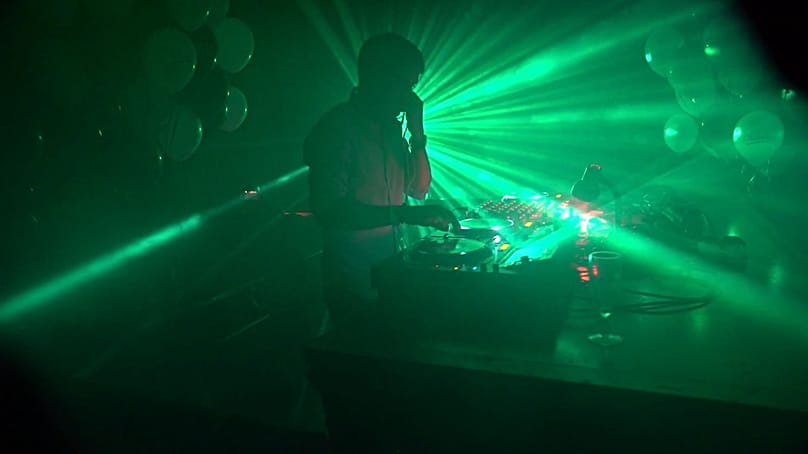
The pioneers of French Touch stood out for their use of very short sampled loops, drawn mainly from disco and soul. They turned them into "something more personal and specific," Sven Løve recalls. "Little moments of music brought to the fore."
"We’ve exhausted the subject"
"This musical movement became huge, its success feeding off itself until it was almost mainstream. And then, inevitably, things calmed down a bit, without completely dying out," analyses Sven Løve, before adding a nuance: "The leading figures of French Touch were smart enough to find ways of keeping their activities going, one way or another."
As early as 2005, Le Monde was already talking about the "new generation", the "heirs to this electronic movement" who wanted to "escape its flagging momentum and the clichés, just as the culture minister was consecrating the genre by decorating some of its inventors."
Kavinsky was among that second wave, as were the Ed Banger Records crew, including Justice and the much-missed DJ Mehdi, whose fans marked the 15th anniversary of his death on 13 September.
According to Stéphane Jourdain, even if the core of the movement is confined to a particular period, those who came later, such as Thylacine or Petit Biscuit, "still benefited from what had happened."
"And there is still a musical lineage, with a slightly polished, effective kind of electro that makes people dance."
"The typical French Touch sound still exists, but it no longer has that sense of newness," says Sven Løve. "Yet pop music runs on the principle of novelty. It is no longer what young people listen to now. (…) In any case, pop music is bound to renew itself and head off in other directions – that’s perfectly normal."
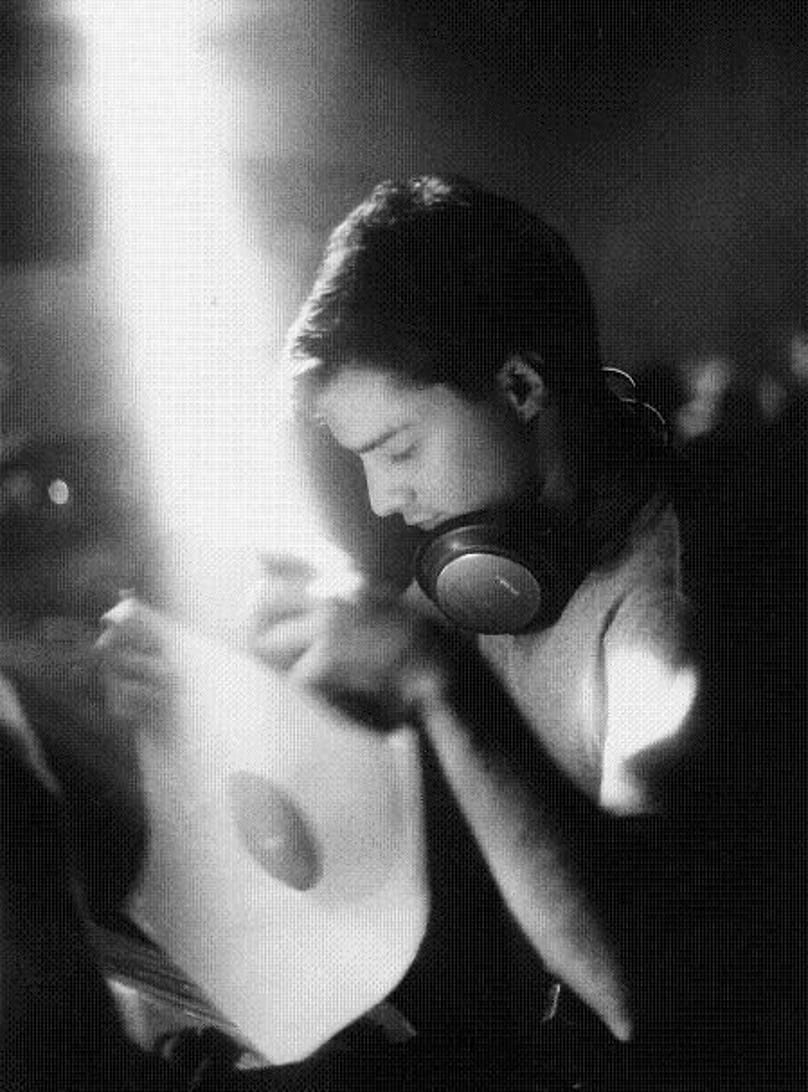
"That is the story of music," agrees Stéphane Jourdain. "What was done with those samples, those filtered funk basslines, that very accessible music, was linked to the arrival of certain machines; there is no reason to go on doing exactly the same thing."
"They did it, and did it well, and I think, musically, we have now exhausted the subject."
The curse of French Touch
Musical movements, explains Sven Løve, often "play out over 20 or 30 years": there are "revivals or re-celebrations" of a scene that was strong two decades earlier.
For the former DJ, the "tragic side" surrounding French Touch heightens fans’ emotion, with the early deaths of DJ Mehdi and Philippe Zdar, both after accidental falls. Then came Kavinsky’s death, two years after the triumph of the Olympic Games. "All of that lends itself to storytelling and, through those stories, that era is brought back to life a little."
Noah, 20, likes and shares several Instagram posts commemorating DJ Mehdi on the anniversary of his death. "French Touch, for me, was my first way into music – to the point where I had it tattooed on my forearm," he tells Euronews. Just a few centimetres from his Diesel watch, the Ed Banger logo appears on his skin: a cross between a musical note and a pencil-like shape.
"That movement of the 1990s and 2000s embodies the pride and talent of young French musicians who embraced a kind of 'corniness' and ended up on top of the world," he says.
Even if the music "is no longer centre stage," Sven Løve believes the story of French Touch continues to feed a certain sense of national pride. "Suddenly France had become the centre – there is a sort of pride there, which is why we keep talking about it," he notes. Is that pride justified? He says he can understand it, while sometimes finding it "a little excessive."
"There is a curiosity among 20-year-olds about all this. But does that mean we are seeing a genuine mass movement? No, I don’t think so."
"French Touch is in their blood"
Then there are the heirs, in the literal sense – those who grew up in the families of the people who embodied it.
In February 2026, during a back-to-back (B2B) set by Fred again.. and former Daft Punk member Thomas Bangalter at London’s Alexandra Palace, his son Roxan Bangalter was standing at the side of the stage among a handful of guests. He had no idea what was about to happen. Without telling him, Thomas Bangalter slipped into his set the vocal of 'Never The End', a track his son had composed under the alias Roxb at the age of 12 years old.
He blended that vocal with the classic 'Can’t Do Without You' by Caribou, who was also on stage. The footage (source in French), filmed from the crowd, shows Roxan’s emotion as he is overwhelmed to see his father play his own creation in front of thousands of people. In his own way, and in his first performance in the UK for almost 18 years, Thomas Bangalter was giving a platform to the next generation.
While Thomas Bangalter’s son remains relatively discreet, the children of Bob Sinclar – Paloma and Raphaël Le Friant – and David Guetta’s son Elvis are now themselves trying their hand at DJing.
This summer, all three racked up dozens of dates: Paris, London, Ibiza, Mykonos and, of course, the Côte d’Azur.
JC Murray, founder of the Isabelle festival on the heights above Saint-Tropez, says he wants to "bring back the very best of what I see around the world, in terms of both music and production, and showcase it in a place that means so much to me and my family."
"When an artist moves me, I immediately picture them playing in the Citadel," he tells Euronews.
For its third edition, last July, Elvis Guetta and Raphaël Le Friant opened the festival’s second day. Speaking of their family ties, JC talks about "a new generation, clearly, but one that embraces its heritage without being trapped by it."
"That said, French Touch is in their blood: their fathers belong to that story," he adds. As for why he booked them, JC explains that it is first and foremost because he heard them play: "They work incredibly hard. (…) That’s what convinced me, not their surname."
As for family, they were joined for a B3B by Jean-Marc Murray, the organiser’s younger cousin, the first of the three to start mixing, at around the age of 13. They are "close friends, lifelong friends". Their getting together on stage this year was something he felt "particularly strongly about."
"But if they’re on the bill, it is above all for what they are in the process of becoming."