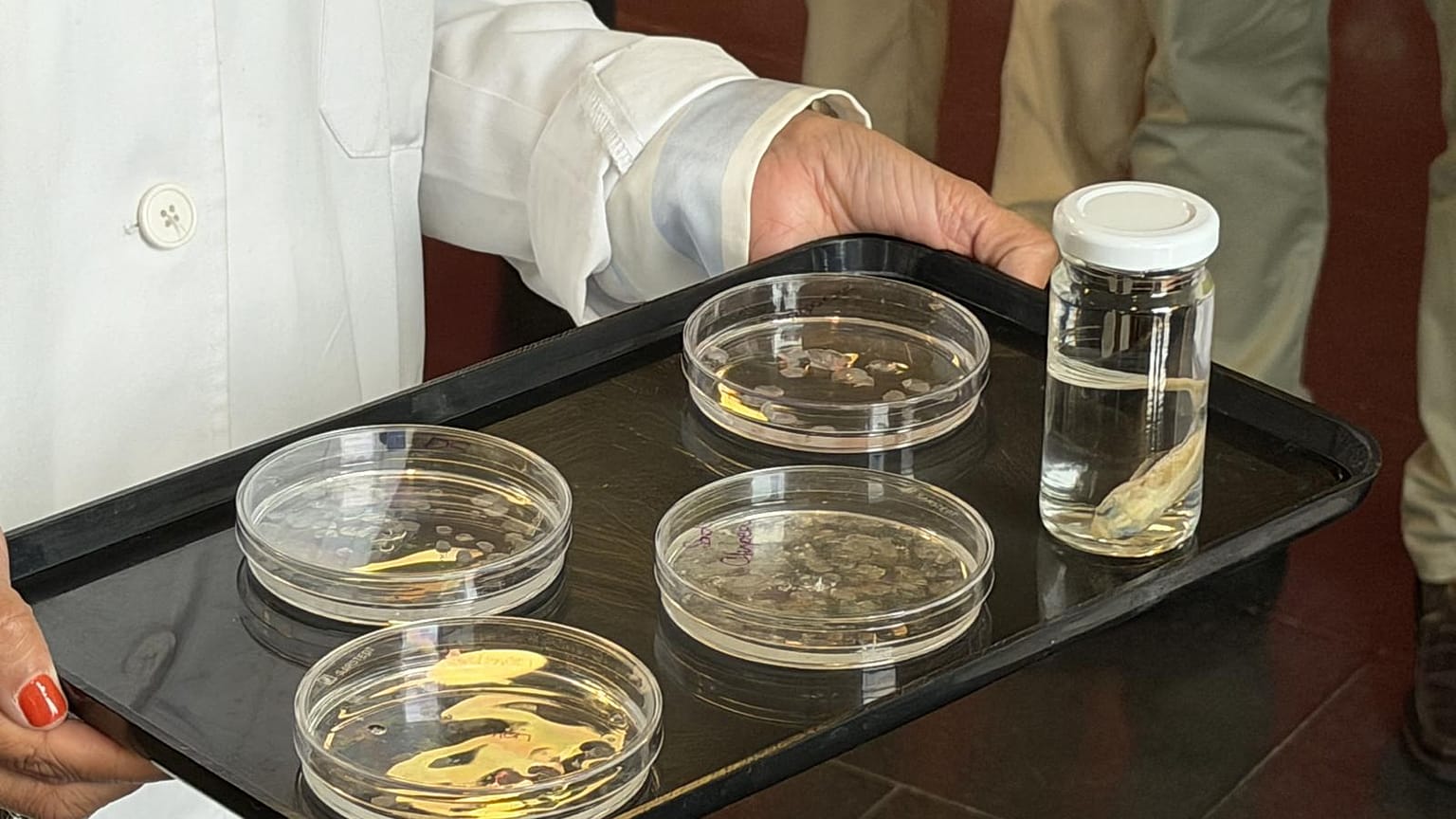













Researchers at the University of Granada have developed corneal implants from fish scales with promising results in the laboratory and in animals. The finding opens a way to reduce dependence on transplants.
Fish scales usually end up in the rubbish bin of any market. In the laboratories of the Department of Histology of the Faculty of Medicine of the University of Granada, however, they have been examining this waste with different eyes for some time. The result is a biocompatible, resistant and transparent corneal implant obtained from the scales of carp and other commonly consumed fish.
 ADVERTISEMENT
ADVERTISEMENT
ADVERTISEMENT
The cornea is the transparent layer that covers the front of the eye and serves an essential optical function. When it becomes severely diseased, it regenerates poorly and receives no direct blood supply, complicating any treatment. In many cases, the only way out is a transplant from a donor.
The problem is well known: waiting lists are long and the availability of healthy tissue is limited. "It is necessary to develop new effective methods of regeneration that do not depend on organ donation," says Miguel Alaminos, professor of Histology at the UGR and one of the authors of the study.
The study, published in the journal 'Materials & Design', describes how the exhaustive analysis of the flakes made it possible to obtain a biomaterial with properties suitable for use in corneal repair. Tests carried out both in laboratory conditions and on experimental animals have yielded good functional results.
Low cost and a fishery sector that could benefit
Beyond the clinical interest, the researchers highlight a practical advantage: the origin of the material makes it cheap and easy to obtain. Fish scales are a by-product of the fishing industry that in many cases is simply discarded. Turning it into a raw material for medical implants opens up a potential use that could have economic consequences in the province.
"This product is very accessible, easy to obtain and inexpensive, and could contribute to boosting the fishing sector in an area that is being affected by numerous restrictions and conditioning factors," explains Ingrid Garzón, professor of Histology at the UGR and researcher at the ibs.GRANADA Biosanitary Research Institute.
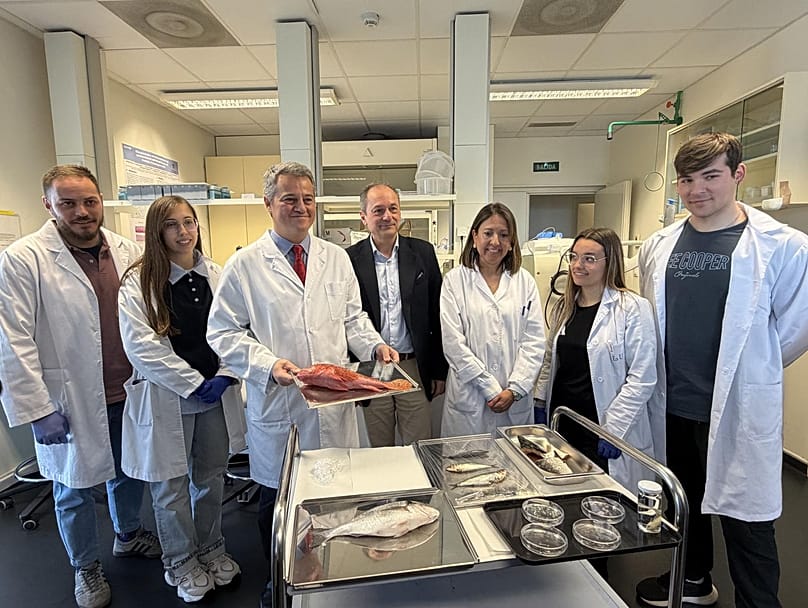
The research has been funded by the Instituto de Salud Carlos III, within the Ministry of Science, Innovation and Universities, through the project PI23/00335. The work was presented in the presence of the manager of the Hospital Clínico San Cecilio de Granada, Manuel Reyes, which reflects the interest of the clinical environment in the development of this line of research.
The road ahead
The current results are preliminary but sufficiently solid to justify continuing. The laboratory phase and animal tests have passed the first filters, but before this type of implant reaches the operating theatre it is necessary to complete clinical trials in humans, a process that usually takes years and requires strict regulation.
What the Granada team (source in Spanish) has achieved so far is to demonstrate that the material works on a biological and structural level. That carp scales can be converted into a viable cornea is not yet a clinical reality, but it is a hypothesis backed by data. In a field where donor shortage remains a problem with no easy solution, that's quite a lot.