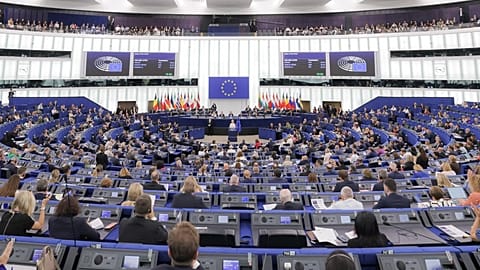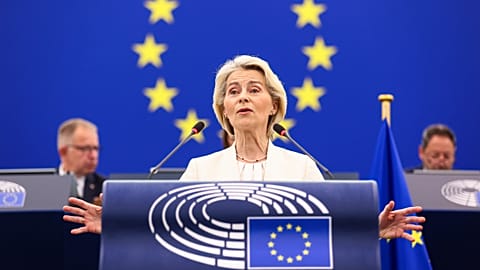
















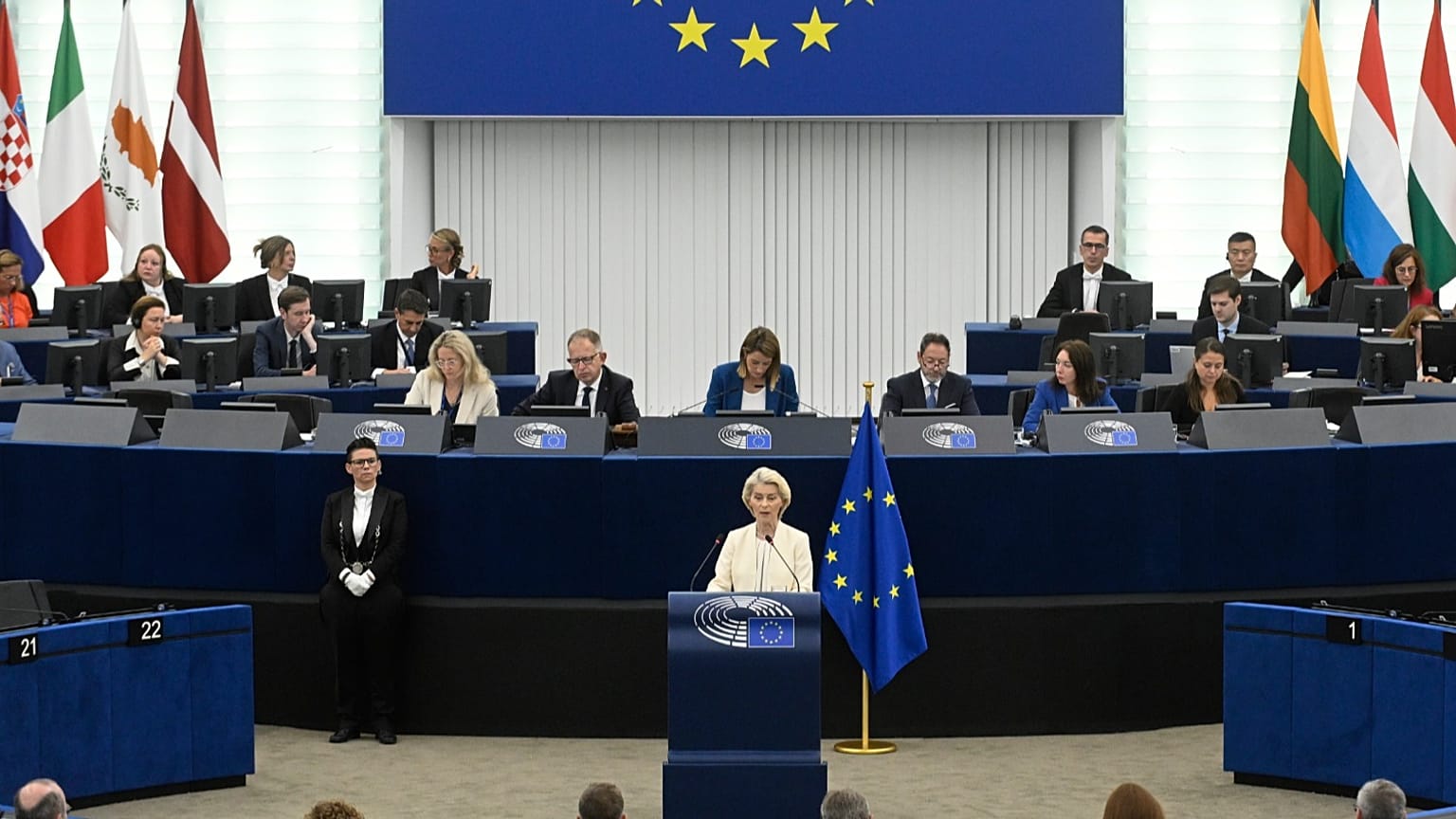













AI can improve healthcare in Europe, but must never replace doctors, the EU’s Commission President Ursula von der Leyen said in her State of the Union speech today.
Health got a mention in today’s State of the Union speech, where European Commission President Ursula von der Leyen spelt out priorities and flagship initiatives for the year to come.
 ADVERTISEMENT
ADVERTISEMENT
ADVERTISEMENT
She used health as an example where artificial intelligence can be used for good and make a difference in the European Union but should never replace doctors.
“Do I want my doctor to have instant AI access to all the data needed to make the best diagnostic or treatment choice? Yes, of course. But do I want my doctor to be a robot, AI-assisted? No, of course not. I do not want a robot to tell me whether I have cancer or not,” von der Leyen said during the annual State of the European Union speech in the European Parliament.
However, thanks to AI tools that can manage huge amounts of data, it is advancing healthcare and the EU’s chief wants Europe to benefit from that.
Von der Leyen, herself a former doctor, cited health as an example of advances that can benefit people, adding that it should be done in a “European way”.
“AI-supported mammography can identify earlier and more cancers during screening. And as a result, more women can survive. So we need AI for health,” she said.
Early detection is essential in tackling cancer, and several studies and clinical trials suggest AI can help spot the disease sooner than previous methods allow.
Cancer screening is not the only area where AI is being deployed in healthcare. The technology is transforming the sector, driving advances in diagnostics, drug development, and easing the workload of healthcare professionals.
“Health will be one of the five priority sectors where Europe will focus on accelerating the use of industrial AI,” Health Commissioner Olivér Várhelyi wrote in a post on LinkedIn, reacting to von der Leyen's speech.
He added that Europe needs to use its high-quality data and strong health and research ecosystems to turn that advantage into innovation that reaches patients faster and strengthens healthcare systems.
"Innovation and resilience must go hand in hand to keep our healthcare systems strong and sustainable," he added.
AI should not replace doctors
With the rapid expansion of AI, concerns and warnings from experts are also increasing. The Commission chief warned that despite AI advances, human doctors should never be replaced.
Recent research has shown that language models may be a dangerous tool when looking for medical advice, as they don’t always correctly assess urgency.
Experts have also warned of the sensitivity of biological data and the need for concrete frameworks for how AI models can access it.
The gaps in legal accountability, uneven investments in workforce development, and emerging risks of exclusion underscore the need for continued vigilance, cooperation, and learning, the World Health Organization warned in a recent report.
The organisation found that only 8% of its member states have issued a national health-specific AI strategy, “an urgent reminder that ambition must be matched with concrete action”.
President von der Leyen announced during her speech “game-changing initiatives” to be presented in November for the highest-value sectors in which industrial AI has the biggest potential, and we have the data: health, transport, agri-food, advanced manufacturing, and defence and space.
This story has been updated to include Olivér Várhelyi's comments.