





























Iceland's relationship with Brussels will not fundamentally change. The country already participates in the European Economic Area and the passport-free Schengen zone, and both arrangements stay intact.
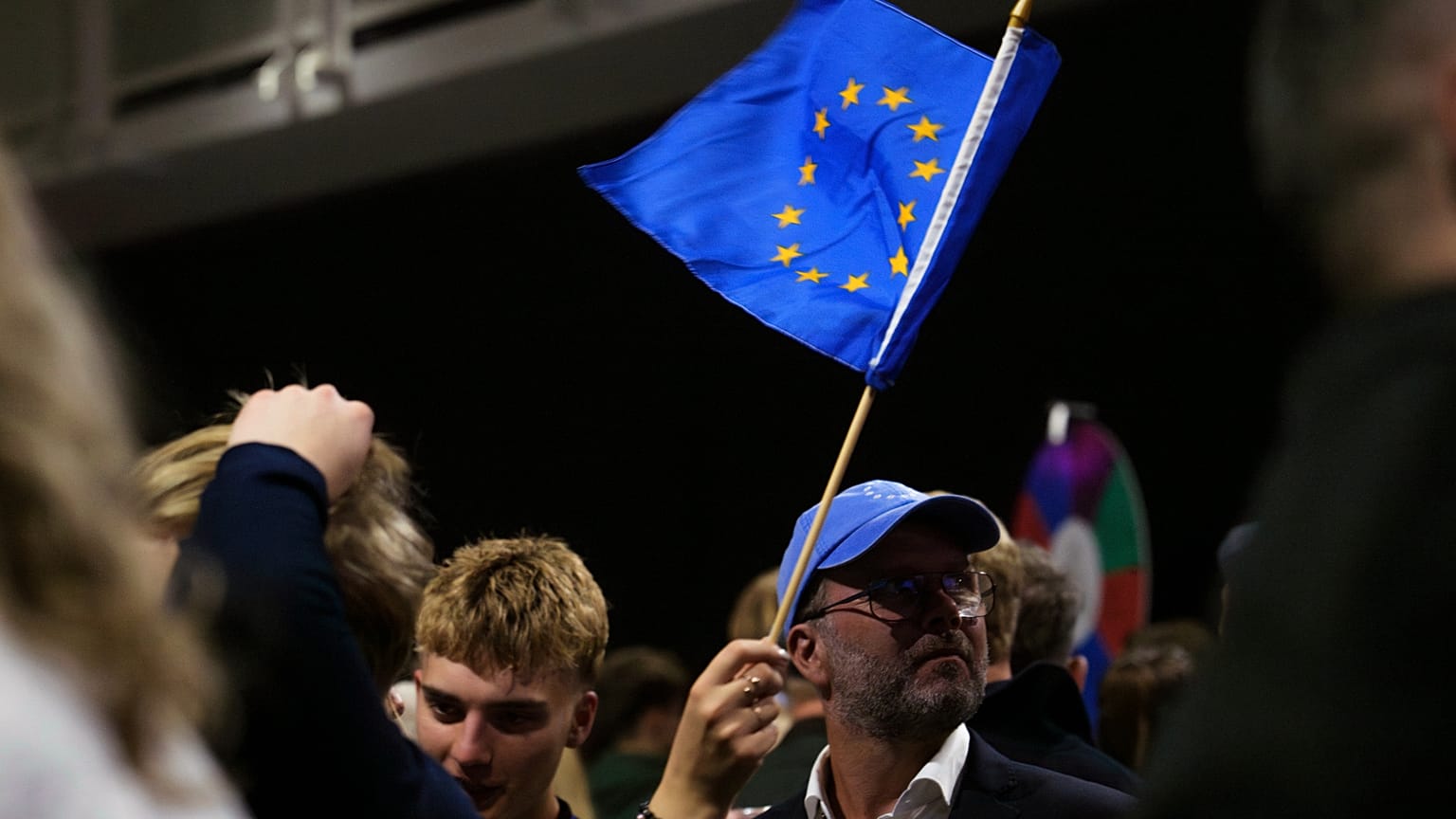
Iceland's "No" camp has narrowly won a referendum on whether to resume the country's suspended European Union membership negotiations, officials have confirmed.
 ADVERTISEMENT
ADVERTISEMENT
ADVERTISEMENT
The final result was close but decisive: "No" finished nearly 5.6% ahead of "Yes," a gap of just under 13,000 votes out of more than 225,000 cast — enough to settle the question, but far from a landslide.
Prime Minister Kristrún Frostadóttir used a post-result press conference to call for unity, urging the country to respect both sides of the debate.
"47% of the population was interested in it [restarting EU talks]. I think it is important that we go into the coming months and weeks and respect that point of view," she said.
Turnout reached 82.5%, one of the highest levels recorded in an Icelandic national vote, with well over half the country's roughly 400,000 residents turning out to cast a ballot on a decision that will shape Iceland's relationship with Europe for years to come.
Foreign Minister Þorgerður Katrín Gunnarsdóttir framed the turnout itself as one of the referendum's biggest takeaways.
"For me as Foreign Minister, it was incredibly good and nice that there was much more discussion about international affairs in society than before," she said.
The result exposed a sharp divide between Iceland's capital and its rural regions. Voters in Reykjavík North and Reykjavík South both backed "Yes" comfortably but that support evaporated outside the capital as the South, Northwest and Northeast constituencies all delivered emphatic "No" majorities.
The votes in order of the announcements were divided as follows:
Reykjavík North: Yes 57.5% - No 42.5%
Reykjavík South: Yes 54.5% - No 45.5%
South constituency: Yes 39.5% - No 60.5%
Northwest constituency: Yes 37.1% - No 62.9%
Northeast constituency: Yes: 38.8% No: 61.2%
Southwest constituency: Yes: 47.0% No: 53.0%
The "No" outcome will shelve the EU debate in Icelandic politics for at least two more years.
Speaking after casting her ballot Saturday, Prime Minister Kristrun Frostadóttir said the referendum campaign had "lifted discussions about the EU, about Iceland's place in the world, about our general geopolitical situation and status, to a higher level".
She had made no secret of her own preference for "Yes," but stressed the country would manage fine either way.
Frostadóttir had committed to shelving the EU membership question entirely for the remainder of her term — which runs until 2028 — if voters rejected reopening accession talks.
Her government had also indicated that, in a "No" scenario, it would leave the decision on whether to formally withdraw Iceland's EU membership application up to parliament, rather than deciding unilaterally.
Former president of Iceland, Ólafur Ragnar Grímsson, is against joining the EU and posted on X that the "nation has spoken".
The nation first sought EU membership after the 2009 financial crisis pushed its economy to the brink, but accession talks stalled in 2013 once a euroskeptic coalition took power.
Frostadóttir's current Social Democratic-led government revived the question this year, arguing that a more volatile international climate made it worth asking voters whether to pursue closer EU ties.
What impact will it have on EU relations?
Iceland's relationship with Brussels won't fundamentally change either way, though: the country already participates in the European Economic Area and the passport-free Schengen zone, and both arrangements stay intact.
The referendum itself carries no legal force, but the government has committed to abiding by whatever Icelanders decide.
Frostadóttir, Foreign Minister Þorgerður Katrín Gunnarsdóttir and Minister of Education and Children Inga Sæland have called a press conference for 3pm CET where the party leaders will discuss the result and take questions from the media.
Fisheries have long been the thorniest sticking point in Iceland's on-off relationship with Brussels — the country's fishing waters are central to its economy and identity, and it has resisted ceding control over stocks and quotas to the EU's Common Fisheries Policy.
Asked about the issue, EU Enlargement Commissioner Marta Kos said: "Iceland's unique specificities on fisheries and agriculture are well known. They would have to be carefully considered." She added: "I'm confident that, together with EU member states, we would find creative solutions."
How the night unfolded
Polls closed at 10 p.m. local time (00:00am CET), and the first partial results — drawn heavily from the capital, Reykjavik — showed "Yes" comfortably ahead, at nearly 58%. Pro-EU campaigners were cautiously optimistic in the early hours, pointing to strong urban turnout.
But as rural and coastal constituencies began reporting after midnight, the picture shifted sharply. Fishing communities where opposition to EU quota-sharing rules has run deep for over a decade, delivered "No" majorities above 65% in several districts. By 2 am CET, the national tally had narrowed to a near-even split.
The turning point came around 7am CET, when the northern agricultural region — traditionally a bellwether — reported a 60/40 split in favour of "No," pushing the national count into "No" territory for the first time. From there, the lead never fully reverted.
By late morning, all eyes were fixed on a single outstanding constituency: Southwest, the second-largest of Iceland's six, encompassing the commuter towns ringing the capital with some 79,000 registered voters.
It was the last piece of the count still to report, and the tightest battleground of the night.
The constituency had started dead even before "No" pulled ahead as counting progressed. At 11:30 CET, Southwest published its final tally, closing out the national count in favour of No.