




























Europe and Canada have said they won't succumb to the growing number of hybrid attacks from Russia. The show of unity comes as Germany takes the unprecedented step of formally blaming to the Kremlin for a drone incident at Leipzig airport last month.
European foreign ministers have said they're ready to stand firm against a surge of Russian hybrid war attacks across the continent, rallying behind Germany after its decision to formally hold Russia responsible for a drone incident at Leipzig airport last month.
 ADVERTISEMENT
ADVERTISEMENT
ADVERTISEMENT
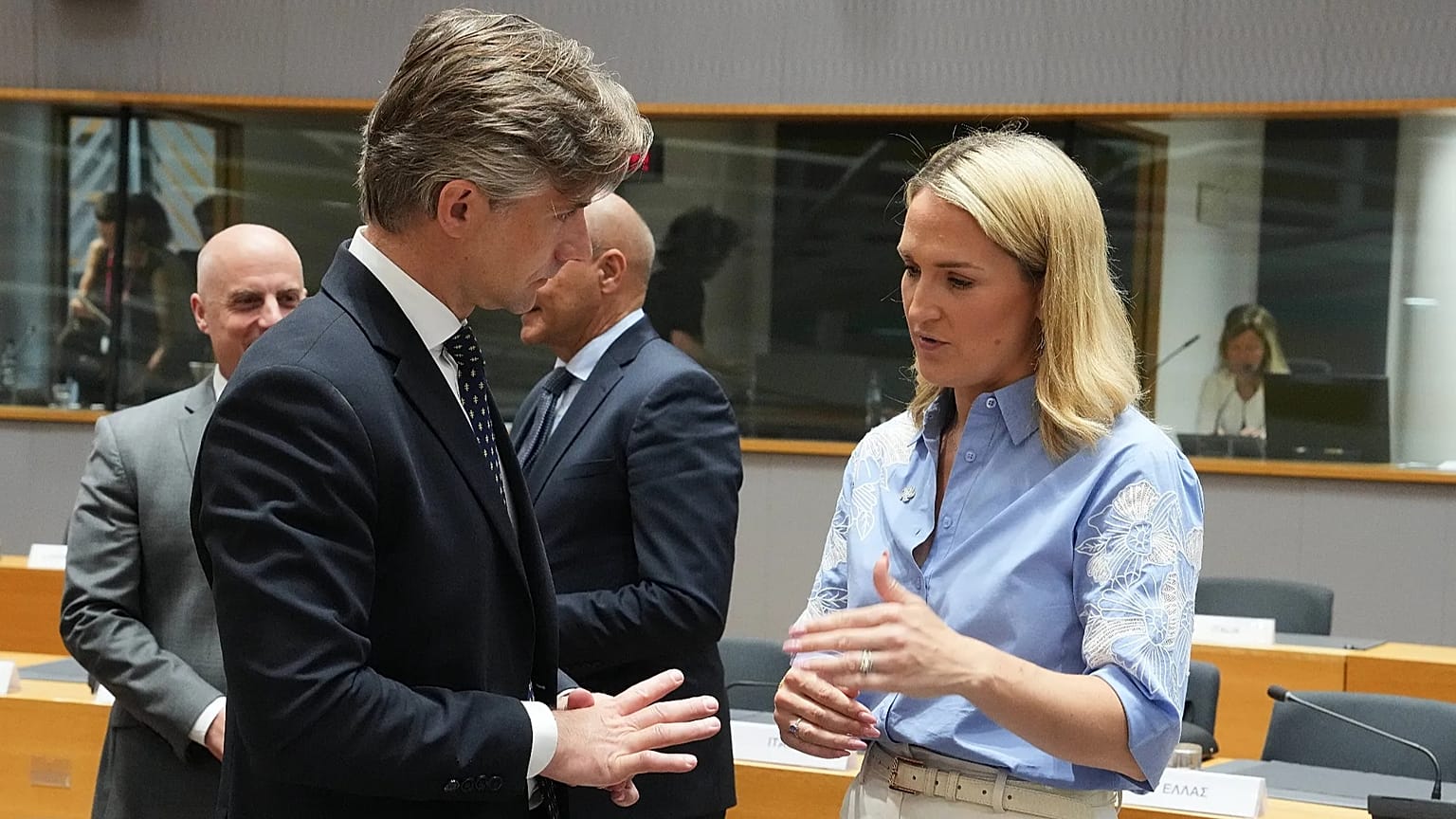
The show of unity came at a summit of EU foreign affairs ministers in Wicklow, Ireland, also attended by ministers from Ukraine, Canada, Switzerland and the United Kingdom.
The Leipzig airport incident on 4 August saw German authorities intercept a drone carrying military-grade explosives. Berlin has been unequivocal in attributing the incursion to the Kremlin.
"The means used – such as the drone configuration, components, explosives and detonation systems – are known to us from other hybrid operations by Russia," German Foreign Minister Johann Wadephul said on Tuesday, framing the attack as part of a "long series of destabilisation operations" against Europe.
In remarks condemning Russia's activities, British Foreign Secretary Ed Miliband referred to his country's experience of Russian attacks in recent years, such as the attempted chemical assassination of former Russian KGB operative Sergei Skripal in Salisbury.
"We stand in full solidarity with Germany and Ukraine," Miliband told journalists. "We know from the past from Russian attacks on our soil these attempts to divide us will not work, but this is a dangerous sign of attempt by Russia to divide us and to think they can send a chilling effect on European countries when it comes to their invasion of Ukraine."
Lithuanian Foreign Minister Kestutis Budrys, meanwhile said Russia appears to be dialling up the volume of hybrid attacks it is launching.
"We see they are expanding and quadrupled attacks against us in the last year," he said. "Our goal is to show these activities won't intimidate us or stop us supporting Ukraine."
Also on the agenda at the informal so-called Gymnich meeting are proposals that the European Commission could reopen the question of using immobilised Russian sovereign assets to fund Ukraine, an idea being pushed by Sweden, Spain and Poland and the Netherlands.
Finnish Minister for Foreign Affairs Elina Valtonen said that "Europe needs to support Ukraine ahead of the winter".
"This is a good space and time to talk about the frozen assets," she said ahead of the summit. "We need to explore all options on the table."