




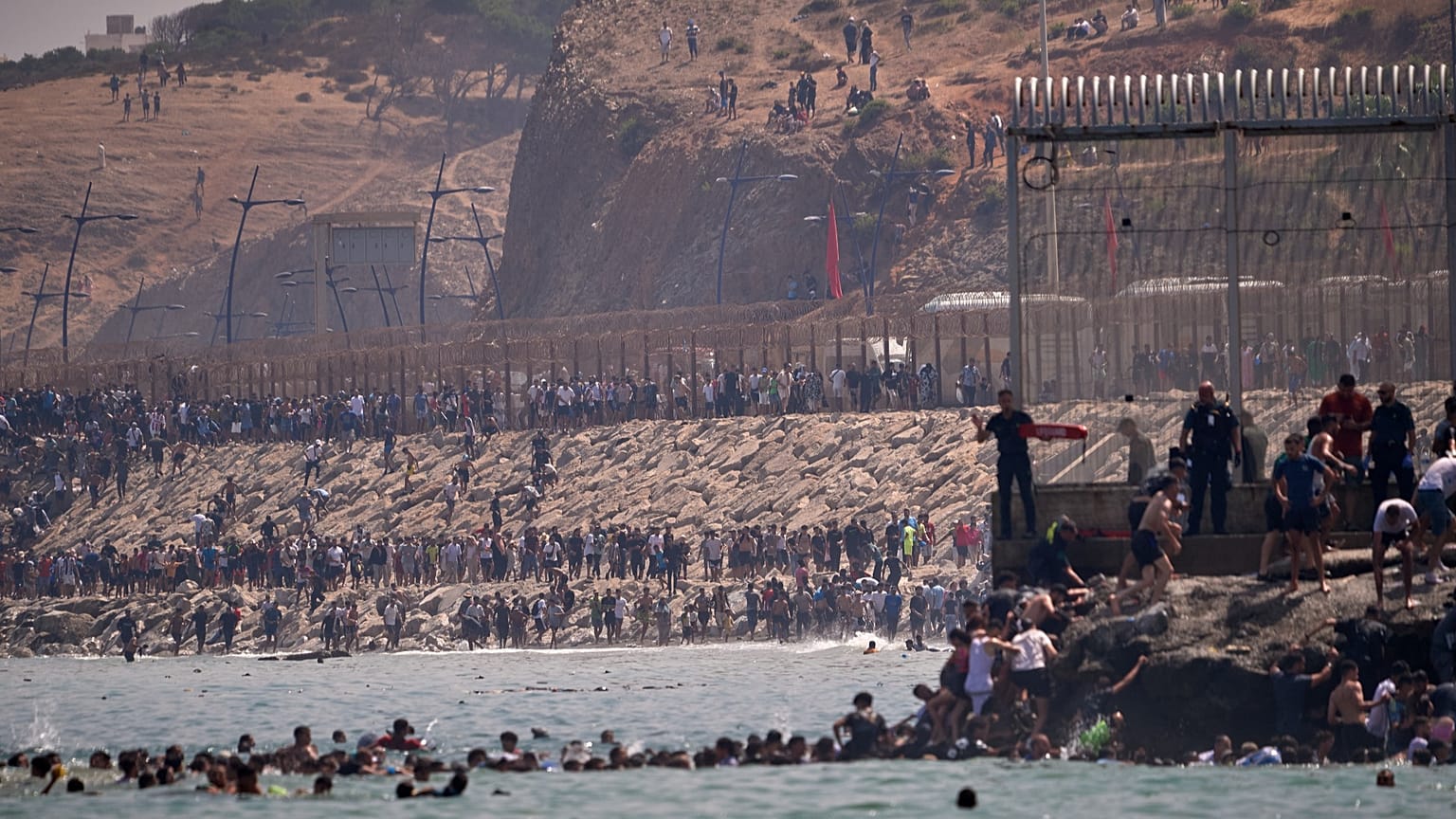














Madrid demanded an explanation from its own police after an explosive leaked police report suggested that Moroccan security forces were involved in transporting and pushing migrants towards the border.
Spain's police chief, Francisco Pardo, has told Interior Minister Fernando Grande-Marlaska that there is no police report attributing to Moroccan security forces the planning or execution of the events in Ceuta at the end of July.
 ADVERTISEMENT
ADVERTISEMENT
ADVERTISEMENT
The response comes after Marlaska asked police to clarify a leaked report in which Spanish police blamed Moroccan security forces for orchestrating a mass entry of migrants to the enclave of Ceuta last week, ministry sources said on Wednesday.
Spanish Prime Minister Pedro Sánchez said on Monday that Morocco was not responsible, instead accusing Israel, Russia and the far right of spreading disinformation about the mass entry of around 70,000 migrants into Ceuta.
Sánchez told Cadena SER radio that "no intelligence service with which the Spanish government normally cooperates" had suggested "any involvement in one way or another of the Moroccan authorities."
Online newspaper El Español reported on Tuesday that Spain's National Centre for Immigration and Borders (CENIF) said the incident "was guided by Moroccan security forces...with an objective other than migration" in an explosive leaked report.
Interior Minister Fernando Grande-Marlaska demanded police chief Francisco Pardo to check and clarify the information, which was reportedly sent to a judge collecting information on the incident, according to ministry sources.
In his comments, Grande-Marlaska implies the Spanish government found out through media reports about allegations, which would put in question Madrid's narrative that the influx was mostly led by social reports and amplified by human traffickers.
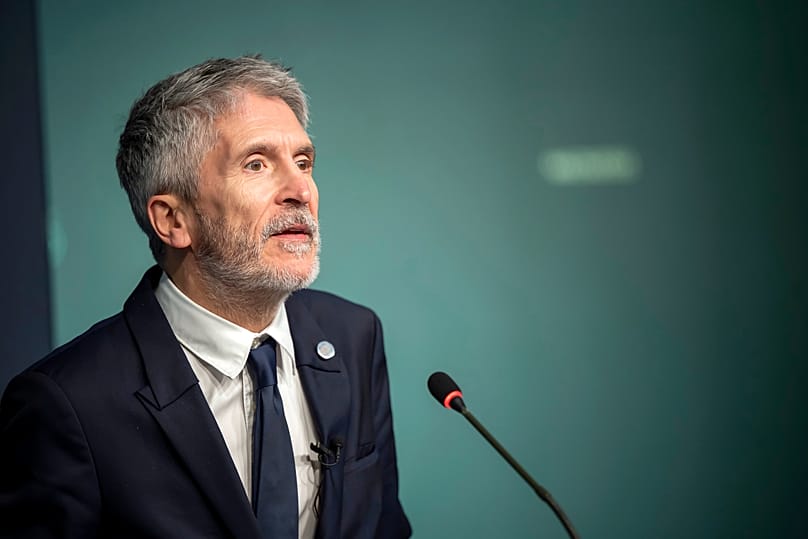
"Any such information should have immediately been made available to the National Security Council...and to other bodies with powers in this field," the minister said in his letter to the police chief, sent after the newspaper report was published.
More than 70,000 migrants entered the small Spanish territory in north Africa on 30-31 July, swimming or crossing on foot from neighbouring Morocco in an unprecedented rush that left scores dead.
Some analysts have suggested the crisis may have been a message sent to Spain by Morocco over the disputed Western Sahara after Sánchez visited Rabat's historic enemy Algeria in July.
The Western Sahara is a former Spanish colony largely controlled by Morocco but claimed by the Algerian-backed pro-independence Polisario Front.
Political flashpoint
The influx triggered fresh tensions within the European Union over the sensitive topic of immigration and dealt a blow to one of its main achievements, the Schengen free-travel zone.
Italy's right-wing government imposed border checks for one month on travellers from Spain after the crisis, with Madrid reciprocating a week later.
Both governments announced a 15-day extension of the controls on Monday.
Although the vast majority of the migrants returned to Morocco within hours, thousands remain in the tiny territory of 18 square kilometres and 84,000 inhabitants, many living rough on the streets.
Their fate has become a major political flashpoint, with the conservative and far-right opposition demanding that all those who entered Ceuta, including minors, be returned to Morocco.
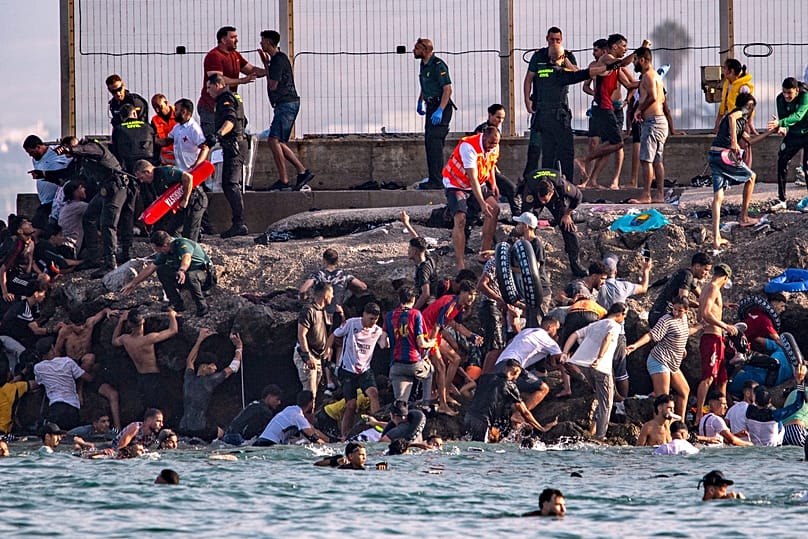
Ceuta residents have held regular demonstrations over what they say are security and hygiene problems linked to the influx.
Sánchez said that 6,000 spaces at reception centres would soon be available in the territory for migrants, whose status must be verified by the Spanish authorities before any possible return to Morocco.
He also pledged an additional €168 million in aid for Ceuta to respond to the crisis.
At the end of August, Madrid asked the European Commission (EC) for the support from Frontex, Europol and the European Union Agency for Asylum (EUAA) to assist with the screening and processing of migrants who are staying irregularly in Ceuta.