

















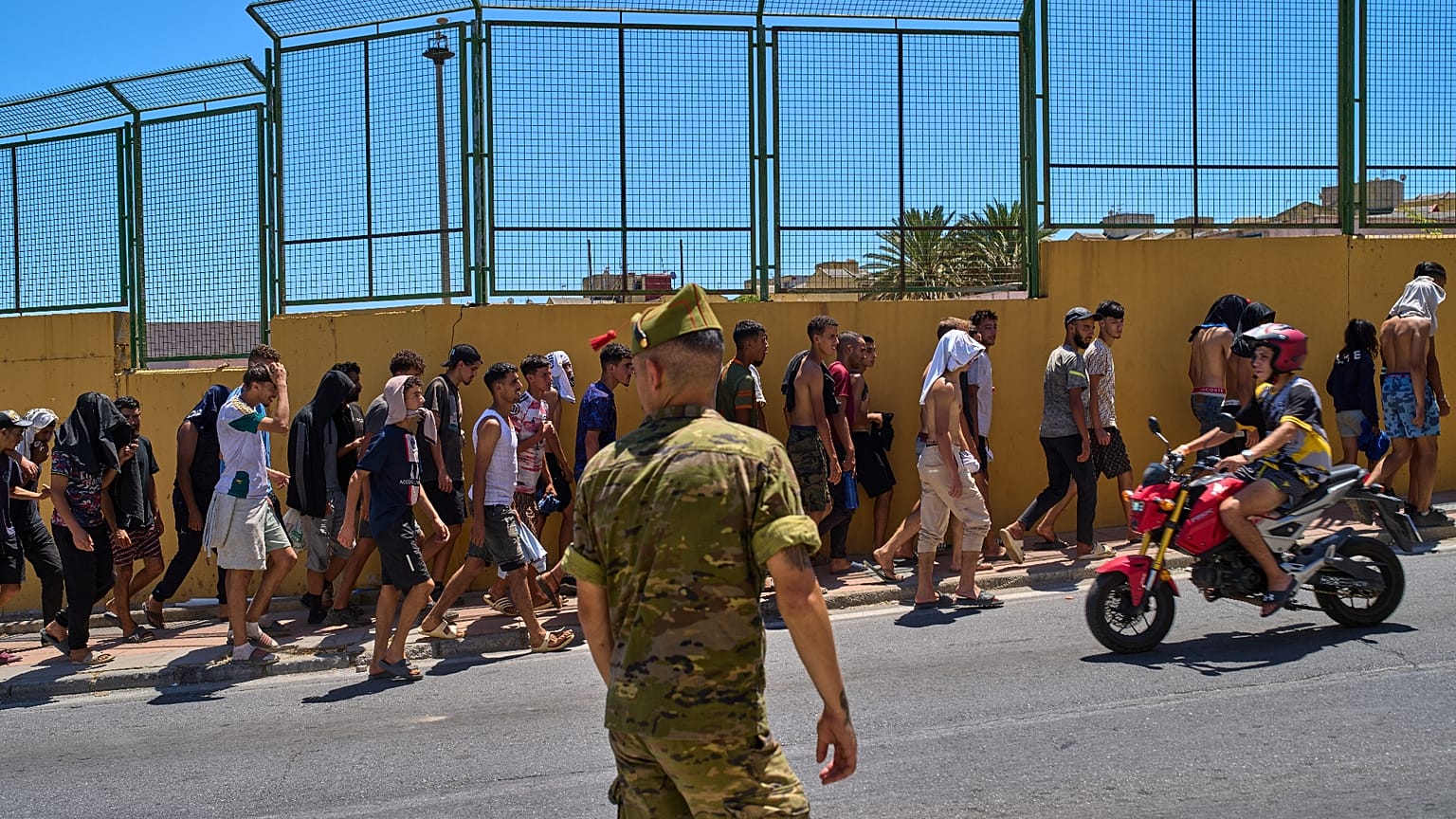














A Spanish police report highlighting "total permissiveness" by Moroccan security forces formed the basis for the decision by the country's top criminal court to open the probe.
Spain's Audiencia Nacional court has ordered a criminal investigation into the arrival of tens of thousands of migrants in Ceuta in July.
 ADVERTISEMENT
ADVERTISEMENT
ADVERTISEMENT
In her ruling, investigating judge María Tardón said there were grounds to believe that "criminal conduct allegedly committed abroad had seriously undermined Spain's territorial integrity, using the mass entry into the country to do so."
The decision comes after the judge ruled that the National Court had jurisdiction to investigate alleged crimes against territorial integrity, negligent homicide, and criminal organisation, in line with the criteria set out by the Public Prosecutor's Office.
Tardón said the migrant flow "constitutes one of the characteristic methods of 'hybrid warfare' or the 'grey zone,' with the aim of altering the life and rights of Spanish citizens" in Ceuta.
A Spanish police report highlighting "total permissiveness" by Moroccan security forces formed the basis for the judge's decision to open the probe.
"A clear and undeniable facilitation of the process" came from the north African nation, notably "through the verified and visually documented behaviour of Morocco's security forces," Tardón said.
Uniformed Moroccan security forces made "no serious attempt" to halt the influx, with some also offering "active guidance" on how to make the crossing, the judge continued.
The Spanish government has said there is "no conclusive evidence" that Rabat was responsible for the mass entry in late July, which saw more than 70,000 migrants cross into the Spanish exclave from Morocco.
Moroccan authorities have not commented on the Spanish police report, although Moroccan media outlets have branded it a "botched" document that they say lacks material evidence.
Most of the migrants who made the crossing into Ceuta have been returned, but thousands have remained amid mounting political tensions.