


















The US president criticised Europe over trade, energy and immigration, and called relations with European allies "disappointing" over their response to his Iran war efforts
US President Donald Trump said on Saturday that a unified Ireland would be “fantastic,” wading into a complex and politically charged subject during a two-day visit to a major tournament at his private Irish golf course.
 ADVERTISEMENT
ADVERTISEMENT
ADVERTISEMENT
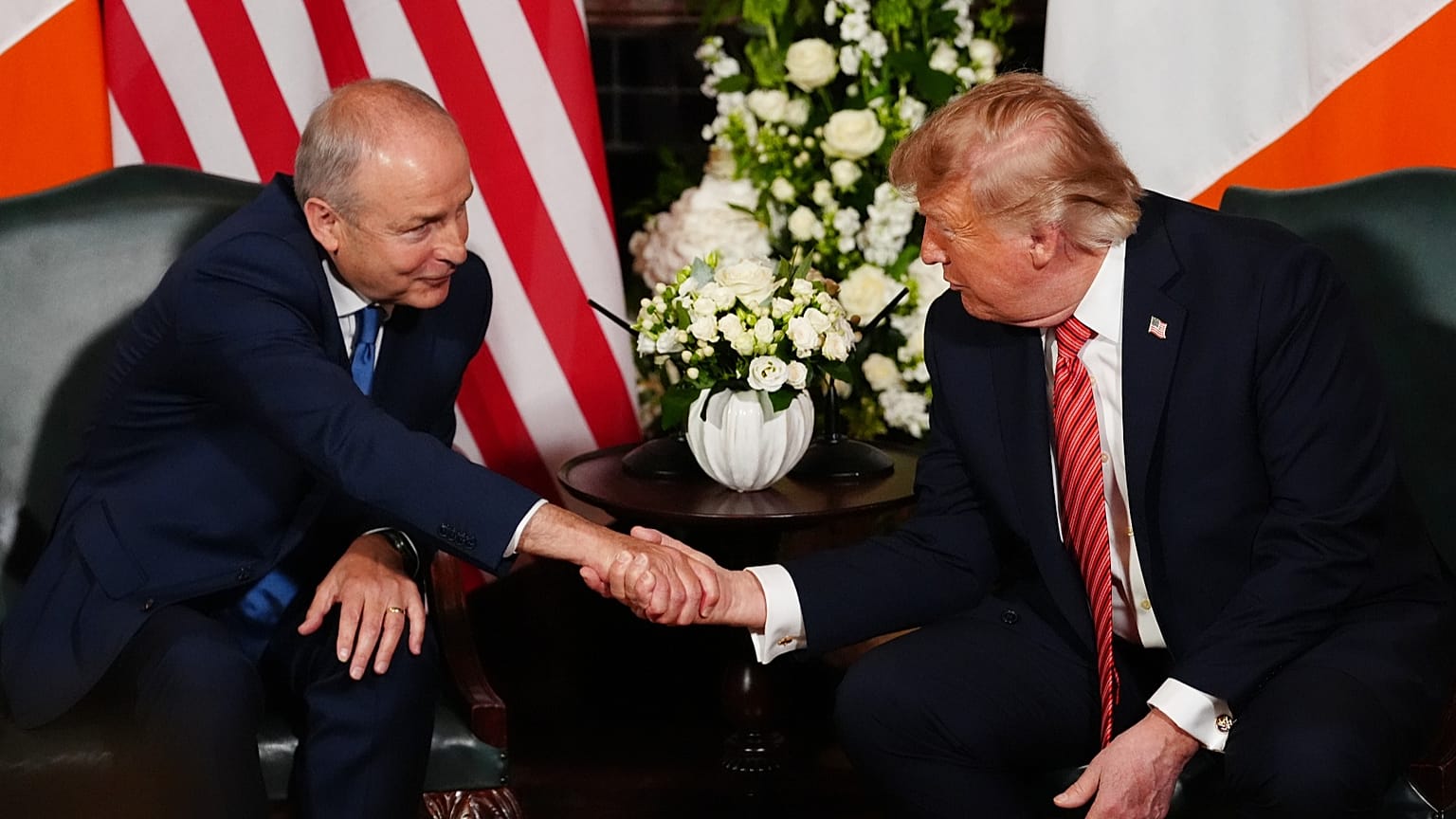
At a meeting with Irish Taoiseach Micheál Martin in Dublin, Trump said he would love to see the reunification of the Republic of Ireland with the UK’s Northern Ireland.
“I don’t want to cause any problems but I’d love to see it unified," Trump offered when asked for his opinion on the issue by a reporter. "It’s going to happen eventually. It may as well happen now.
“I think it would be a fantastic thing," he said, adding that "the UK will have something to say about it, obviously.”
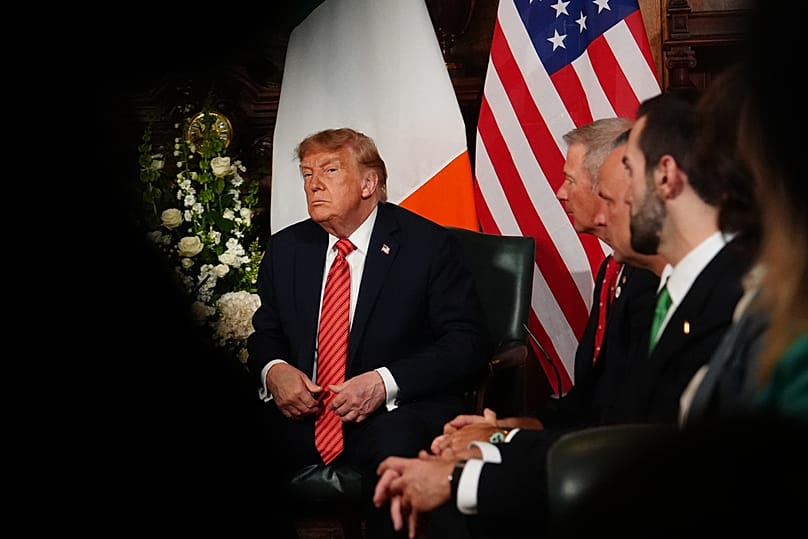
Competing visions of Northern Ireland — whether it's Irish or British — drove decades of violence in Northern Ireland that left some 3,600 people dead. Previous US presidents have avoided commenting directly on the subject, even those, like Joe Biden, with strong ancestral and emotional ties to Ireland.
When Ireland, long dominated by its bigger neighbour Britain, became a self-governing Roman Catholic-majority country a century ago, a six-county region in the north with a Protestant majority remained part of the United Kingdom.
Northern Ireland was split between two main communities, nationalists — most of them Catholic — who desired union with the rest of Ireland, and largely Protestant unionists, who wanted to stay British.
Tensions eventually exploded in the Troubles, unwinding three decades of violence involving paramilitary groups on both sides and British troops.
A 1998 peace accord that Washington was instrumental in brokering largely ended the violence, but left Northern Ireland’s ultimate status unresolved.
The peace accord allows for a vote on unification if it appears likely a majority of people would vote for it.
Newly-appointed UK Prime Minister Andy Burnham said point blank on Wednesday that there won’t be another referendum on reunification unless there is an evident desire for one.
“I am not aware that there is majority public support for another referendum, and until that changes, there will not be one,” said Burnham.
Trump also held talks Saturday in Dublin with his Irish counterpart Catherine Connolly and will address US and Irish business leaders at the US ambassador's official residence, before traveling to his oceanfront golf club in Doonbeg, on the other side of the country, to watch the Irish Open golf championship.
Connolly is a left-wing politician who was among those who protested when Trump visited Ireland in 2019, during his first term in office. She is now Ireland's elected head of state, which is a largely symbolic and ceremonial position.
A supporter of the Palestinian cause, she has in the past criticised US policy in the Middle East and called the Republican president a “bully” in his dealings with other states, pressuring of them and approach to foreign policy and bilateral relations.
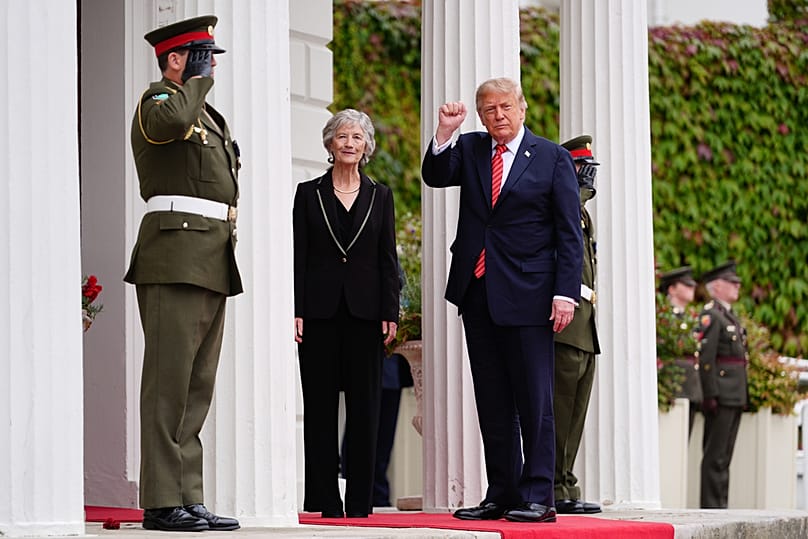
The Irish president met Trump at the end of a red carpet at her official residence in Dublin. They shook hands and chatted before going inside. He emerged alone a few minutes later and saluted as an Irish Defence Forces band played the US national anthem and inspected an Irish Army guard of honour.
Trump rebukes European allies
The US president also lashed out at European allies as he spoke in a joint press conference with Martin following the meeting, slamming them for what he says has been a notable decline in their societies.
"I hate to see what's happening with Europe. I hate to see what's happening on trade, energy, and immigration," he said. "Ooh... that immigration, what you're doing to yourselves, you're just killing yourselves."
He also criticised Washington's relationship with European allies as "disappointing" following many nations' unwillingness to help the Republican president with his Iran war efforts, and the chaos that ensued with the closure of a strategic waterway, the Strait of Hormuz.
The US president however said that his country is maintaining a working relationship with all its allies in the continent.
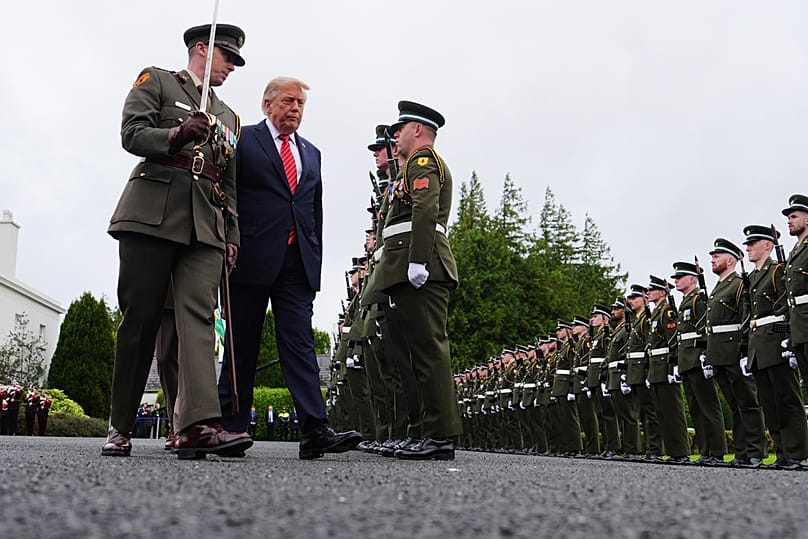
Trump’s visit is the latest example of blending his official duties and personal interests.
Trump plays golf about every weekend at clubs he owns in Florida, New Jersey and Virginia. His attendance at the Irish Open continues his trend of appearing at high-profile sporting events — and having a hand in organising some of them in ways that benefit his family business.
His clubs in Doral, Florida, and Bedminster, New Jersey, have each hosted professional golf tournaments this year.
The Irish Open is the second European Tour event to be held at a Trump property this year. The Nexo Championship was held last month at Trump's golf course in Aberdeen, Scotland.
Last year, Trump went to Scotland for five days to play golf at his club in Turnberry and later inaugurated a new Trump golf course in Balmedie, Aberdeenshire.
During that visit, he held talks with the then-UK Prime Minister Keir Starmer and European Commission President Ursula von der Leyen to discuss his controversial global ‘reciprocal’ tariff policy.