




























Iran has refused to back down in its war with Washington, with military officials warning they are prepared to respond to any renewed US attack.
Iran's chief negotiator issued an ultimatum to the United States on Tuesday to accept the conditions in Tehran's 14-point proposal for peace or face "failure."
 ADVERTISEMENT
ADVERTISEMENT
ADVERTISEMENT
The defiant message came after US President Donald Trump rejected the latest counteroffer from Iran and said that a fragile ceasefire in place since 8 April was on "life support."
But Mohammad Ghalibaf said Washington had to accept Tehran's "rights" if it wanted to end more than two months of conflict, as peace talks remain deadlocked after an initial round last month failed to produce a breakthrough.
"There is no alternative but to accept the rights of the Iranian people as laid out in the 14-point proposal. Any other approach will be completely inconclusive; nothing but one failure after another," said Ghalibaf in a post on X.
"The longer they drag their feet, the more American taxpayers will pay for it."
Iran has refused to back down in its war with Washington, with military officials warning they are prepared to respond to any renewed US attack.
It has choked traffic through the key Strait of Hormuz trade route, rattling global markets and giving it vital leverage, while the US has imposed its own naval blockade on Iranian ports.
Details of the latest US proposal remain limited, though media reports say it involves a one-page memorandum of understanding aimed at ending the fighting and establishing a framework for negotiations on Iran's nuclear programme.
Iran's foreign ministry said its response called for ending the war on all fronts, including Lebanon, halting the US naval blockade on Iranian ports and securing the release of Iranian assets frozen abroad under longstanding sanctions.
It did not elaborate on what Iran would offer in return.
On Tuesday, the spokesman for Iran's parliamentary national security commission said lawmakers would consider the possibility of enriching uranium to weapons-grade levels if conflict resumed.
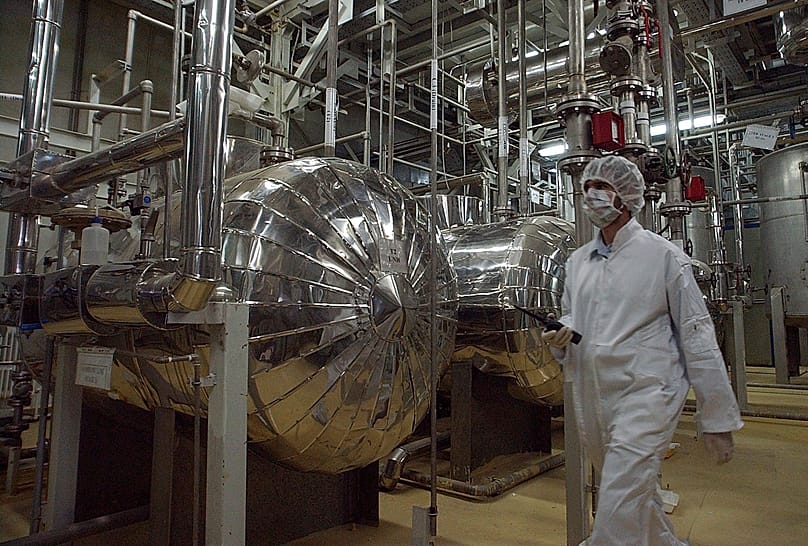
"One of Iran's options in the event of another attack could be 90 percent enrichment. We will examine it in parliament," Ebrahim Rezaei wrote in a post on X.
Tehran possesses a significant stockpile of uranium enriched to 60% purity, with roughly 90% required for a nuclear weapon.
Iran's stockpile of highly enriched uranium remains a key sticking point in negotiations with the United States, which insists the material must be transferred out of the country.
Iran has so far refused to move its enriched uranium stockpile abroad and insists on its right to the peaceful use of nuclear energy, though it has said the level of enrichment remains "negotiable."
Two sides remain far apart
Trump has demanded a major rollback of Iran's nuclear activities, while Iran is pushing for a more limited agreement that would reopen the crucial Strait of Hormuz and lift the US blockade ahead of further negotiations.
Israeli Prime Minister Benjamin Netanyahu has insisted the conflict would not end until Iran's nuclear facilities were destroyed.
Tehran's foreign ministry said Iran's proposal asked that the US recognise its sovereignty over the Strait of Hormuz, which it has effectively closed since the start of the war, allowing only a small number of ships to pass and charging tolls.
But experts say such an arrangement would likely violate international law that provides for freedom of navigation. That proposal is also likely to be widely rejected by the international community. The strait was open to international traffic before the war.

The world now also faces a shortage of fertiliser, much of which comes from Gulf ports, risking food supplies for tens of millions of people.
Jorge Moreira da Silva, executive director of the United Nations Office for Project Services (UNOPS), warned there were just a few weeks left to avert a potentially "massive humanitarian crisis."
"We may witness a crisis that will force 45 million more people into hunger and starvation," he said.
Iran is also demanding war reparations from the US, the lifting of international sanctions, the unfreezing of Iranian assets held abroad and an end to the war between Israel and Lebanon's Iran-backed Hezbollah, according to Iranian state TV.