

















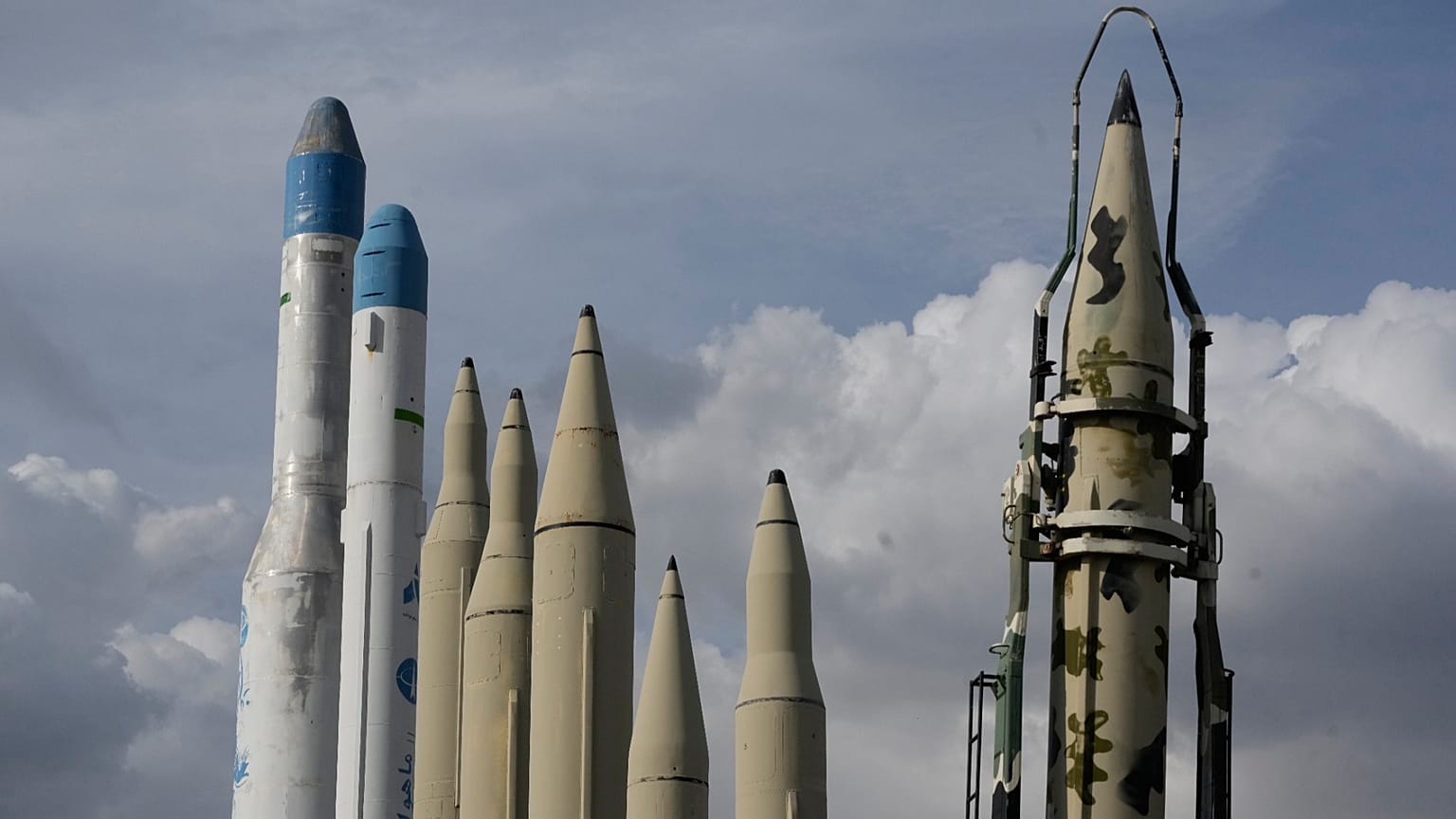














Tehran has vowed a "far more severe" response beyond the region after overnight US strikes on missile sites and boats planting mines in southern Iran, even as both sides say negotiations toward a Hormuz deal are still on.
The Gulf region is bracing for Tehran's response to the US strikes on southern Iran which CENTCOM insisted that they were in “self-defence”, signalling that they were not meant to breach the fragile ceasefire, yet making it clear that the US retains the upper hand and the initiative in the complex negotiations to end the Iran war.
 ADVERTISEMENT
ADVERTISEMENT
ADVERTISEMENT
Tehran has neither officially confirmed nor denied the overnight US strikes, but Iranian army spokesperson Abolfazl Shekarchi told Fars news agency on Tuesday that any new attack on Iran will generate a “far more severe” response beyond the region and will be heavier than before.
The Iranian media reported that three explosions were heard in Bandar Abbas region, offering no further details.
However, the Islamic Revolutionary Guard Corps (IRGC) said in a statement that it had detected and tracked an MQ-9 drone, an RQ-4 drone, and an intruding F-35 fighter jet.
The IRGC also warned against any violation of the ceasefire by what it described as the “aggressor US military,” adding that it considers its right to retaliate to be “legitimate” and “certain”.
US Secretary of State Marco Rubio said from India on Tuesday morning that the negotiations with Iran are continuing in Qatar over what he called “the specific language” of the deal, despite the US strikes.
“I think it’s a lot of talking, back and forth, going on about specific language in the initial document, so it’ll take a few days,” Rubio said, yet warned that US President Donald Trump is “either going to make a good deal or no deal.”
Meanwhile, Qatar appears to now take centre stage alongside Pakistan for mediating the peace deal, with top Iranian negotiator Mohammad Bagher Ghalibaf and Foreign Minister Abbas Aragchi in Doha conducting what Rubio described as “some talks” with Qatar’s Prime Minister and Foreign Minister Sheikh Mohammed bin Abdulrahman Al Thani.
While Galibaf and Aragchi have not yet commented on their talks in Qatar, Iranian lawmaker Ebrahim Rezaei, a spokesperson for the parliament’s National Security and Foreign Policy Commission, urged the Iranian delegation in Doha that they “must negotiate from a position of victorious power” and not to “whitewash the red lines.”
“The definitive victor of the war has been and remains the valiant Iranian nation,” Rezaei said in a post on X.
In a post on X on Tuesday, Qatar’s foreign ministry spokesman Dr Majed Al Ansari said that “the reports suggesting Qatar 'offered' $12 billion to Iran to secure a deal are simply not true and are being circulated by parties attempting to sabotage the deal and undermine ongoing diplomatic efforts toward regional de-escalation and stability.”
“Qatar’s diplomatic role, in coordination with regional partners, is well established and publicly documented, and such narratives are nothing more than desperate attempts to tarnish Qatar’s reputation as a trusted international peace facilitator," Al Ansari said.
In his statements to reporters in India, Rubio also said that the Strait of Hormuz will “open one way or the other”.
Over the past 24 hours, maritime data showed that a total of 32 vessels, including oil tankers and others, have passed through the Strait of Hormuz with Iranian clearance.
Strikes amid ongoing negotiations
The US military said late on Monday that it carried out "self-defence" strikes in southern Iran, including on missile launch sites and boats placing mines, even as Trump said on social media that negotiations were “proceeding nicely".
According to a statement from the US Central Command, the strikes were carried out “to protect our troops from threats posed by Iranian forces".
“Targets included missile launch sites and Iranian boats attempting to emplace mines. US Central Command continues to defend our forces while using restraint during the ongoing ceasefire,” CENTCOM spokesman Timothy Hawkins wrote in the statement.
Further details were not immediately available, including more specifics on the threats from Iran and what this means for ongoing negotiations.
The strikes come amid a potential deal between both sides on ending the war, and that will allow for the reopening of the Strait of Hormuz, the passageway for some 20% of global shipping which has been effectively blockaded by Iran since the start of the Iran war on 28 February.
On Monday, Iranian officials said agreements on many issues were concluded between their negotiators and Washington, but a potential deal was not imminent.
According to Tehran's foreign policy spokesperson Esmail Baqei, there was no "timeframe or deadline" in finalising the deal with the US.
This was in sharp contrast to Trump's words on Saturday that a deal with Iran, including opening the Strait of Hormuz, has been “largely negotiated” after calls with Israel and other allies in the region.
“Final aspects and details of the deal are currently being discussed and will be announced shortly,” Trump said on social media, providing no further details.
Hours later on Sunday, the US president said he had told representatives to hold off and not rush the potential deal.
Abraham Accords expectations
Meanwhile, Trump on Monday said any agreement to end the Iran war should include a requirement for several additional countries, including Saudi Arabia and Pakistan, to join the Abraham Accords, the US-brokered agreements aimed at normalising relations with Israel.
The proposal came as the emerging Iran deal faced criticism from fellow Republicans who favour a harder line on Iran, and it could add new diplomatic complications to the negotiations.
Trump said Saudi Arabia and Qatar were countries that should “immediately” sign on, alongside Pakistan, Turkey, Egypt and Jordan. Bahrain and the UAE became the first countries to join in 2020.
“After all the work done by the United States to try and pull this very complex puzzle together, it should be mandatory that all of these countries, at a minimum, simultaneously sign onto the Abraham Accords," Trump said.
Trump has long hoped Saudi Arabia would join, but the kingdom has maintained that any normalisation deal requires first establishing a clear path for Palestinian statehood. The same matter is also key for Pakistan, which is among the countries that do not have diplomatic relations with Israel.