




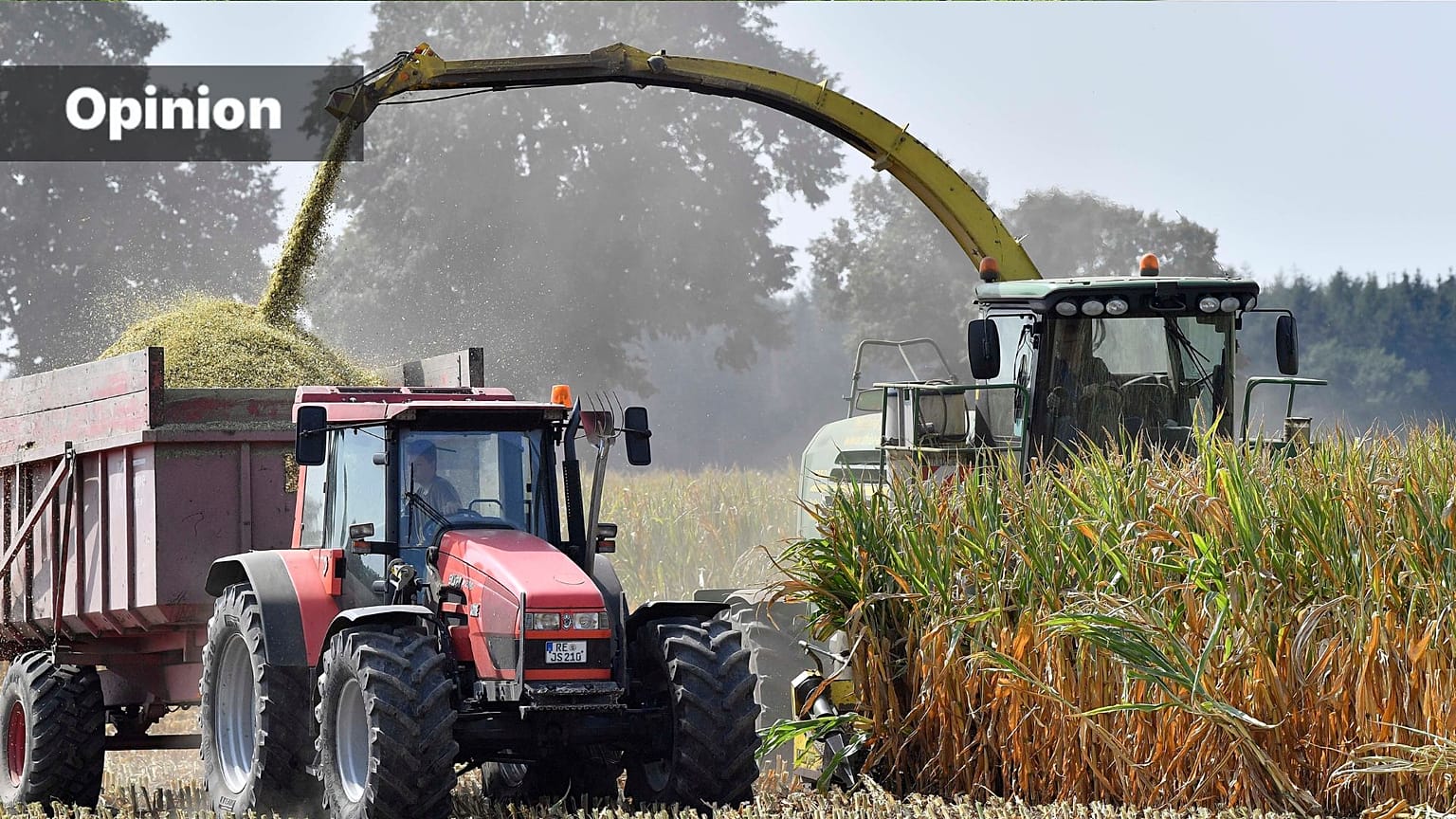













Europe is losing more than €50 billion annually because of its degraded soils write leading scientists in an op-ed for Euronews. They found a way to deliver healthier soils using AI. They say AI-driven tools are quietly transforming how Europe monitors and manages soil health.
Intelligence (AI) has become one of the most polarising technologies of our time. Concerns about job losses, misinformation, and opaque algorithms shaping society are both real and justified. Yet amid this broader anxiety, one area where AI’s promise is unmistakably positive lies beneath our feet: Europe’s soils. Healthy soil is not just an environmental concern—it is the foundation of food security. More resilient soils mean more stable harvests, reduced dependence on imported fertilisers, and stronger local food systems.
 ADVERTISEMENT
ADVERTISEMENT
ADVERTISEMENT
60–70% of soils are in an unhealthy state
In the aftermath of the Strait of Hormuz crisis, resilient soils have become the agricultural equivalent of renewable energy, granting communities greater independence from fragile global supply chains. But across the European Union, the situation is alarming. An estimated 60–70% of soils are in an unhealthy state, affected by erosion, heavy metal contamination, compaction, salinisation and acidification, loss of organic matter, and declining biodiversity. Degraded soils are estimated to cost European citizens more than €50 billion annually.
The EU has recognised the urgency. In 2025, it adopted its first-ever Soil Monitoring Law (SML), setting the ambitious goal that all EU soils should be healthy and resilient by 2050. The challenge now lies in implementation. Monitoring millions of hectares of farmland, forests, and urban land is a daunting task. Traditional soil surveys are slow, costly, and often fragmented. This is where Earth observation technologies—such as the Copernicus Sentinel programme—and AI-driven analytics come in, not as tools of surveillance, but as instruments of stewardship.
A machine-learning powered system to monitor soil health
Seeing Europe’s soils as never before One of the EU’s most promising developments is the AI4SoilHealth project, which is building a machine-learning powered system to monitor soil health indicators across the continent. By integrating vast datasets—from satellite imagery to in-situ soil samples—AI can reveal patterns that would otherwise remain invisible. A striking example is the Soil Health Data Cube (hosted at EcoDataCube.eu), a comprehensive stack of geospatial data layers at fine spatial resolution (30 metres or finer). It combines soil, vegetation, and land-use dynamics with climatic and terrain data.
The system already contains tens of terabytes of data spanning more than two decades (2000–2025). While the availability and quality of the data remain far from ideal, this approach clearly demonstrates the value of integrating Earth observation data with sources such as the EU LUCAS soil survey and national inventories. The result is openly accessible, value-added information that can benefit all stakeholders. But this is more than a technical breakthrough. Properly understood, such systems could become civic infrastructure: a shared, living map of Europe’s ecological foundation.
AI is giving Europe shared soil knowledge
Rather than treating soil as a resource as an unlimited resource, this approach reframes it as something as vital as water and oxygen—something collectively understood, governed, and regenerated by farmers, regions, and communities. In practice, this means farmers, cooperatives, and municipalities could access insights into soil conditions at high spatial resolution. They could track indicators such as soil carbon, pH levels, and biological activity—and even simulate how soils might respond to future climate or land-use changes.
In other words, AI is giving Europe something it has never had before: not just a digital map of soil properties, but the foundation for shared soil knowledge. A future where soil literacy is as widespread as weather forecasting—where every land steward can make informed, autonomous decisions about crop rotations, carbon restoration, and biodiversity. From policy ambition to practical action Laws alone cannot restore soil. What Europe needs now are tools that translate policy into practice—and communities of farmers, especially younger generations, who are committed to long-term stewardship.
Technologies can strengthen regional food systems
As Member States develop their monitoring frameworks, AI-based tools could enable a shift from reactive policymaking to predictive stewardship. Instead of responding to degradation after it occurs, governments and communities could anticipate risks decades in advance, guiding proactive restoration and avoiding costly emergency interventions. At the same time, these technologies can strengthen regional food systems. By understanding soil conditions in near real time, regions can better plan crop diversity, water use, and land restoration—reducing vulnerability to global supply shocks and reinforcing local resilience.
For this vision to succeed, one principle is essential: soil data must be open, transparent, and collectively governed, while still protecting personal and sensitive information. As the AI4SoilHealth partners emphasise, data should be “as open as possible, as closed as necessary. ” True soil sovereignty depends on democratising access to knowledge, ensuring that farmers and communities—not only institutions or corporations—can shape and benefit from the data that describes their land.
Soil has to be seen as living infrastructure
Understanding the underground In a continent where soil types are as diverse as its politics, initiatives like AI4SoilHealth are not only welcome—they are necessary. By making the hidden life of soils visible, the technologies being created by the scientific community can shift public perception: from seeing soil as inert dirt to recognising it as living infrastructure that underpins food security, climate stability, and Europe’s ecological future. This is a rare opportunity—not just to measure decline, but to reverse it. In doing so, Europe can reshape its relationship with the ground beneath its feet, turning AI into a force not of disruption, but of regeneration.