


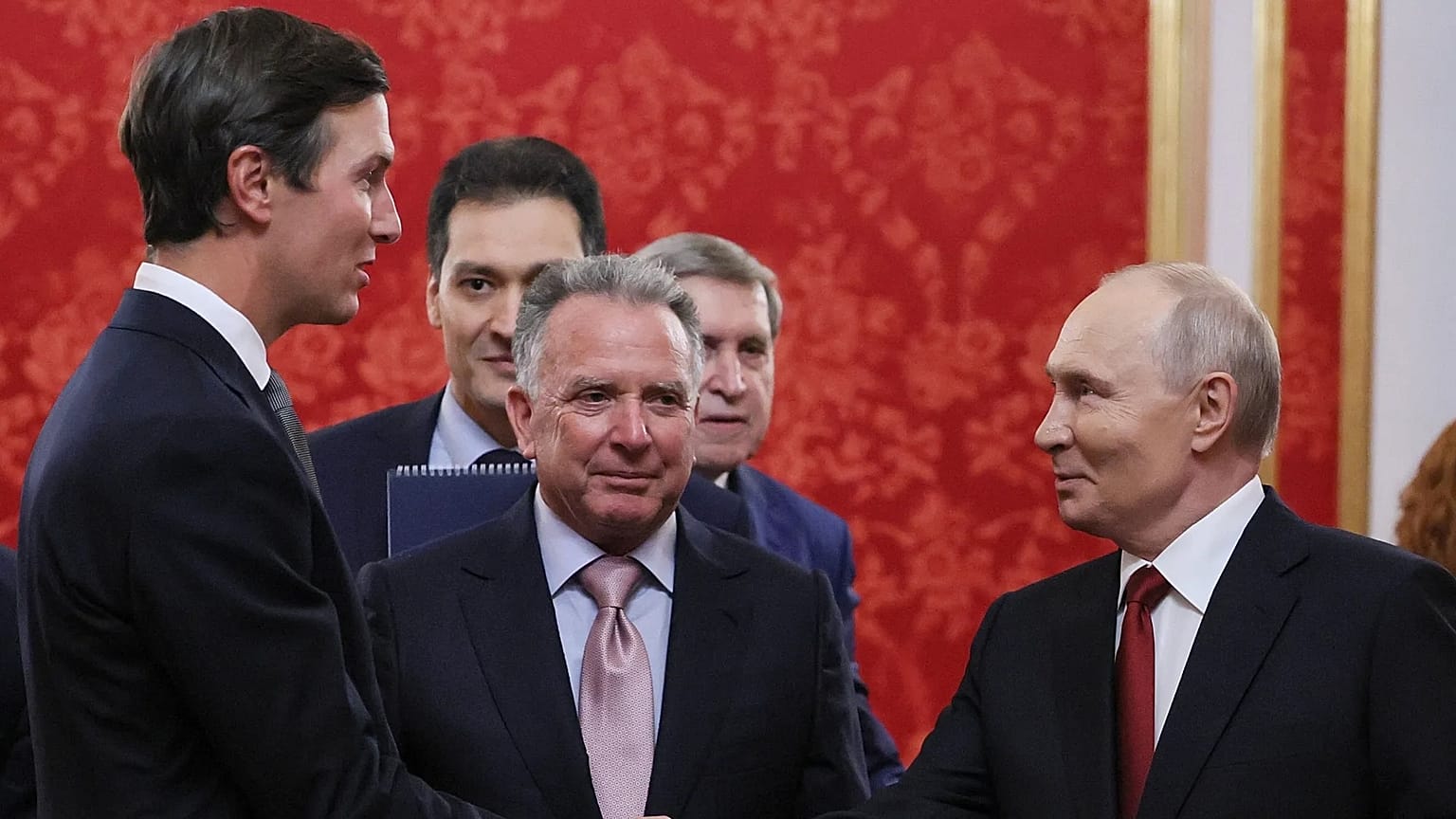


Moscow says it is prepared to consider economic proposals from Washington but will not make political concessions, while the Kremlin insists that a lasting settlement on Russia's terms, rather than a temporary energy ceasefire, remains its objective.
Russia has ruled out making political concessions to Washington ahead of talks between President Vladimir Putin and US envoy Steve Witkoff, signalling that Moscow remains unwilling to soften its maximalist negotiating position despite renewed American efforts to end the war in Ukraine.
 ADVERTISEMENT
Witkoff arrived in Saint Petersburg to meet Vladimir Putin, following what US Secretary of State Marco Rubio described as "positive" talks with Ukrainian President Volodymyr Zelenskyy in Oslo on Tuesday.
Russian Foreign Minister Sergei Lavrov said Moscow would examine proposals brought by Witkoff and Donald Trump's son-in-law Jared Kushner, but made clear that any economic or financial benefits would not be accompanied by political concessions.
"We'll see what they propose. If they offer something that benefits us economically and financially, then why not?" Lavrov said, according to remarks reported by Russian media.
"But this must be done without any political concessions on our part," he added, stressing that Russia should rely on itself rather than expect favourable treatment from Washington.
His comments underscore the difficulties facing the latest diplomatic initiative, which comes after Trump reached a diesel agreement with Putin and criticised the impact of Ukrainian strikes on Russia's energy sector on global fuel prices.
Lavrov also cautioned against expecting a fundamental change in US-Russian relations under Trump, describing the United States as "at best a competitor" and warning that future American administrations could reverse any economic concessions.
Kremlin rejects energy ceasefire
The Kremlin, meanwhile, reiterated its opposition to any temporary halt in attacks on energy infrastructure, despite Trump's earlier announcement of an energy ceasefire between Russia and Ukraine.
"Nothing has changed. We need peace, not a ceasefire," Kremlin spokesman Dmitry Peskov told reporters on Wednesday.
The statement comes as Russia continues its attacks on Ukraine's energy infrastructure ahead of winter, raising further questions about the prospects for a limited agreement to protect power facilities.
Peskov also acknowledged that a comprehensive settlement could not be reached without Ukraine's participation, even as Moscow prepares to discuss the latest proposals directly with Washington.
"Of course, it is impossible to fully resolve the Ukrainian issue without someone from Kyiv being present," he said, adding that someone in the Ukrainian leadership would have to take what he described as a responsible decision.
The Kremlin spokesman also cast doubt on the contribution Finnish President Alexander Stubb could make to the diplomatic process, suggesting that merely repeating the broader European position on Ukraine would do little to advance negotiations.
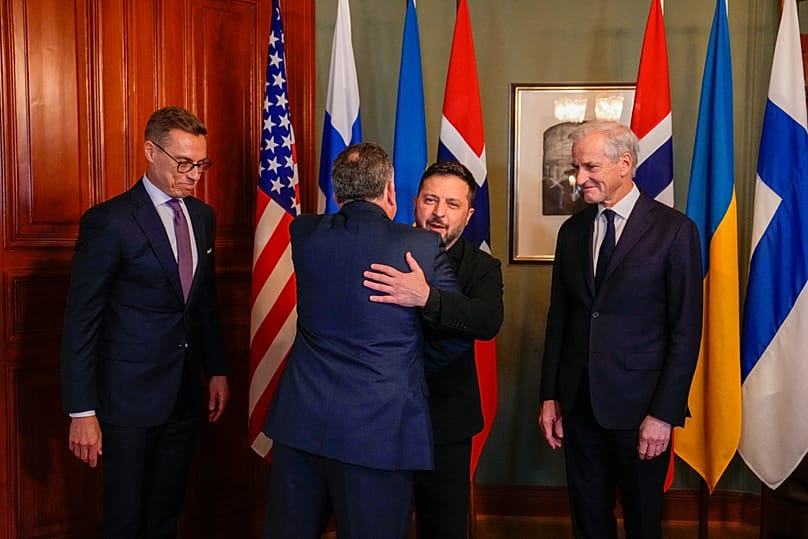
Stubb took part in Tuesday's talks in Oslo alongside Zelenskyy, Witkoff and Norwegian Prime Minister Jonas Gahr Støre, with discussions focusing on proposals for ending the war and possible security guarantees for Ukraine.
'Time to make a deal'
The latest diplomatic push comes amid deepening tensions between Kyiv and Washington, following Trump's criticism of Ukrainian strikes on Russian energy infrastructure and reports of delays in US-made Patriot interceptor missile deliveries already paid for by European countries.
Following his meeting with Witkoff, Zelenskyy thanked Washington for resuming intelligence-sharing on incoming Russian strikes, describing early warnings of ballistic missile attacks as essential to protecting civilians.
"We are thankful that intelligence works," Zelenskyy told reporters in Oslo, calling the warnings "very, very important for our people, for children, adults, civilians".
Trump, meanwhile, renewed his calls for Ukraine to reach an agreement with Russia, telling reporters at the White House on Tuesday that Kyiv needed to "make a deal".
Zelenskyy has insisted that Ukraine must be directly involved in any negotiations determining its future.
"If there are issues about Ukraine, our future, it can be acceptable only when we are at the table of negotiations," he said on Tuesday.