


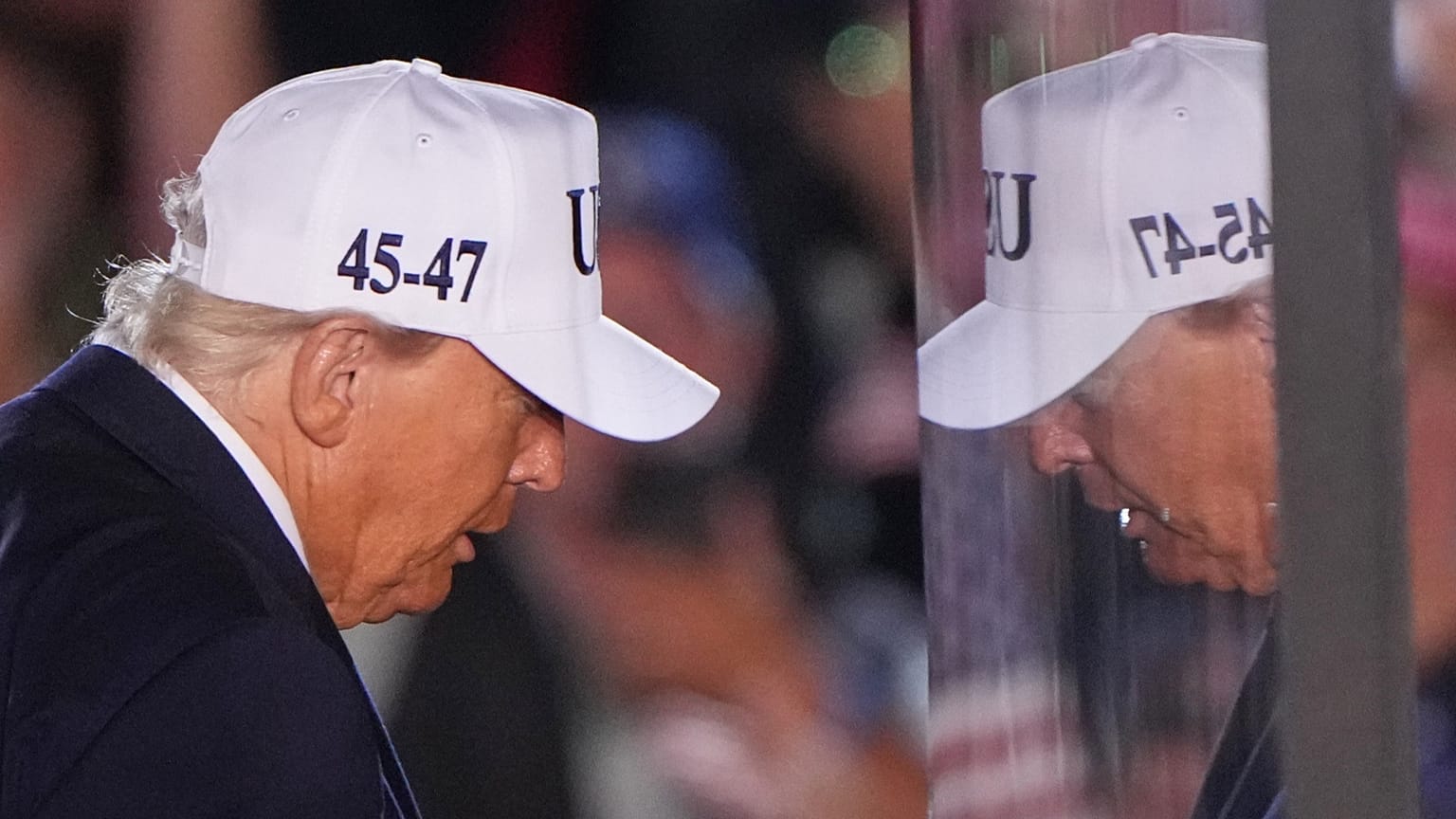


US President Donald Trump wrapped up his campaign in Iowa and Kansas with a final push to rally support, as Democrats seek to regain control of Congress.
US President Donald Trump round up his midterm campaign efforts on Sunday, holding rallies in Iowa and Kansas, while divisions emerged among Democrats in Michigan, threatening to undermine their effort to retake the Senate.
 ADVERTISEMENT
The president was in Salina, Kansas, and Dubuque, Iowa, where Republicans are facing strong competition from Democratic candidates in both states.
However in Iowa, Trump insisted Republicans are on the verge of sweeping victories.
“We're going to elect ‘America first’ Republicans up and down the line,” he said near the start of a speech that lasted two hours.
Trump later travelled to Kansas, where Air Force One flew over an enthusiastic crowd before landing at Salina airport for an outdoor rally.
Once again, the president delivered a lengthy speech, lasting nearly 90 minutes, during which hundreds of attendees left before he had finished speaking.
“This is our last stop. We’re closing it down tonight," Trump said, who has been rallying across the country since the start of October. The president has held more than two dozen rallies in 19 states.
With more than 54 million votes already cast, Tuesday's elections are considered a referendum of Trump's second term in the White House.

Trump's approval rating has fallen to a low point in his second term, reflecting growing public discontent over his domestic decisions, sweeping tariffs and his decision to launch the war in Iran.
A shift in strategy is evident. In 2024, the Republican party largely focused on flipping states that had voted for Democrat Joe Biden in 2020. This year, however, Trump has concentrated much of his campaign efforts on states where he has dominated before.
On the ballot are all 435 seats in the House of Representatives and 35 seats in the Senate. Republicans currently hold a narrow 219-214 majority in the House and a 53-47 majority in the Senate.
Polls suggest Democrats are well positioned to regain control in the House of Representatives, while also have a viable chance at securing majority in the Senate.
Winning the House would put Democrats in charge of the federal budget, would give them the ability to block legislation and would give them greater authority to investigate the Trump administration.
El-Sayed fires back at Trump
Meanwhile in Michigan, Democratic congresswoman Haley Stevens broke with her party by publicly endorsing Republican candidate Mike Rogers rather than supporting her party's nominee.
Stevens lost the Democratic Senate primary to progressive candidate Abdul El-Sayed and announced she would be backing Rogers in the Senate race.
"This is a very close election, we all know that, but Abdul made very clear that I was not welcome in his campaign," she told reporters when announcing her endorsement.
Trump praised Stevens for endorsing Rogers and welcomed her to move to the Republican Party. “I don’t know Haley, I’ve never met Haley, but Haley said what few people are willing to say,” he said.
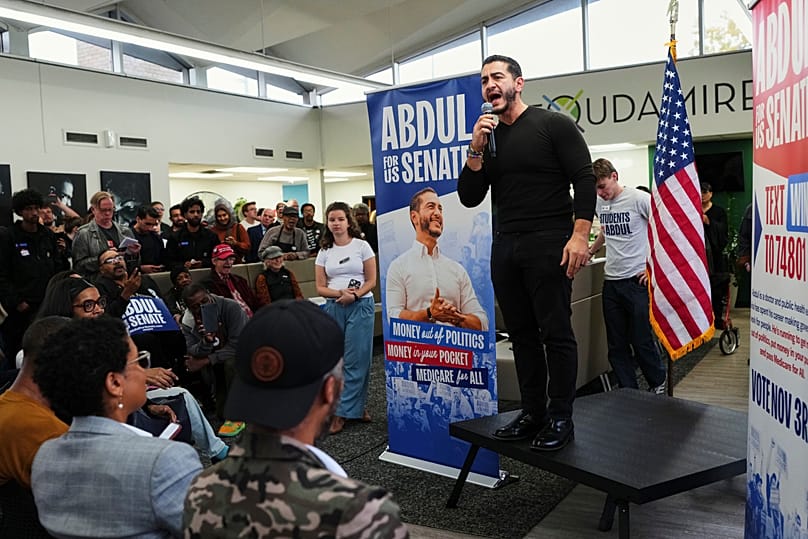
At his rallies, the US president also continued his attacks on El-Sayed, using Islamophobic rhetoric and branding him a "jihadist".
"That's another important election for us. We don't want to have a jihadist, we don't want to have a... can you imagine, we'll have to put him through metal detectors in order to seat," Trump said.
El-Sayed fired back that if he is to go through a metal detector, Trump should sit for a lie detector.
"It's simple. I've got nothing to hide, you've got so much to hide," he added, raising questions about the Jeffrey Epstein controversy and disputed claims surrounding the 2020 presidential election.
El-Sayed, whose national profile has been growing, has been a vocal critic of the US alliance with Israel and has called for an end to US arms sales to the country.
"At the end of the day, I actually don't think about Haley Stevens. I think about the 9,999,998 people who are not those two," he said.