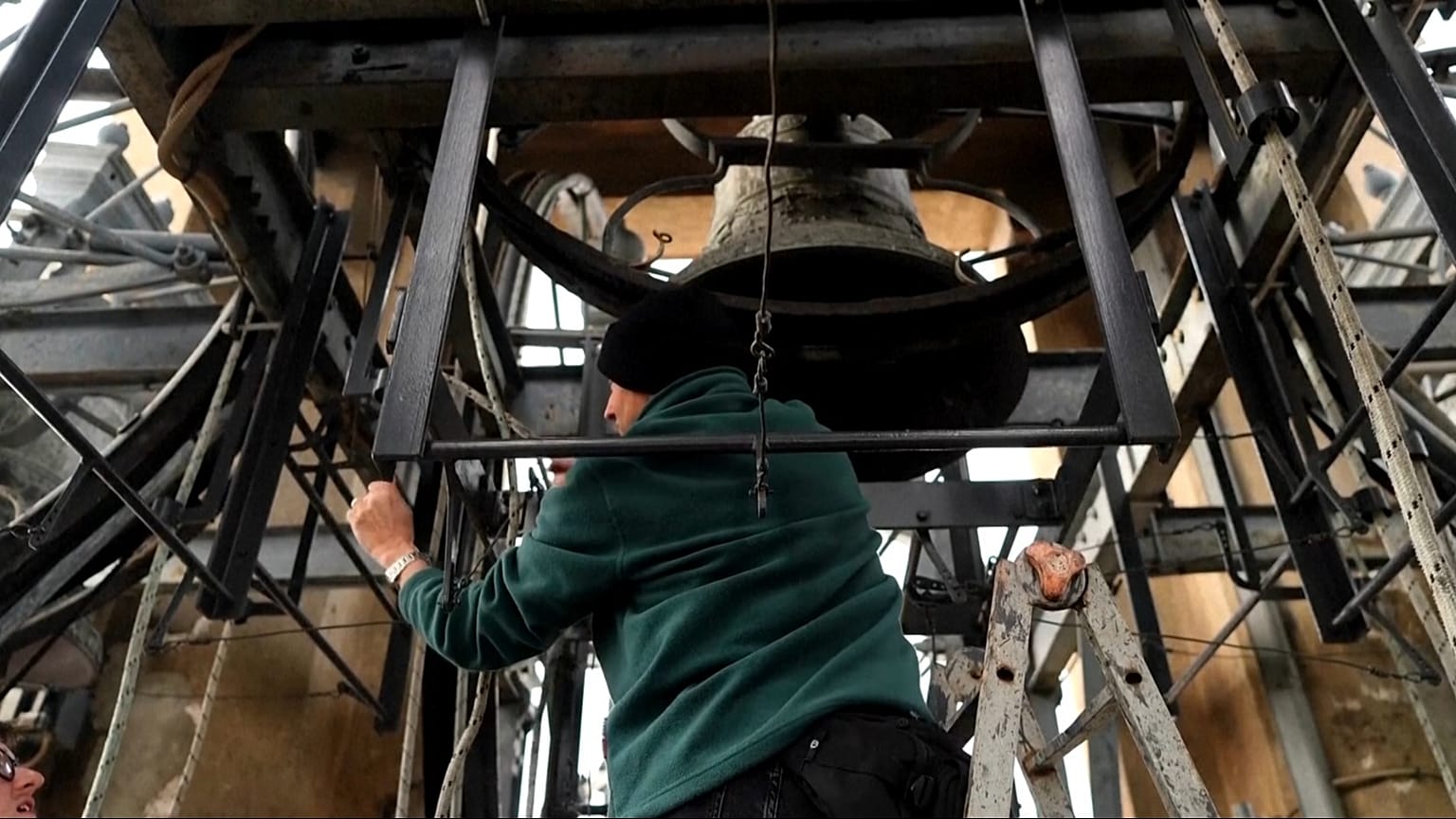


Across northern Italy, a new generation is keeping the centuries-old art of church bell ringing alive. As automated systems replace traditional techniques, young enthusiasts are learning to play the bells by hand, combining precision, teamwork and improvisation.
In northern Italy, a new generation is keeping the centuries-old art of manual church bell ringing alive, resisting the spread of automated systems.
 ADVERTISEMENT
At the Church of Saint Martin the Bishop in Bellusco, young enthusiasts pull heavy ropes to produce the melodies that once echoed from church towers across the region.
Today, church bells are increasingly operated electronically. For Corrado Codazza, president of the Federation of Ambrosian Bell Ringers, the preservation of the tradition is also about recognising bells as musical instruments and protecting a cultural heritage that was once close to disappearing.
But members of the Federation are determined to preserve the traditional craft, bringing together several dozen enthusiasts, more than half of them under the age of 30.
The tradition requires more than physical strength. Bell ringers must master timing, coordination and the ability to follow a conductor, much like musicians in an orchestra. Learning the craft is a hands-on process. Training takes place inside the bell tower, where enthusiasts gradually develop the technique needed to control the instruments.
“You start knowing little to nothing, perhaps having watched a few videos online to get an idea of what it’s like, before stepping into the world of manual bell ringing,” says 21-year-old Simone Malinverno.

Performances are also an opportunity to bring creativity back into the tradition. Unlike automated systems, which repeat the same sequences, manual bell ringing allows conductors to introduce variations and improvise.
The art of bell ringing was recognised by UNESCO as intangible cultural heritage in December 2024, giving further international recognition to the efforts of those working to preserve it.
“I like to think that people notice when the bell tower is playing something different," says 28-year-old computer programmer Alessandro Dameno. "While an automated system always delivers the exact same rendition, a manual performance incorporates the inventiveness of the conductor, who may call upon the bells in a different sequence, ensuring there is always something new. No two performances are ever the same,” he adds.
The group also hopes to restore manual bell ringing in places where the practice has disappeared, creating opportunities for new performances and passing the skills on to future generations.
Read more