






























Uzbekistan is increasing the adoption of electric and hybrid vehicles through both public and private initiatives, providing clearer signals to consumers and investors.
Uzbekistan is turning its urban transport sector into a high-growth market for sustainable mobility.
 ADVERTISEMENT
ADVERTISEMENT
ADVERTISEMENT
Investments in charging infrastructure, fleet electrification and green logistics are cutting emissions while strengthening supply chains and creating new revenue streams.
By 2030, electric buses are expected to account for 50% of urban fleets, signalling large-scale market expansion and positioning the country as a green mobility hub in Central Asia.
Trams and e-buses drive transport shift
Samarkand, one of Uzbekistan’s historic cities, has been modernising its tram system since 2017.
According to Sherali Namatov, Director of the Samarkand Tram Lines State Enterprise, the network operates two lines with 20 Czech-made trams.
“They are providing services to 9,000–10,000 passengers a day,” he said.
“Each tram consumes 500–600 kWh of electricity daily, costing around €41–€42. These trams are fully eco-friendly and support our commitment to sustainable urban transport.”
Alongside the tram network, Samarkand is expanding its electric bus fleet.
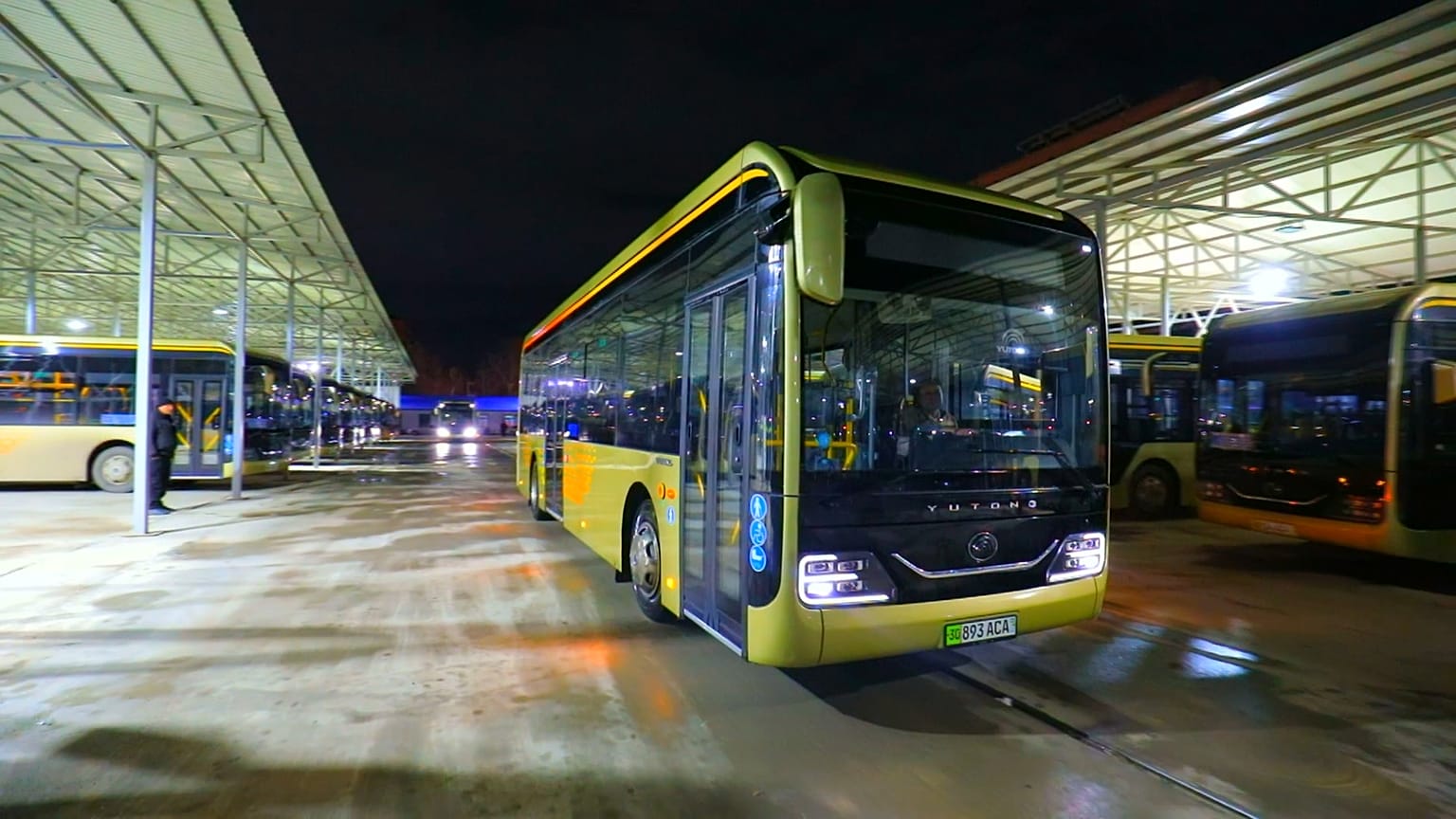
“Following presidential directives, 100 Yutong electric buses were introduced to cover the city’s main streets,” explained Ravshan Tojiyev, Head of the Samarkand Regional Transport Department.
“Each bus has a range of 400 km and can recharge overnight.”
The programme is backed by a €42 million partnership with the European Bank for Reconstruction and Development and forms part of a broader plan to add 250 more buses.
“The city is now on track to become fully green with modern, low-emission transport,” Tojiyev added.
In the capital, Tashkent, electrification is progressing at scale. Since 2025, the city has received 202 Yutong electric buses, with authorities aiming to electrify 50% of the fleet by 2030.
“Electrifying the bus fleet not only reduces emissions, it also provides quieter, safer, and more comfortable travel for residents”, noted Nodir Khudoyberdiyev, Head of the Project Management Group under the Ministry of Transport.
Over the past four years, Uzbekistan has imported 750 electric buses, including 520 for Tashkent. An additional 500 units are planned for the capital by 2030 to meet the electrification target.
Electric vehicle adoption accelerates
Consumer demand for electric vehicles is rising rapidly. According to National Statistics Committee, as of 1 July 2025, 73,600 EVs were registered nationwide, including 55,826 in Tashkent.
In October 2025 alone, a record 7,798 EVs were sold, an 83.5% year-on-year increase. Total third-quarter sales reached 20,700 units, more than double the level recorded a year earlier.
Domestic production is also scaling up. The BYD Uzbekistan Factory, which began full-scale production of electric and hybrid vehicles in 2024, currently has an annual capacity of 50,000 units.
“Our focus is on localizing production while providing safe, eco-friendly vehicles for citizens,” said Azizbek Mukhitdinov, General Director of BYD Uzbekistan Factory JV.
“We also implement a full battery lifecycle system, ‘Batarey Eco Cycle,’ which allows batteries to be reused as energy storage or recycled safely, minimising environmental impact.”
Production has expanded rapidly, from 4,000 vehicles in 2024 to more than 20,000 in 2025. Output is expected to reach 40,000–50,000 units in 2026, with long-term plans to scale up to 200,000 vehicles annually.
Micromobility gains ground
Micromobility solutions are also expanding in major cities.
“E-bikes are accessible for all ages, from teenagers to seniors, and ideal for short-distance travel,” highlighted Bobur Azimov, Founder and Director of Qwatt Bikes.
“In Samarkand, we currently have 200 units deployed, and in Tashkent over 1,300. They provide a convenient alternative to public transport for the last 5–10 minutes of a commute and promote healthy, eco-friendly mobility.”
Qwatt Bikes positions its fleet based on demand patterns and proximity to metro stations, schools and colleges.
“Infrastructure is improving along with demand,” Azimov added. “Up to 2030, 170 km of additional e-bike lanes are planned, along with 20 km of repairs. Last year alone, 7 km of lanes were built on Shota Rustavelli Street.”
Policies fuel Uzbekistan’s EV revolution
Uzbekistan’s mobility transition aligns with its international climate commitments. After ratifying the Paris Agreement, the country set Nationally Determined Contributions aimed at reducing greenhouse gas emissions, including from the transport sector.
Official statistics show that transport accounts for approximately 10% of total national emissions and up to 50% in major urban centres such as Tashkent, making decarbonisation a policy priority.
According to Nodir Khudoyberdiyev, Uzbekistan ranks among the leading developing countries in the adoption of electric buses and electric vehicles.
The government has introduced multiple incentives for companies operating in the EV and charging infrastructure market.
“As a result, these projects are increasingly being implemented by the private sector,” he said, highlighting growing private sector participation in Uzbekistan’s EV and charging infrastructure market.
Read more