

















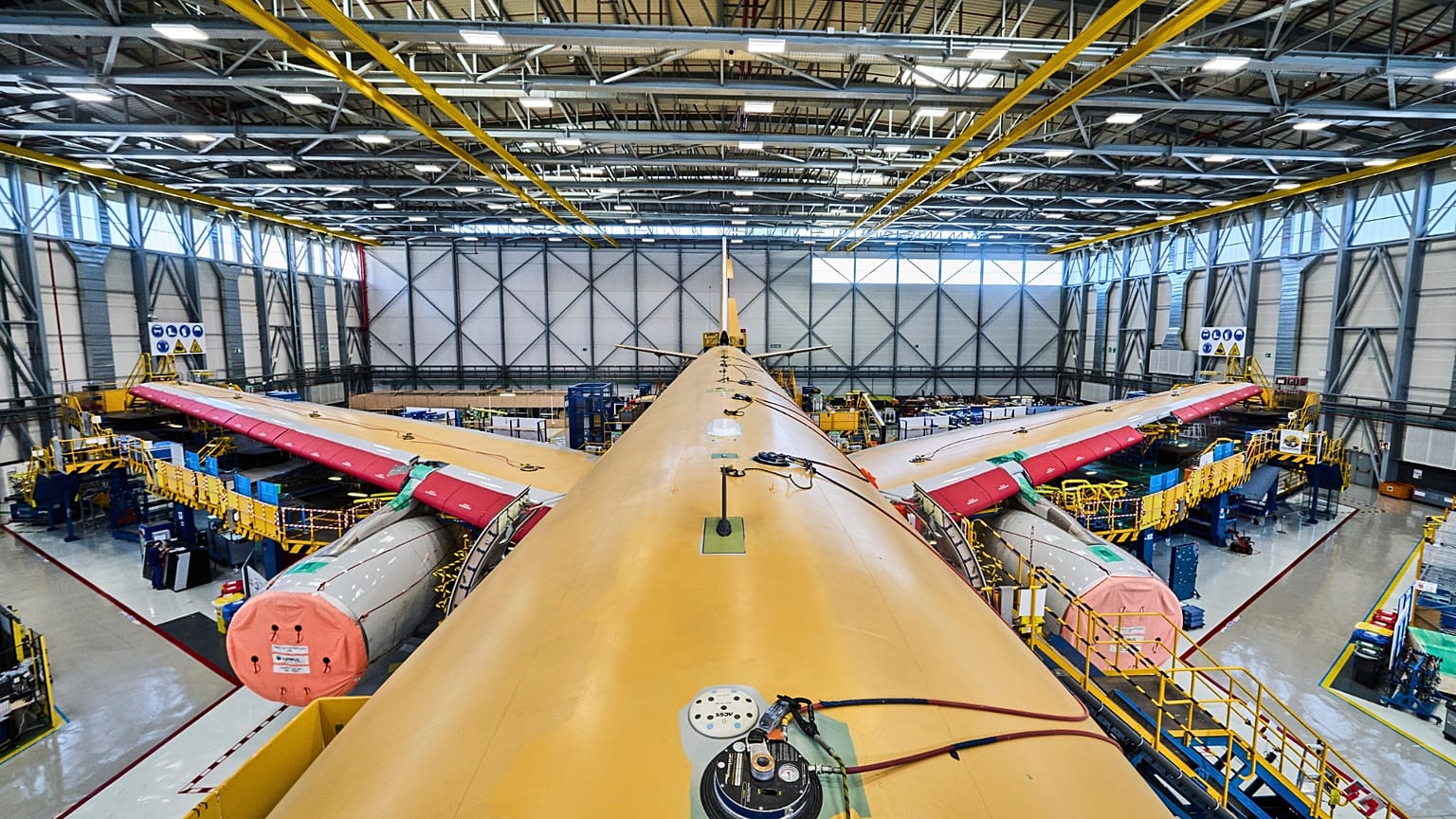













Rome shifts course: six Airbus A330 MRTT tanker aircraft, worth around €1.39 billion in total, to bolster the European pillar in NATO.
The tanker deal is not just a competition won; it is a decision that shifts the balance. Behind the purchase of the new Airbus A330 MRTT lies a shift in the centre of gravity of Italy’s air defence, which is now looking increasingly to Europe within the NATO framework, leaving behind the US option linked to the Boeing KC-46.
 ADVERTISEMENT
ADVERTISEMENT
ADVERTISEMENT
In this context, Italy has formalised the acquisition of six Airbus A330 MRTT tanker aircraft, in a deal with a total value of around 1.39 billion euro, including long-term logistic support. The news emerges from publication on the European TED (Tenders Electronic Daily) portal on 19 May 2026 and confirms that the contract was signed on 16 April by ARMAERO.
The decision closes a process launched in 2022 that went through cancellations, tenders without valid bids and changes in the industrial landscape, before finally settling on a European solution that has now become the standard among several NATO countries.
From the Boeing KC-46 to a return to Airbus: a geopolitical choice
The path that led to the final decision was complex and marked by several changes of course. Initially, in 2022, Italy had selected the Boeing KC-46 Pegasus as the platform to replace and complement the current KC-767A refuelling fleet.
However, the programme was cancelled in 2024, opening a new European tender that proved more difficult than expected. The subsequent procedure, launched in 2024, ended in April 2025 without any offers fully meeting the required technical specifications.
Only in the final phase, in December 2025, was a single proposal left on the table: that of Airbus, which led to the definitive signing of the contract in 2026.
According to international sources and defence-sector analyses, the Italian decision is seen as a clear shift towards the European supply chain, with the definitive abandonment of the Boeing KC-46 platform in the national context.
Both systems are NATO-compatible, so Italy’s ability to operate alongside the United States does not change. The geopolitical difference is that with Boeing the logistical and support centre of gravity remains more “US-centric”, whereas with Airbus a European ecosystem of maintenance, training and supply chains is strengthened.
In practice, NATO remains the overarching framework, but Europe is increasing its weight in enabling capabilities, such as tankers.
The meaning of the contract: far more than a simple aircraft purchase
The A330 MRTT is not just a tanker for in-flight refuelling, but a multi-role platform capable of combining different strategic functions. The aircraft is used both for direct support to combat operations and for long-range strategic transport of personnel and materiel.
For Italy, the introduction of six new tanker aircraft above all means a significant increase in the Italian Air Force’s power-projection capability, particularly for missions that require extended endurance from new-generation fighters such as the F-35 and Eurofighter Typhoon.
Italy joins the club of 19 MRTT operators
Another element that has emerged in recent hours concerns the international dimension of the Airbus programme. With this acquisition, Italy becomes the 19th operator worldwide of the A330 MRTT, a platform that has now been firmly established as the reference standard among NATO and allied countries.
This highlights the growing centrality of the Airbus aircraft in the military tanker market, where in recent years it has steadily gained ground over its US competitors.
The A330 MRTT is designed to deliver extended endurance and operational flexibility. Its primary function is air-to-air refuelling, which allows fighters to significantly extend their time on station in the operational area without returning to base.
This capability translates into a direct advantage for NATO missions, for operations in the wider Mediterranean and for possible crisis scenarios further afield. At the same time, the platform retains a strong logistical component and can also be used for strategic transport and humanitarian operations.
Aircraft variant and industrial participation still to be defined
Despite the signing of the contract, some technical and industrial aspects remain open. It has not yet been clarified whether the chosen configuration will be the standard version of the A330 MRTT or the more recent MRTT+ evolution, based on the A330neo and offering greater fuel efficiency.
In parallel, the level of involvement of Italian industry in the programme still has to be defined, a key factor for the economic and technological return of the operation.
A decision that redraws the balance
Italy’s change of paradigm fits into a broader trend in which Boeing is struggling to expand the export market for its tanker compared with Airbus.
Several defence analysts point out that although the KC-46 is the standard tanker of the USAF, it has suffered technical problems and delays that have slowed its competitiveness abroad, to the benefit of the A330 MRTT, which has already been adopted by many NATO and non-NATO allies. In this sense, the Italian choice is seen more as an industrial victory for Airbus than as an American “political defeat”.
Overall, Italy’s decision to turn to Airbus marks a significant step not only in military terms, but also industrially and geopolitically. Abandoning the KC-46 Pegasus in favour of the A330 MRTT further consolidates the European axis in the military tanker sector, strengthening interoperability with NATO allies that are already users of the platform.
For the Italian Air Force, this is an important qualitative leap that boosts its global power-projection capability and reduces dependence on solutions outside the European industrial base.