




























Nepal has contributed little to the emissions driving global warming yet it is suffering the worst consequences.
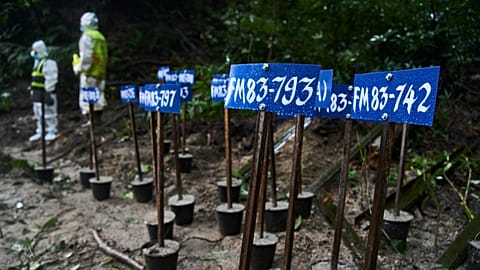
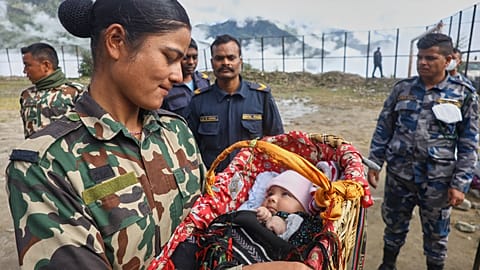
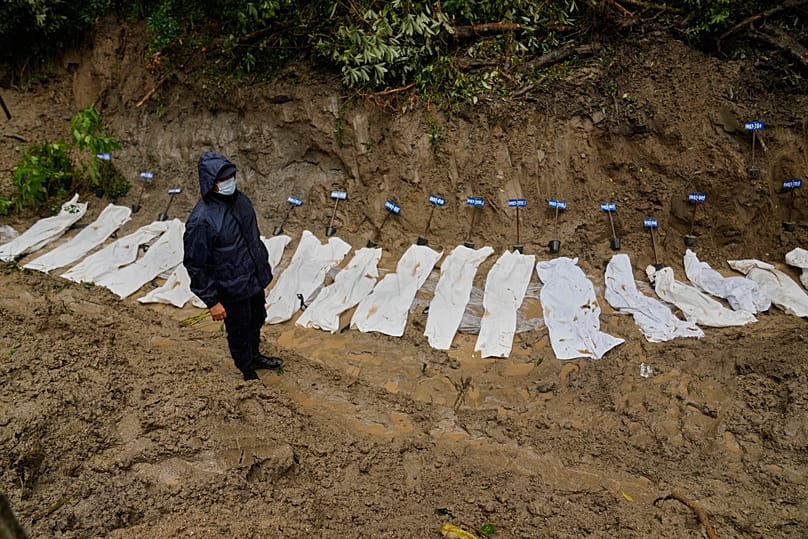
With the death toll over 1,000 and thousands still missing, the human tragedy of the Nepal flooding disaster is undeniable. Some estimate the costs of reconstruction could equal up to a tenth of the country’s entire economy.
 ADVERTISEMENT
ADVERTISEMENT
ADVERTISEMENT
Now attention is turning to what caused the disaster and how to prevent devastation on such a scale when “unprecedented” events like this happen again which, scientists say, they will.
Nepali Prime Minister Balendra Shah has linked the disaster to climate change, saying: “The flood in the Bhote Koshi River in Rasuwa was not an ordinary flood. It was one of the region’s major disasters, triggered by an avalanche of snow and ice in the Himalayan region.”
In the social media post, he went on to say, “It is now time for us to strongly raise with the international community the issue of the disasters we are experiencing as a result of climate change.”
It would be reasonable to assume he is referring to the rich, industrialised countries which are responsible for the vast majority of carbon emissions, unlike Nepal which is a largely rural country.
“Nepal is paying the price for a crisis it didn’t create. This is a moment for countries not just to understand how much climate impacts can play havoc but also how much is needed urgently in terms of putting climate action front and centre of development policy,” urges Aarti Khosla, director of research consultancy Climate Trends.
What caused the Nepal flood?
On 26 August, a sudden flood swept through Nepal’s Rasuwa district after a massive chunk of glacial ice and rock broke off from an altitude of about 5,200 metres and plunged roughly 1,200 metres into the valley below.
Inter-governmental body the International Centre for Integrated Mountain Development (ICIMOD), based in Kathmandu, has concluded that the flood was most likely triggered by an ice-rock avalanche, rather than a glacial lake outburst flood.
It’s important to remember that attribution studies take months and researchers are still examining the precise sequence of events and whether long-term changes such as permafrost degradation and rock-slope instability played a role.
Glacier at heart of disaster had been retreating for decades
It has emerged that the glacier that collapsed in Nepal had been in retreat for decades, like many glaciers across Europe.
“The failed glacier retreated by approximately 450m between 1990 and 2020, potentially reducing the mechanical support provided by the glacier to the underlying rock slope,” says Professor Maria Shahgedanova, a climate scientist researching climate impacts on mountain glaciers at the University of Reading in the UK.
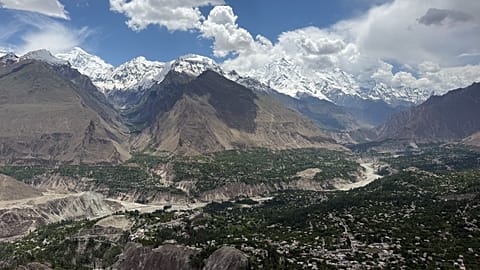
It has been known for decades that climate change is causing glaciers to melt worldwide, increasing the risk of such disasters. Scientists say the Himalayas, the world’s highest mountain range, are warming at an unprecedented rate and losing ice faster than the global average.
Nepal has lost almost a third of its ice volume in 30 years, with glaciers melting 65 per cent faster in the last decade than in the previous one, according to the United Nations Development Programme (UNDP).
"Rising temperatures induced by climate change are quite literally melting the glue (permafrost) that holds the mountains together," Kyoko Yokosuka, UNDP Resident Representative for Nepal, tells Euronews Earth.
"As temperatures rise and glaciers retreat, these frozen ice sheets that stabilise mountain slopes loosen, triggering catastrophic landslides and floods downstream."
This, Yokosuka explains, is creating "a dangerous chain reaction: small, isolated pockets of meltwater on top of glaciers are growing, merging into massive lakes, and putting immense pressure on the moraine" – the collection of rocks, soil and sediment left behind by a moving glacier – which can trigger "catastrophic glacial lake outburst flooding".
"When these dams burst, millions of lives downstream are put in immediate peril," she adds.
Shahgedanova says the recent disaster demonstrates how climate-driven changes in the cryosphere can change conditions that make hazards in high-mountain regions even more risky for people in the area. "Such events cannot be prevented, but their impacts can be reduced through systematic hazard assessment and monitoring,” she says.
Would early warnings have helped in Nepal?
It may be of some comfort to families and friends of the victims that experts believe that it would have been “very difficult” to predict the disaster. But better preparedness could have helped.
“This was an unprecedented and unexpected disaster. There was simply no detection and no time to issue a warning. The event was a sudden-onset hazard that could not be captured by conventional warning systems,” explains Dr Farooq Azam, senior cryosphere specialist and intervention manager at ICIMOD. “In such rock-ice avalanches, establishing a warning system is very difficult to ascertain the place of the breakpoints, which can sometimes be below the bedrock or glaciers and not easily visible with satellite or eyes.”
Still, UNDP says that continuous monitoring of glaciers, lake volumes and moraine dam stability using satellite and sensor technologies is critical to assess future risks.
"Governments need the systems and coordination mechanisms to anticipate rapidly evolving risks," Yokosuka adds. "Communities in downstream areas need warnings they can act on – clear evacuation routes, identified safe areas, and regular exercises."
European countries may be able to assist by bringing "technology solutions, such as precise engineering and avalanche-mitigation technologies used in the Alps directly to the Himalayas," as well as by scaling-up financing for risk prevention and early warning systems, says Yokosuka.
What does Nepal need to do to be more prepared for disasters?
ICIMOD says there are three immediate priorities to improve the region’s preparedness for global warming-related disasters. Firstly, make sure clear policies are in place that determine what land can be used for, particularly in areas close to rivers, slopes and mountains.
Secondly, assess how the environment can impact infrastructure using Environmental Impact Assessments before it is built, as well as assessing how environmental conditions could affect infrastructure over its lifetime.
Thirdly, bring Indigenous knowledge back into risk planning. Historically, communities often lived on higher ground and away from river channels, while newer development has increasingly moved closer to riverbanks and, in some cases, onto riverbeds. Indigenous knowledge should inform contemporary disaster-risk and land-use planning, ICIMOD says.
UNDP says interventions like physically managing high-risk lakes and strengthening vulnerable slopes could be considered but require careful assessment.
“If this heartbreaking tragedy can help countries realise the need for a shared approach – for building adaptation and resilience, early warning signals, and transboundary monitoring – that will be a step ahead for humanity in the fractured world order we are living in today,” says Khosla.